
PHOTO

John Gordon Keys (known as Gordon), former leader of Lauder’s Atmospheric Research Station, was born in Palmerston North on November 9, 1930, but spent most of his childhood, including the war years, in Warkworth.
After attending Mt Albert Grammar and the University of Auckland for a year, he embarked on a colourful pioneering career that took him all around the world, from the Arctic to the Antarctic and everywhere between, investigating regions within the Earth’s crust and throughout the atmosphere from the surface to hundreds of kilometres above us.
His scientific work was hugely varied and encompassed mineral prospecting of the ground beneath us using anomalies in radioactivity, gravity fields and the Earth’s magnetic field, measurements of the upper atmosphere to understand how Earth’s ionosphere and magnetic field are affected by variations in solar activity and nuclear testing, and measuring trace gases in the middle atmosphere, with a range of quite different optical techniques, to understand the causes of ozone depletion.
His first decade of work was mainly in the tropics, including Brisbane, Darwin, Rarotonga and Samoa. During his time in Rarotonga, he met Rima, who would be his wife for 65 years. They had three children, John, Christina and Geoffrey.
In 1963, when he arrived at Lauder, the DSIR Auroral Station, as it was known then, consisted of an eclectic mix of wooden huts scattered on the hillside.
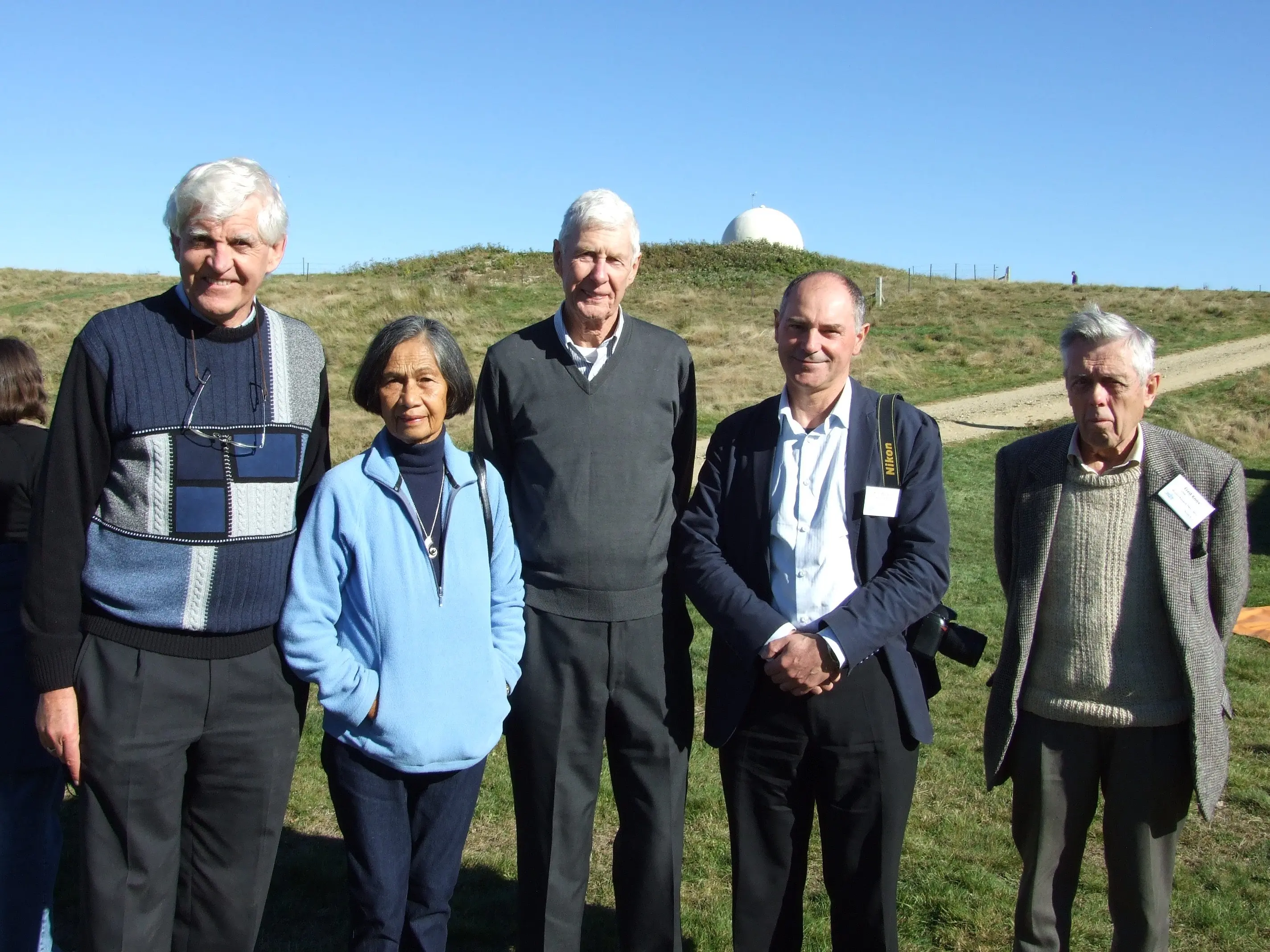
He took over its management in 1970 and would continue that role for the next two decades, when he ensured the research station’s ongoing viability and transformed it to the purpose-built facility we see today.
Gordon had a long association with Antarctic research beginning in 1967, long before the development of the ozone hole, when he was involved with research about the interactions between solar radiation and the earth’s atmosphere, which had important consequences for compass navigation and short-wave radio communication — both extremely important at the time.
Thirty years later, his research there would contribute to a better understanding of the causes of the Antarctic ozone hole.
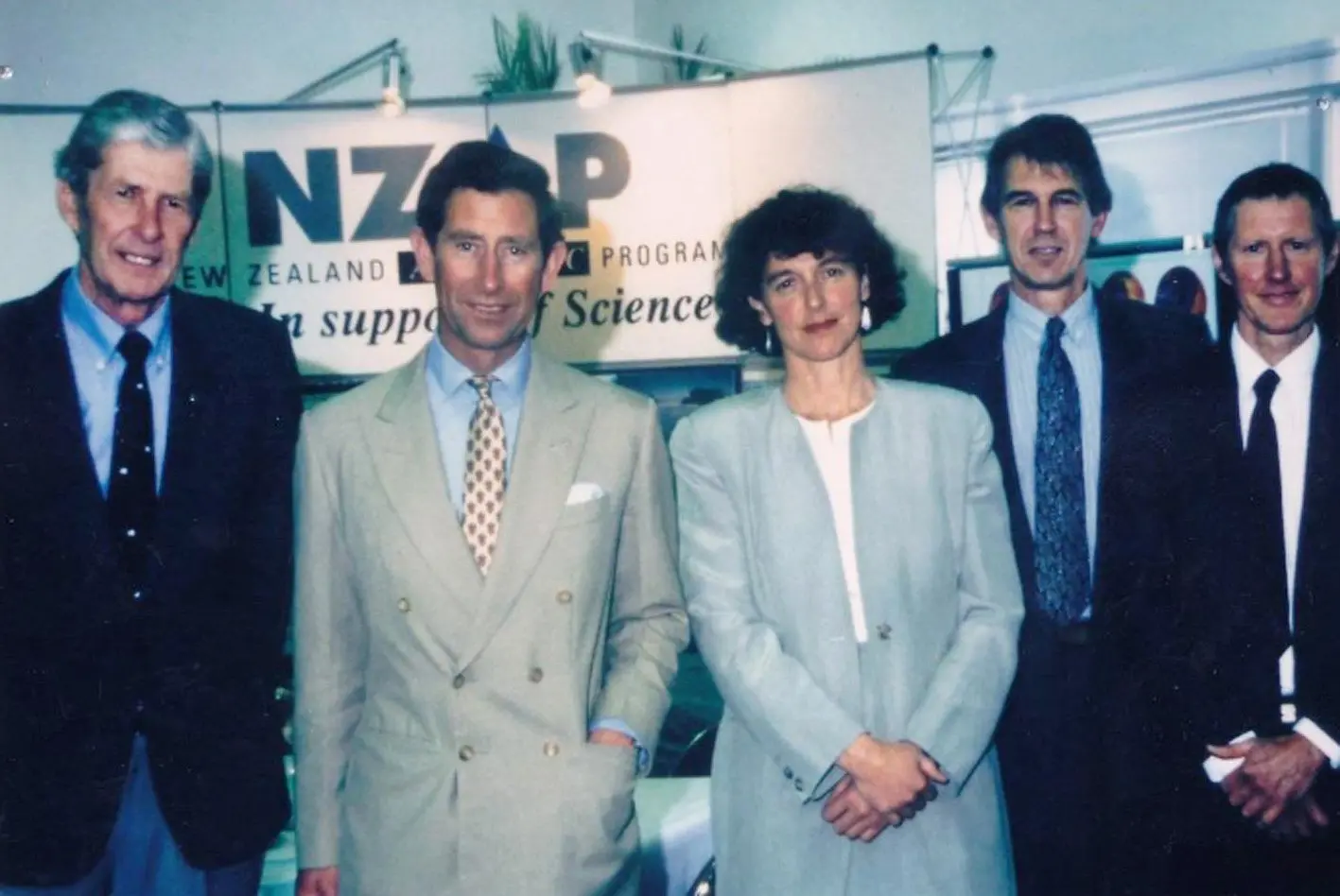
His efforts in Antarctica were recognised in three significant ways. Firstly, in 1994, when he was invited to summarise New Zealand’s contribution to atmospheric research in Antarctic during a one-on-one discussion with Prince Charles (later King Charles) at the Antarctic centre in Christchurch.
Secondly, in 1995, he was awarded the Royal Society of New Zealand’s Science and Technology Silver Medal. Finally, in 2001, when the New Zealand Geographical Board named Keys Hill, near Scott Base, in his honour.
He was president of the New Zealand Institute of Physics in the mid-1980s and belatedly received a MSc in physics with distinction from the University of Otago in 1993.
A year before that, DSIR had ceased to exist, and the work at Lauder had fallen under the Niwa (now Earth Sciences New Zealand) umbrella.
He retired from Lauder in 1999, after an association of more than 35 years, over half of them as the boss.
But his interest in its science never waned.
In addition to his up to 60 scientific publications, his name also lives on with his book, Stranded in Paradise, published in 2016, in which he recounts his pioneering adventure in Rarotonga where he and an intrepid friend salvaged the propeller blades from the wreck of the 95m RMS Maitai, which sank at the mouth of Avarua Harbour 99 years earlier.
His adaptability was further demonstrated by taking on the task of building his own home on Earnscleugh Rd, Alexandra. In 1985, he and Rima moved into their new home.
He and Rima also built their own home in Rarotonga, where they escaped the Central Otago winters. At both, they would host many visitors and friends over the following years.
He was a talented musician, and many can attest to the couple hosting wonderful evenings including musical interludes with Gordon on the piano or playing his piano accordion.
He always played an active part in community affairs. While at Lauder, he directed several musical performances by the Omakau Musical Society. He was also active in the local Art Society and the Rotary Club of Alexandra for 30 years, including terms as president in both.
Active in a wide range of sporting activities, he continued on with tennis into his 90s and was the driving force behind the establishment of the tennis/hockey recreational facility alongside the newly built Central Stories in 2011.
Gordon was farewelled at Orchard Garden, Alexandra, on November 6, 2025, about one month short of his 95th birthday.
His wife Rima, who died three years ago, will also be fondly remembered. Their oldest son, John, died in his early 20s.
He is survived by their son Geoffrey, their daughter Christina Parker, Christina’s son and daughter John and Camille, and Camille’s son, Roimata. — Richard McKenzie.