


 How are they made?
Perhaps the most famous style involves Botrytis cinerea, a beneficial fungus we often see noted on labels as "Noble Rot".
Botrytis causes the berries to shrivel as they lose fluid in the berries, concentrating the sugars and the flavour, while the botrytis itself adds a musky nuance to the final wine. These can be amazingly concentrated and viscous, yet invariably have great acidity to keep everything in balance. Often capable of marvellous ageing potential, though gorgeous at almost any age. Usually too sweet to have with desserts, typical matches are fresh fruit or blue cheeses, while paté can also work a treat.
Late harvest, as its name suggests, is where the grapes are held on the vine longer than usual if conditions allow.
The flavours move to the riper end of the spectrum, while that added ripeness brings extra grape sugars. Time on the vine can also see a little shrivelling of the berries adding further concentration, a process that can be mimicked by a technique called "cane cut" where the stalk of the grape bunch is partially cut or twisted, beginning that drying process.
Straw wine/vin de paille and sun dried wine
Not commonly seen here, though Prophet’s Rock make a wonderful example, this is where the grape bunches are harvested and kept in cool, airy winery lofts/warehouses while they begin to raisin and the flavours concentrate. Historically, the bunches were laid on beds of straw or reeds (thus the name).

Laying bunches out to dry in the sun is another technique that dates back to the ancients. Moscato/muscat from Pantellaria off Sicily, vin santo from the Greek Island of Santorini and P.X from Spain are famous examples while the process is also common in Puglia in the heel of Italy.
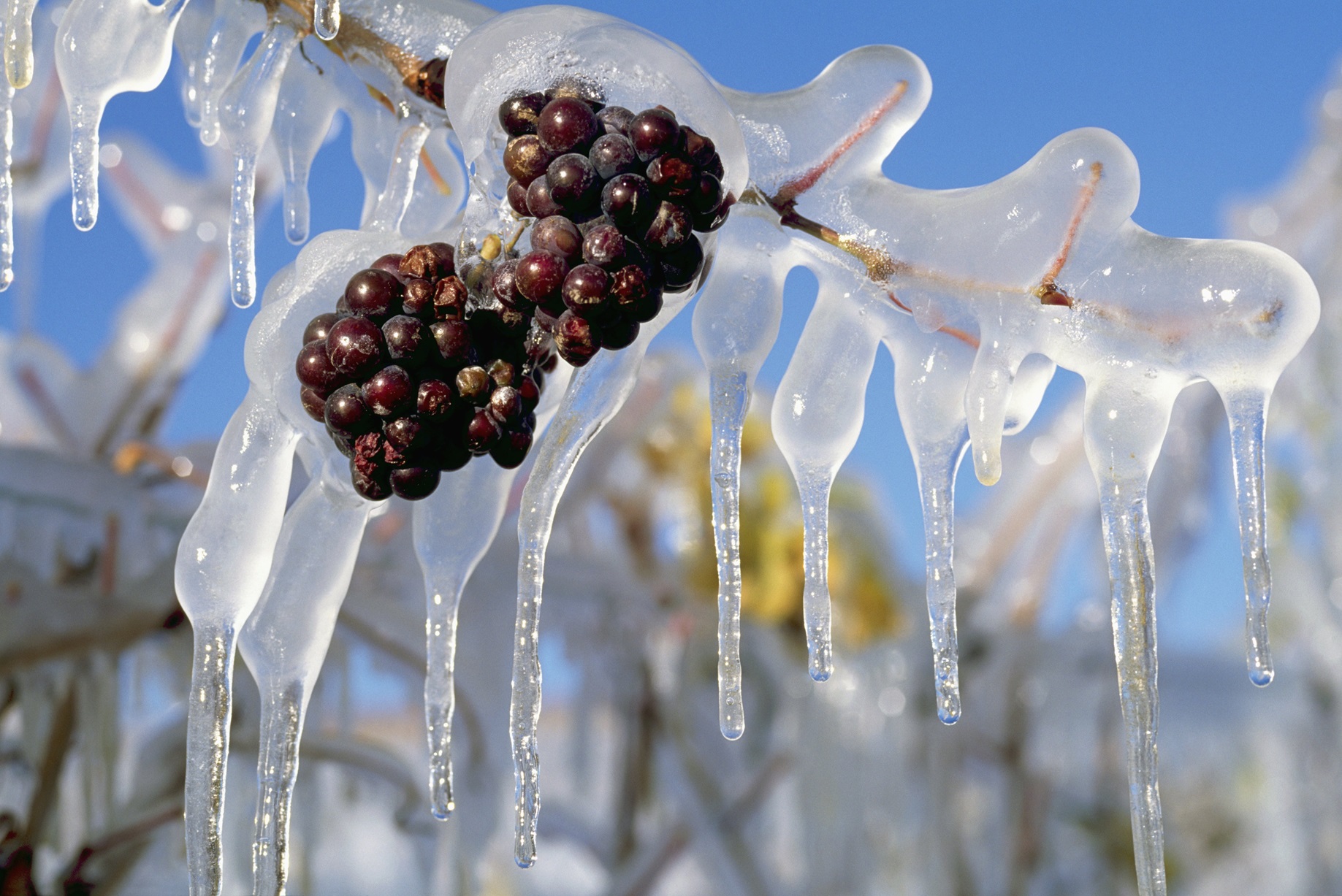
Ice wine in its purest form requires ripe grapes to held on the vine until the temperatures drop below freezing for long enough that the berries themselves (or the water in them) freeze into marbles.
When picked and crushed a super concentrated elixir is released. An option used domestically is to freeze a tank of grape juice: the ice that forms is removed, concentrating the remainder.
What do these wines taste like?
First and foremost, these wines are lush and rich, with incredible viscosity; texturally a very different proposition from "table wines". They often move beyond the typical notes of each grape variety, developing a tasting note lexicon all their own with descriptors like honey, beeswax, butterscotch, creme brulee, musk, fungi and spice being common. They are more than just sweet, they are hugely complex and fascinating. A little goes a long way.
Creating these wine styles involves risk for winemakers.
Keeping grapes on the vine could see the berries eaten by birds or animals, while inclement weather could bring undesirable rot or just turn it all to mush. Similarly, dried grapes could be affected by undesirable rot, decimating the volumes. Quite simply, the yield (or volume of wine produced) is significantly lower than table wine yet requiring ever more work: when factored in with the risks, this is reflected in the price, yet the counter argument is that the quality in the bottle far outweighs that price. If you haven’t dipped your toes into these wine styles, do yourselves a favour as they offer an amazing experience.
As the days shorten and the evenings cool, perhaps we will all crave something richer: the following three wines deal that card in spades.
2025 Misha’s Vineyard The Cadenza Late Harvest Central Otago Gewürztraminer

2025 Pegasus Bay Encore Noble Riesling

2025 Blank Canvas Meta Marlborough Riesling


