

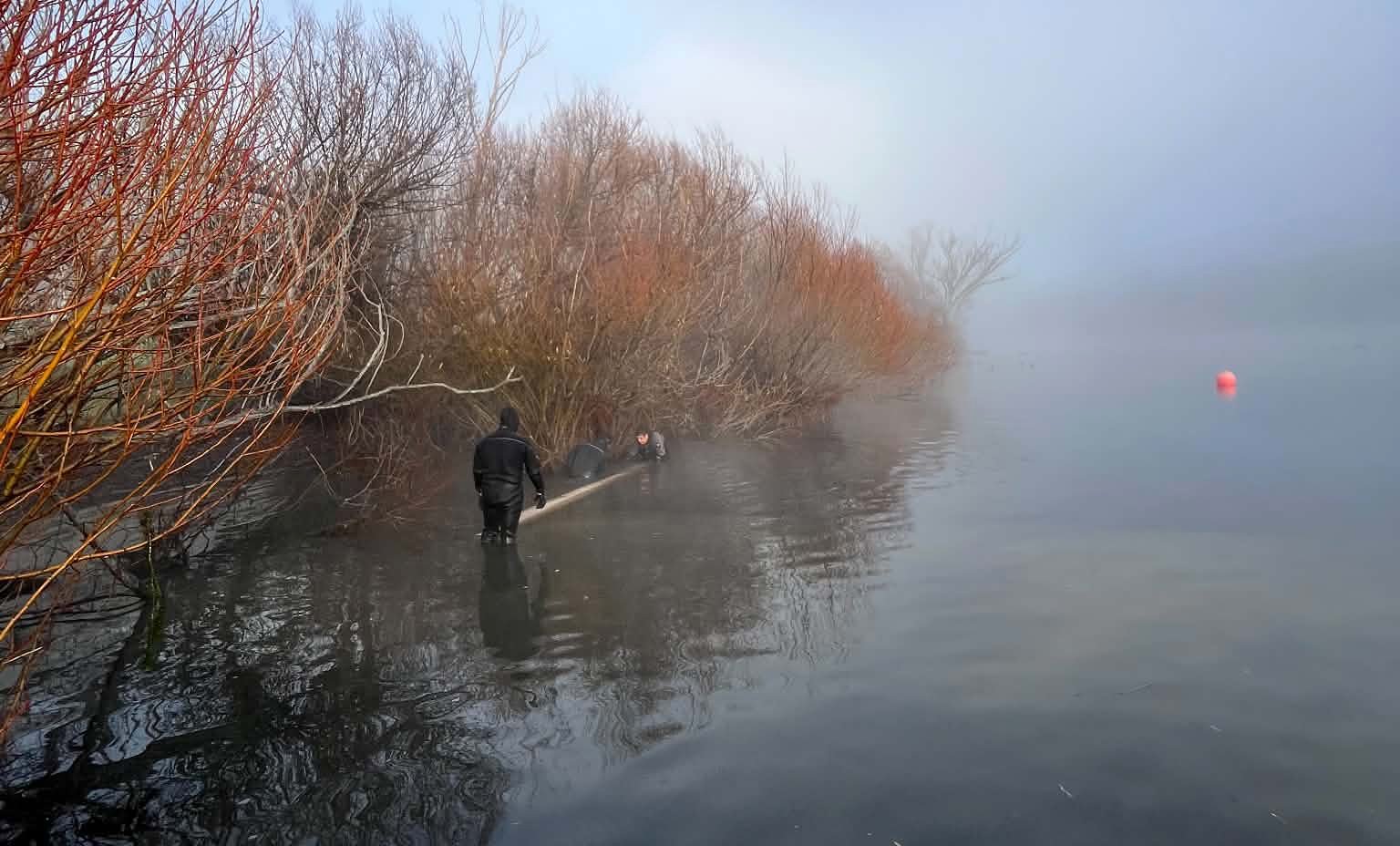
It is part of a plan to eradicate lagarosiphon, one of New Zealand’s most invasive and damaging freshwater weeds, and protect Lake Wakatipu.
Toitū Te Whenua Land Information New Zealand (Linz) biosecurity leader Tracey Burton said about 60,000sqm of hessian was being laid across sections of the riverbed to suppress the weed, which marked a ‘‘significant push’’ to remove lagarosiphon from the river, thereby protecting the lake.
The work was expected to be complete by the end of this month.
Lagarosiphon can be carried upstream on boats and other craft entering the lake from the river, so removing the weed from the area would reduce the risk of accidental spread, Ms Burton said in a statement.
‘‘By focusing on eradication here, Linz is cutting off that risk at the source and giving Lake Wakatipu the best possible protection, now and into the future,’’ she said.
Land Information Minister Mike Butterick, who yesterday visited sites in the Queenstown Lakes and Central Otago where Linz was undertaking control work, said the Kawarau project was a ‘‘significant and practical step to protect one of New Zealand’s most iconic lakes’’.

The freshwater weed grows quickly, forming dense surface-reaching weed beds, and can choke waterways, smother native plants, restrict recreation, and degrade lake and river ecosystems if left unchecked.
Ms Burton said the hessian matting acted like an ‘‘underwater shield’’, smothering the weed while allowing native vegetation to re-establish.
The technique was being used alongside hand weeding in carefully targeted areas to maximise the chances of fully removing the weed from the river system.
However, protecting the lake also relied on the wider community’s actions, she said.
‘‘I want to acknowledge lake users who have been diligent about checking, cleaning and drying their gear, and encourage everyone to keep that up.’’ — Allied Media


