
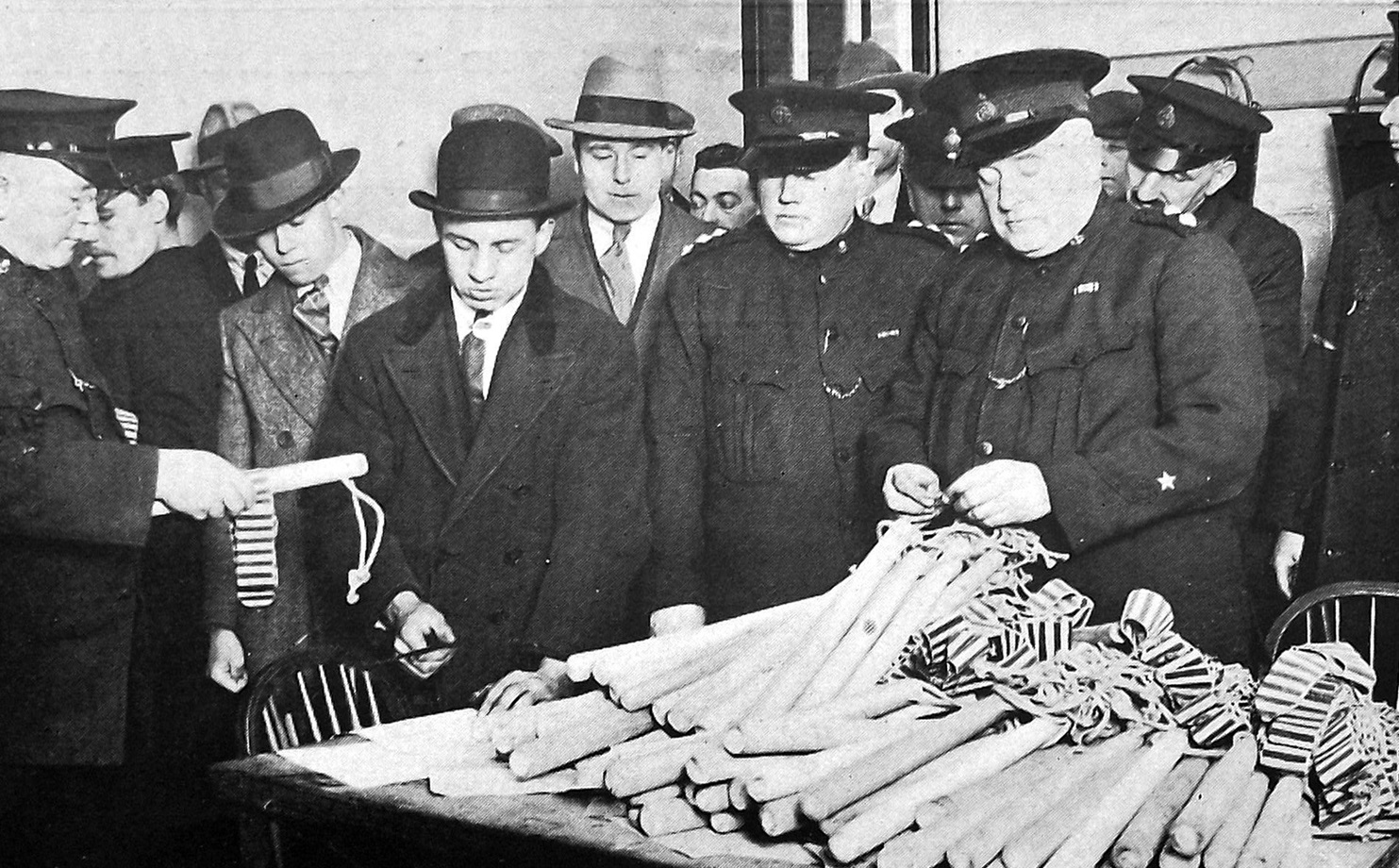

Six thousand special constables are being enrolled daily. Yesterday’s armed convoy for flour was repeated to-day. A hundred and fifty lorries with armed soldiers sitting on the sacks, flanked by armoured cars and with a squadron of cavalry in the rear passed the inflammable dock area peacefully and dumped the cargo at Hyde Park.
The head master of Eton and 50 assistant masters have enrolled as special constables.
Tragedy in South Dunedin
Patrick John Jager was charged on remand in the City Police Court yesterday with the murder of Arthur Creagh at South Dunedin on May 3. Mr H.W. Bundle SM was on the Bench.
Constable Watkins said he was stationed at South Dunedin. About 12.50am on May 3 Jager came to the South Dunedin Police Station and said to witness: "I have come to give myself up. I have just committed murder." Witness said: "It is not so bad as that, is it?" The accused said; "He’s dead all right. I hit him on the head with a bottle and then cut his throat with a razor."
He further said; "It’s Arty Creagh. l am satisfied I did the right thing. He was the chief spy, and he sleeps in my room. They were after me for my money."
The accused said to Sergeant Murray: "I want to tell you sergeant, that I killed Arty Creagh this morning. l am satisfied I did the right thing, because if I had not done so he would have killed me to-night. He was after me for my money. There is a gang watching me. l am not worrying about it, sergeant, as I am satisfied I did the right thing."
Referring to persons spying on him, he said: "They were all round the house last night, and when I stand with the rope round my neck I will smile, knowing I have done the right thing. I killed the man, and that is the end of it." He further said that he had thrown £93 over a fence "because it was the root of the whole trouble." The accused had blood on his hands when he called at the Police Station.
Dr Evans examined Jager at the police station. He was then labouring under great mental stress, and the opinion witness formed as the result of his examination was that the accused was certifiable as a mental defective, and as such should he committed to Seacliff Mental Hospital.
He was under the delusion that he was being watched, and he also imagined he could hear voices and in witness’s opinion the accused should be under observation in a mental hospital.
The accused was committed to the Supreme Court for trial. On the suggestion of Mr Hanlon, the magistrate agreed to make representations to the Minister of Justice with a view to having Jager committed to a mental hospital pending his trial, for the purposes of observation.
Mr Bundle, sitting as coroner, returned a verdict that Creagh died from shock and haemorrhage caused by injuries inflicted by Patrick John Jager. — ODT, 11.5.1926


