
PHOTO
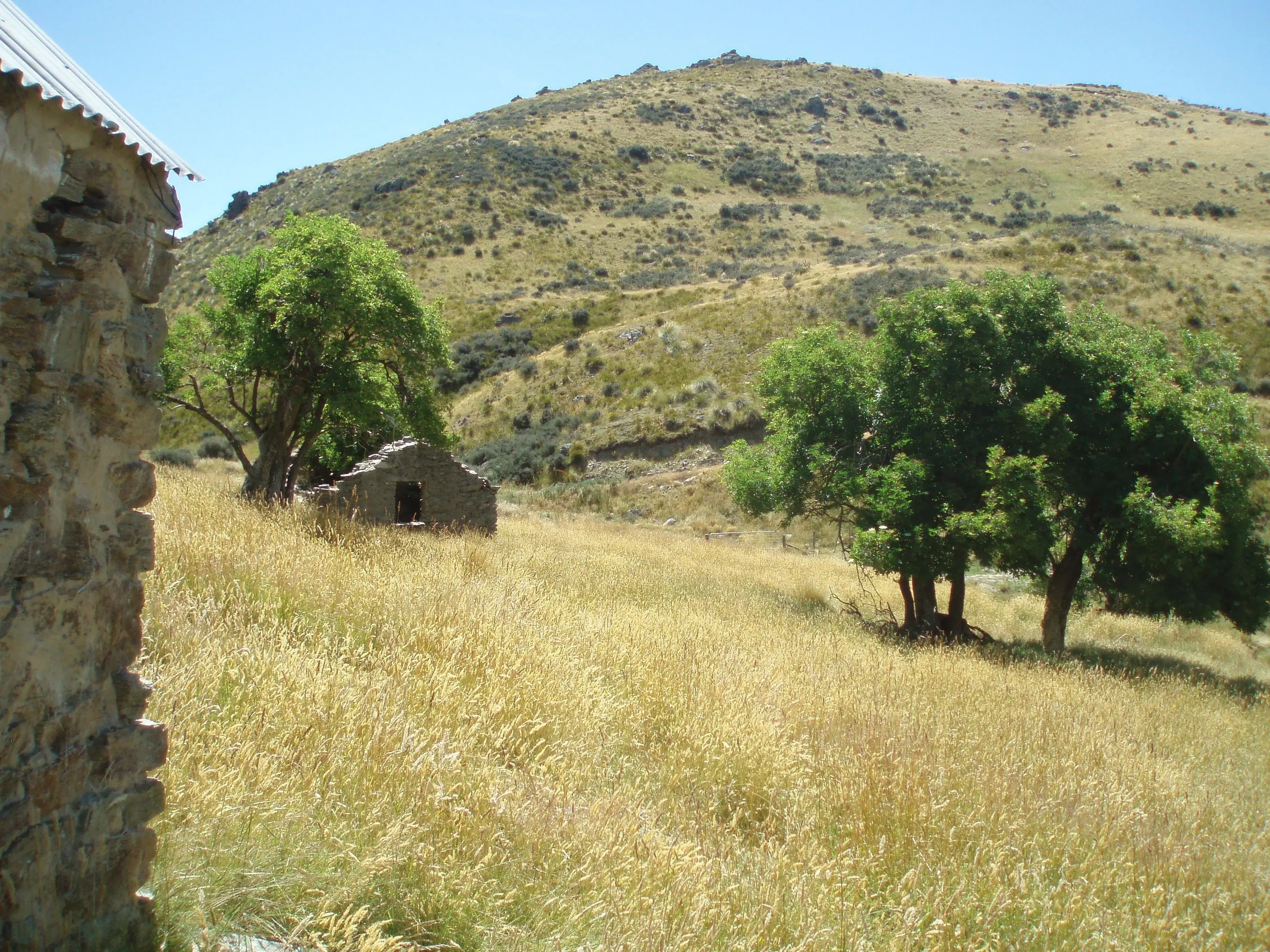
After 160 years, "gold fever" seems again to be gripping the region.
The famous fields, the Arrow, the Dunstan, Gabriel’s Gully, are exhausted but according to new reports from mining companies, an El Dorado is just waiting to be dug up in another part of Central Otago. This includes Rough Ridge in the Maniototo.
But perhaps the new prospectors should take heed of what has happened there before, and more than once, and remember that "fools rush in".
Rough Ridge saw the shortest gold rush in Otago history, or is it longest? It is perhaps the bleakest and most isolated, and certainly it has the most exotic name: The Garibaldi.
In late 1864 Joseph Cicileno, Clement Chiaroni and James Spedderi were prospecting on Rough Ridge. They found gold. Typically, they kept it quiet, but equally as typically, they were discovered and a rush on Rough Ridge happened at lightning speed.
Within days 600 miners had set up a canvas town of 120 tents.
But there was not a lot of work going on, as the Otago Daily Times reported: "They hurried in from other rushes, and have not brought with them the materials necessary for their operations. Rope, windlasses and buckets are not at hand, but doubtless in a day or two these difficulties will be removed."
First results were promising, with gold only a foot down and those with equipment were sinking shafts to 30 feet.
The ODT reported from the township of Hamiltons: "There are some 1100 persons on the field and large numbers are arriving daily. This has set everyone by the ears here in Hamiltons. Few horses are to be had and no saddles whatsoever as the rush of diggers and storekeepers departs for Rough Ridge, most on foot! Almost all the waged men under employment by the large sluicing companies have ‘made tracks’. Hamiltons is in fact in a thorough state of collapse!"
The reporter decided to join the throng to Rough Ridge, and he was in a thoroughly "quixotic" frame of mind.
"I made an excursion this week to see these diggings, and certainly had quite enough of the truly named Rough Ridge. After managing to escape smothering in the swamps and boggy creeks in the Maniototo, there were more perils to undergo from the peculiarity of my Rosinante amid the thousand and one tufts of Spaniards. Great was my anxiety, as a fall would not have been to land me on a bed of moss.
"When I made the high ground, I thought to myself it wouldn’t be so bad, but sad experience has taught me, that looking from the bottom of a hill gradually sloping for about three miles is no method of judging the difficulty of ascent. Ere I had gone half an hour up, I found the hill was rapidly growing."
Eventually he made it to the middle of this nowhere. But after so much exertion, he was struck by the lack of it on the diggings.
"All the miners were more busy drinking brandy than tackling to work; and amongst them by no means a minority of racy-tongued Pat-landers, all in their glory with their "drop of the crathur". I hear fights take place daily. I had from the first no great opinion of this rush, and I saw enough of it the day I was there to prove that it would not last ... many openly said it would not be anything. The storekeepers were doing a good stroke, brandy and bottled beer being much in demand, and soft stuff, nowhere."
Every diggings has its day. In the case of the Garibaldi, it was short indeed. But it was all part of the ebb and flow of the tides of men and fortune that is the story of our goldfields.
Hamiltons emptied out on news of Rough Ridge, then finding nothing but disappointment, a new rush in the Ida Valley took everyone away again. From the 1100 miners only the original claim stakers were left and they gave the diggings its name: The Garibaldi.
At the goldfields Warden reported "Substantial stone cottages have been erected and gardens formed, and tailraces constructed. The yield of gold is not large, but steady".
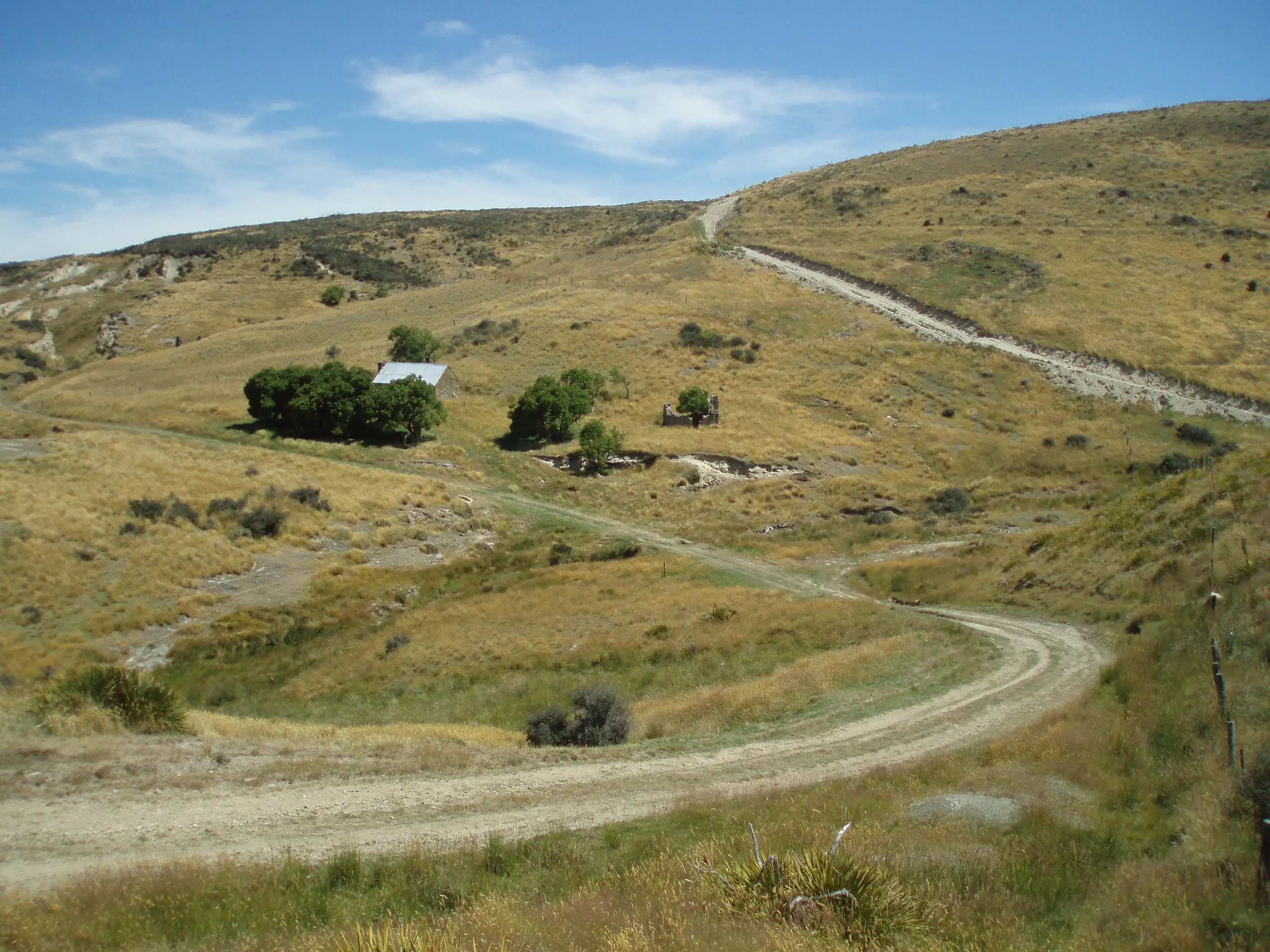
Those cottages remnants of gardens and tailraces are still there, but it is hard to imagine what this isolated life was like for the men, women and children who lived, and died, there.
By the mid-1870s the diggings were described as "waning into insignificance" and in 1885 the Mount Ida Chronicle described the place as Goldsmith’s "Deserted Village" of several buildings, but all abandoned.
Then in April 1887 the Chronicle ran another story, claiming geologists were convinced there was plenty of gold at the Garibaldi.
"There are vast deposits of auriferous drift. Sinkholes 20 feet deep show gold all the way, and riches to be had where the bedrock is. Only investors in a company are needed to turn a deserted village into a thriving, teeming population of happy and independent diggers. That such a pleasurable state of affairs might be evoluted is our hearty desire".
Everything that had been said about the Garibaldi over the previous 20 years was the opposite of the picture that was now being painted. Was there a slight smell of a rat up on Rough Ridge? Something was going on that made the Chronicle put such a spin on these diggings as to make any sceptic dig into his pocket to get a share in the spoils.
And that was exactly what was behind it. A newly formed Garibaldi Hydraulic Sluicing Company was offering 10,000 shares for sale. The list of directors was a who’s who of local businessmen into anything going that could turn a profit, including the owner of the Mount Ida Chronicle.
So it was not surprising the newspaper was now promoting the potential of the, up until now, godforsaken Garibaldi.
This was not a scam per se; but it was a spectacular example of pure speculation.
The company was floated in March 1888. Tenders were called for dam construction and, once again, hopefuls — indeed some of the original prospectors — headed back up the hill.
In April the Chronicle reported. "Mr Frank Cavadore had sold his hotel at Wedderburn to resume the occupation of mining at Garibaldi where he is said to have made a good deal of money in the early days".
But only a few months into operations the reports coming out were doleful. When payment for shares fell due most defaulted.
A meeting of those shareholders who had come up with the cash decided to continue operations until Christmas to see if the 50 ounces that was expected to wash up from the tailraces would be realised. The wash dirt did not deliver and the experiment collapsed.
The deserted village remained deserted and it remains still. A monument to folly.
A few years ago new plans to get the gold out were announced. It was the time of my last visit to the Garibaldi in 2012.
I was taken up there by the late Laurie Docherty, a great-grandson of the original prospector, James Spedderi, and on whose family run station the diggings are located.
I saw new pegs had been driven in marking the ground to be investigated.
I asked Laurie if he thought this new venture might reap the riches that have eluded earlier prospectors.
With family knowledge of this place going back 150 years, he replied "I very much doubt it".
But such is the lure of gold. It makes fools rush in. It makes people dream. It makes people paint their wagons.
— Keith Scott is an Otago historian. This is an updated extract from his 2013 book Gimmerburn: The Land that God Forgot to Finish.