
PHOTO
The government has set an ambitious target of almost five million international visitors a year by 2034, a lift of more than a-third on where we sit today.
A large number of them will come to Central Otago, which is well known as the jewel in New Zealand's tourism crown.
Destination Queenstown CEO Mat Woods says the region is already ‘‘bursting at the seams’’. He's not exaggerating.
A recent MBIE report found that reaching this tourism target will require up to $3.5 billion in new infrastructure across the country. That is a significant number, and if we continue building the way we always have, it will be a number we cannot reach in time.
Southbase has spent more than a decade delivering construction projects across the country, including a significant amount of our work in Central Otago and Queenstown-Lakes. We have put over $500 million of project value into the region since 2019, including schools, aged-care facilities, airport infrastructure and civic buildings.
We know what this part of New Zealand is capable of and we know where the bottlenecks are.
The challenge is not appetite. Developers, investors and the community all understand what is at stake. The challenge is speed and scale.
Tourism infrastructure, hotels, transport hubs, visitor facilities and worker housing is typically delivered as a series of bespoke, one-off projects.
Every build starts from scratch. New design teams, new procurement processes, new subcontractor relationships.
That model made sense when the pipeline was manageable. It does not make sense when you are staring down $3.5b of work and a 2034 deadline.
The good news is that a smarter model already exists and it is being used right now in the health sector. Health New Zealand recently appointed four major construction consortiums to a national panel, with the explicit aim of standardising hospital builds, driving cost efficiencies and accelerating delivery.
The logic is straightforward: design once, refine continuously, apply repeatedly. Instead of treating every project as a unique exercise, you build on what works.
The same thinking should be applied to tourism infrastructure. Repeatable design, standardised hotel room configurations, modular visitor facilities and consistent back-of-house systems can dramatically reduce the time between concept and opening.
Offsite manufacturing takes that further: components are fabricated in controlled environments and assembled on site in a fraction of the time traditional construction requires.
These approaches are already delivering results in construction across New Zealand and Australia.
For Queenstown-Lakes and Central Otago, the case is compelling. There is a huge amount of critical infrastructure ahead of us.
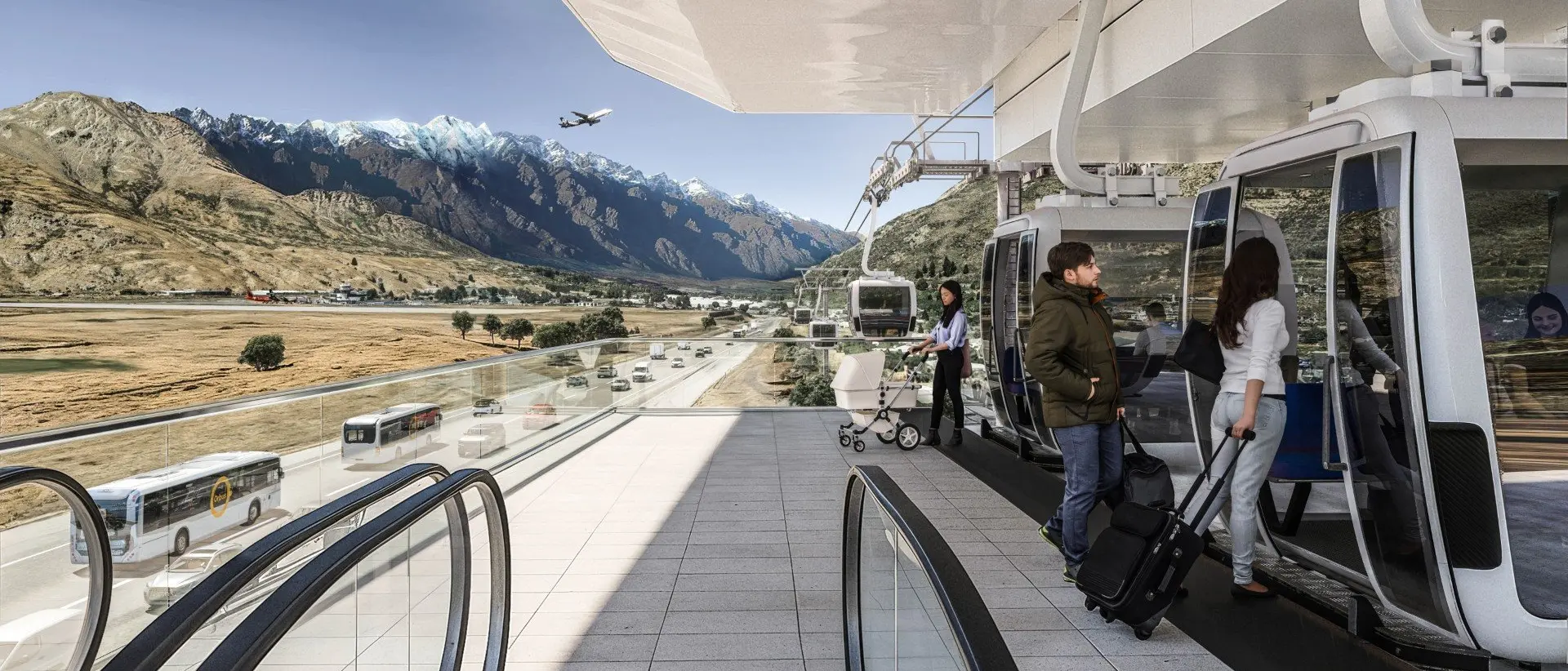
The Queenstown gondola fast-track application has advanced. The Queenstown Lakes District Council has adopted a 30-year plan targeting 9300 new homes by 2050. The airport is expanding. The pipeline is big and it is accelerating.
What the region needs now is a construction sector that can meet that pipeline with the same ambition. We are backing that belief with action, and are investing significantly in our regional presence, hiring locally, moving to larger Queenstown premises and appointing a dedicated construction manager to lead the region.
There is also a workforce dimension that cannot be ignored. New Zealand's construction sector employs almost 300,000 people and delivers around 7% of our GDP, but it operates in one of the most volatile pipeline environments in the OECD.
When projects are one-off and procurement is protracted, companies cannot invest in their people with confidence. A visible, co-ordinated programme of tourism infrastructure work changes that.
It allows firms to bring on apprentices, grow regional subcontractor capability, and invest in the digital tools and modern methods of construction that lift productivity over time.
Central Otago is one of New Zealand's great economic assets. The tourism growth this region is being asked to absorb is not a burden, it is an opportunity.
But capturing it requires us to be honest about the limits of the old model and deliberate about adopting the new one.
The infrastructure will not build itself, but if we are smart about how we tackle it, we are more than up to the challenge.
• Quin Henderson is founder and CEO of construction firm Southbase.