

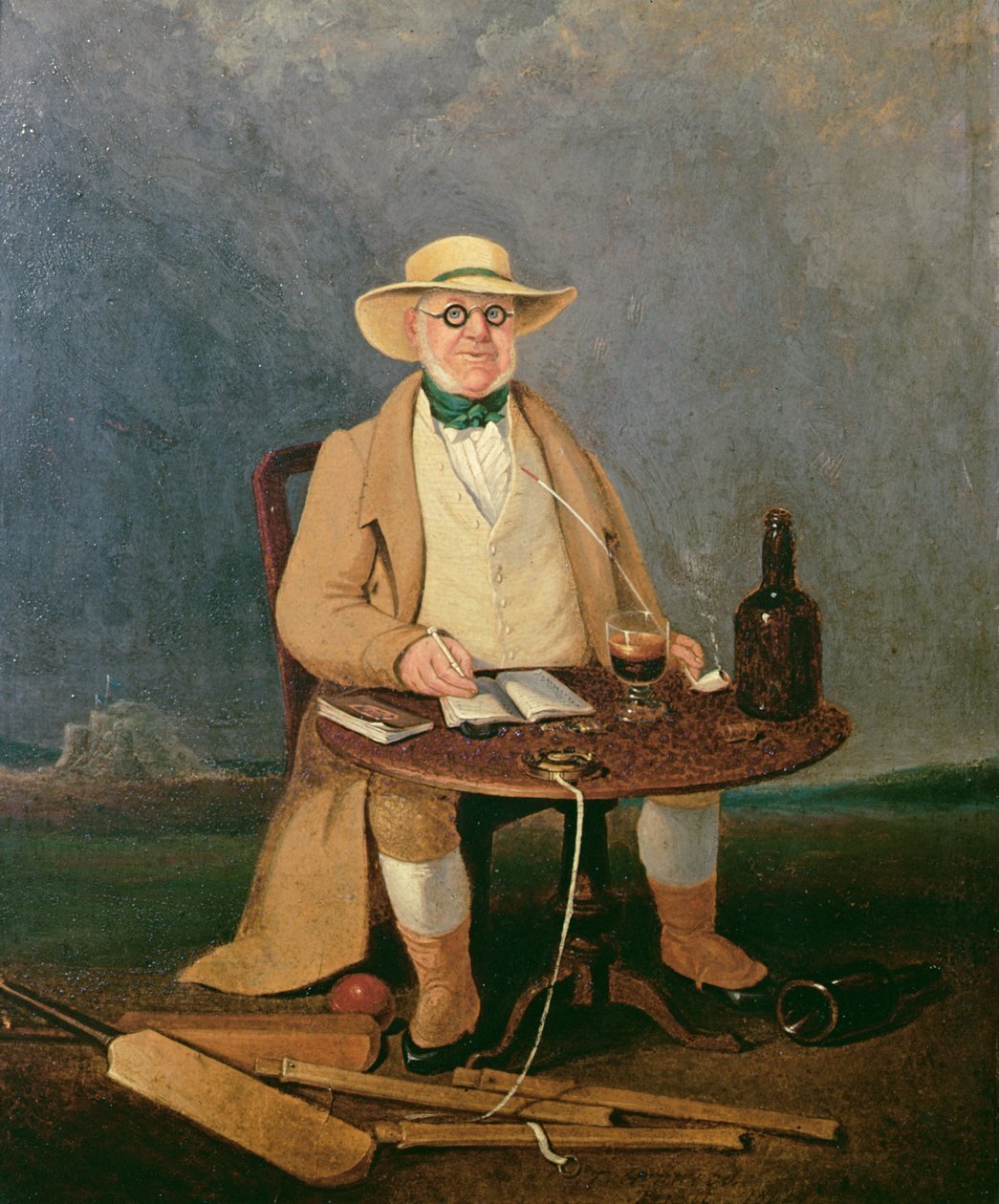
In Patearoa cricket has been played since the gold miners appeared and the first record of cricket at Patearoa comes in November 1864 when a game was interrupted by a nearby murder when John Myles stabbed John Russell. The game continued after a half-hour pause and cricket, without murders, has been part of the Patearoa summer ever since.

Refreshments were "superior and abundant" and conviviality reigned.
A playing area opposite the hotel was cleared of tussock and stones and by the mid-1890s the Patearoa Cricket Club was part of a Maniototo-wide competition. Games were also played for the sheer fun of it, like the game between "Scotland" and "The World" at Christmas 1896. Scots-born locals were defeated by the sassenachs among whom was sporting clergyman John Jamieson (he introduced netball to New Zealand) who played a few games for Patearoa and was immortalised as "The Man Who Saved The Match" in the poem by David McKee Wright.
The Patearoa cricketers were not great churchgoers but after Jamieson took the catch that won the match, McKee Wright described their conversion:
Then how we yelled, and yelled again; he’d fairly won the match —
The splendid batting that he showed, the more than splendid catch;
Why, chaps, you’d hardly credit it, that almost every bloke
Goes into church on Sunday now and does without his smoke.
During the next 100 years some fine cricket was played on the Patearoa Domain as the local club produced plenty of competition winners and players who made their mark in Central Otago teams. John Blakely’s 15,719 runs at 41.7 and 1149 wickets at 12 joins other outstanding figures from the McSkimmings, the Hores, the Beatties and others. Thankfully, the club’s proud history was told in a 1995 centennial booklet.
Equally impressive is the tale of the Easter tournaments. The tradition began in 1904 when the Opoho club became annual visitors and between 1948 and 1969 came an unforgettable era of invitation teams playing the locals. Teams chosen by Tom Fraser and later by Iain Gallaway included cricketing greats. In 1967 four Hadlee brothers appeared — Richard and Dayle opened the bowling and Barry and Martin opened the batting. Bert Sutcliffe, Walter Hadlee and Warren Lees were just a few of those Easter visitors and they often had their work cut out to defeat the Patearoa side.
All this is now but memories for old timers who may recall Francis Thompson’s immortal lines, "And I look through my tears to a soundless-clapping host/As the run-stealers flicker to and fro, to and fro".

When the Hore family’s Stonehenge Station near Patearoa marked its centennial in 2010 Charlie and Andrew Hore organised a cricket match between the Qs (named after the original station brand) and the 13s (named after the number the original Charles Hore drew in the land ballot). Given the rugby pedigree of the Hore brothers, the teams have included any number of All Blacks — Conrad Smith, Jimmy Cowan, Ian Kirkpatrick, Steven "Beaver" Donald and Jordie Barrett among them. While the days of "double All Blacks" have gone, when men like these play cricket you realise that they come close to emulating Jeff Wilson.
That the pre-Christmas Stonehenge game has just had its 15th outing provides almost a sense of timelessness. The crowd is small, the drinks breaks perhaps more frequent than those at Lord’s and the banter more amiable than that of an Ashes test, but the cricket is as good as any first-class game — and all this in Patearoa where the game has been played for 160 years.
The Stonehenge game is now a "tradition" and provides memories which, in the words of Eleanor and Herbert Farjeon, "will play again/Many and many a day again/The game that’s done, the game/That’s never done".
Long may it last.
—Jim Sullivan is a Patearoa writer.


