
PHOTO
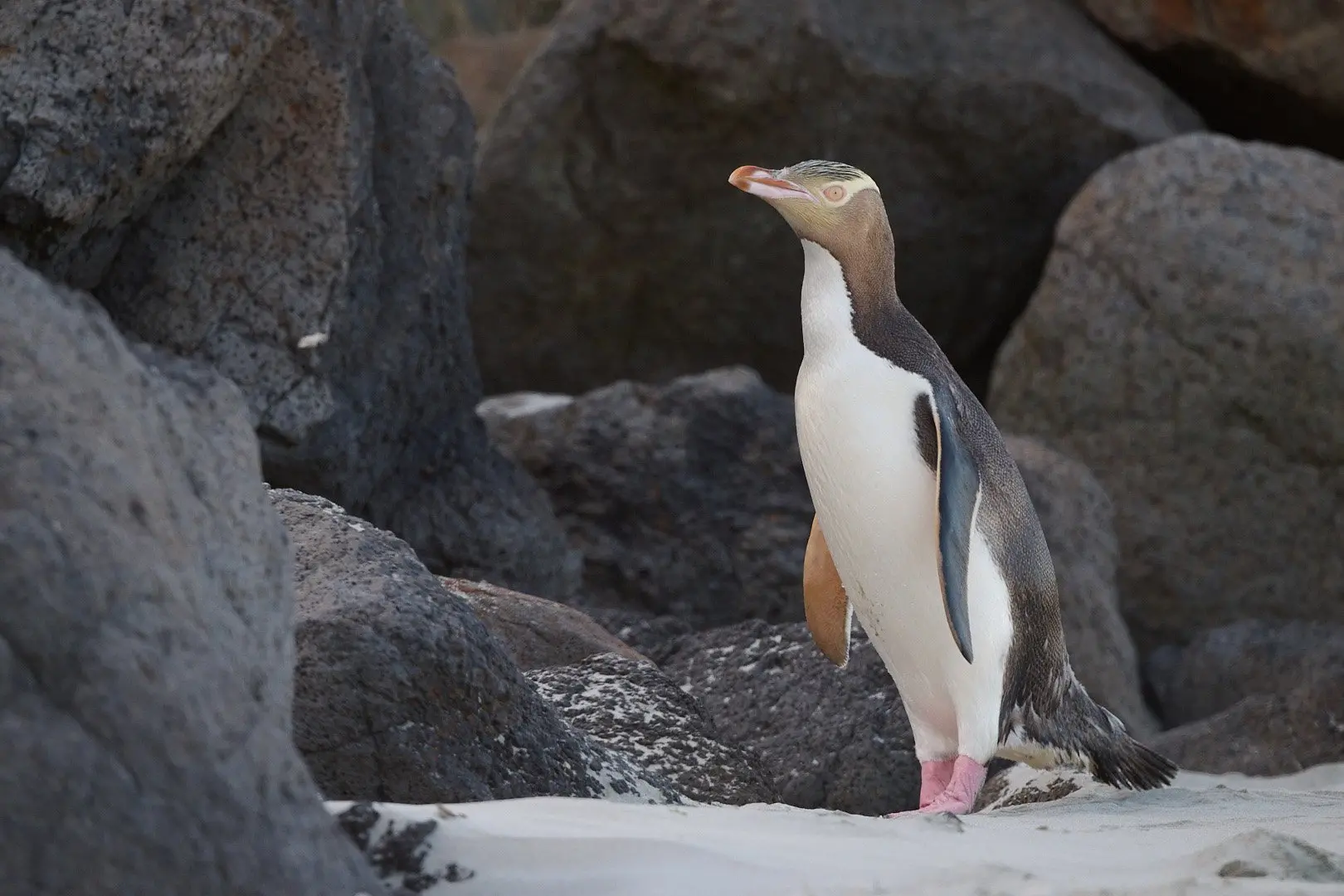
Hoiho, or yellow-eyed penguin, have hit the news again recently.
Population numbers have fallen significantly over the past 20 years and look likely to continue falling if we don’t put our attention to the realities of the significant non-fishing mortalities, right now.
The government is consulting on options to prohibit set netting (a fishing technique) in parts of the hoiho foraging area.
Nothing new in that — a traditional response to a marine protected species issue.
But are they addressing the hoiho problem or merely following societal pressure?
I believe it is the latter as the fact is, even if all fishing was removed, hoiho still faces extinction.
We know this from a scientific risk assessment published in November 2025 that was commissioned by the powers that be to identify and dimension the threats to the bird.
That risk assessment, which was undertaken by independent scientists with considerable experience in that field and peer reviewed by New Zealand’s most knowledgeable hoiho scientists, provides some sobering indications for the future of hoiho.
For a start, based on present circumstances and current conservation strategies, hoiho numbers would be expected to drop from the current level of around 143 breeding pairs to a total of 160 birds by 2040 with the decline effectively continuing until northern hoiho become extinct.
The risk assessment indicated the biggest threats to hoiho are malnutrition, predation, disease, other trauma, other unidentifiable sources and fishing, in that order.
The scientists estimated that, in 2023, some 320 hoiho died.
Of those, 120 died of malnutrition attributed to climate change impacting on marine food chains, 71 from predation, 46 from disease, 35 from trauma from an unidentifiable source, 29 from other sources and 20 from fishing activity — although extensive reviewing of camera footage shows fishing-related deaths actually average 4.5 a year, so the assumed 20 is a significant over-estimate.
The risk assessment indicated that a 50% reduction in the mortality from non-fishing deaths and a 75% reduction in fishing related deaths was necessary to stabilise hoiho numbers at their present levels.
Hoiho conservation groups do a fantastic job uplifting and feeding over 75% of the birds during the season and have reduced terrestrial-based predation and can save some birds if some diseases are detected early.
However, despite those efforts, hoiho die when released back into the wild, in big numbers, from starvation, predation, disease or other trauma.
It is tragic but true that nests in 2024 and 2025 indicate the hoiho population is continuing to decline at the rate projected by the risk assessments and that the dedicated land-based conservation measures already implemented are unable to achieve the reductions in deaths needed for hoiho to survive into the future.
The risk assessment was clear, even if there was no fishing at all, without achieving the 50% reduction in non-fishing mortalities the population would continue to decline.
The above facts say to me that we have to find a better way to help northern hoiho.
With deaths from climate change, starvation, disease, predation and trauma being largely unpreventable, even with high conservation interventions, I cannot see how hoiho can survive in the wild.
While New Zealand has been able to successfully intervene to protect terrestrial species such as kākāpo, black robins, kiwi and blue ducks in the wild by managing threats, hoiho risks lie in the marine domain and are unpreventable. It is time for New Zealand and the parties interested in hoiho to look at these facts because the current approach of closing fishing areas is not going to save these birds.
The science shows that they cannot be expected to have a long-term sustainable future in the wild.
If New Zealand wants northern hoiho to have a future, another option needs to be found. Perhaps that will include having to keep hoiho in captivity?
I don’t have all the answers, but I hope the environmental groups and others will join us to push for an effective, lasting future for hoiho, whatever that will be.
Watching and counting them down to zero cannot be the best option. It is only a tragic one.
• Tom Clark is an independent fisheries management and policy consultant, primarily providing support to the NZ Federation of Commercial Fishermen’s 250 members. Previously he worked for a more than a decade as the policy manager of Seafood New Zealand’s inshore division.