

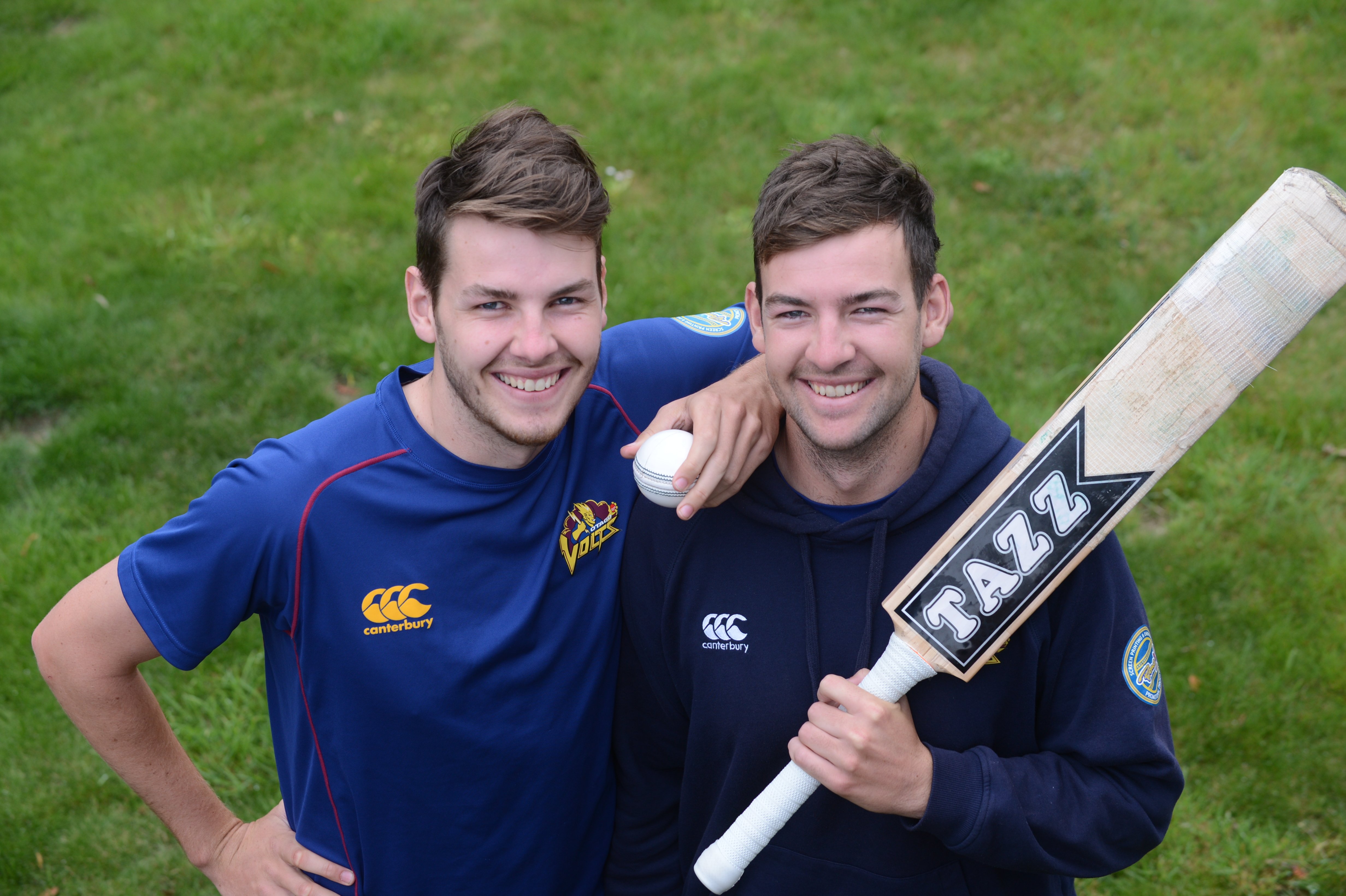

It makes you wonder, though, if the new names would better reflect the origins of the teams if they had been called "Southern Volts" and "Southern Sparks" — a much stronger way of expressing "the full regional footprint".
Northern Districts more or less works for the region which covers the top half of the North Island (apart from Auckland) and Central Districts which covers the bottom half of the North Island (apart from Wellington) and the top of the South Island. Both areas are pretty unwieldy on paper but have established an identity over the last 70 years or so.
How much more convenient is Otago/Southland geography and if, lamentably, the Otago name is to be dropped, then we may as well change the Otago Cricket Association to the Southern Cricket Association.
It would be a much fairer reflection of the contribution Southland cricketers have made to "Otago" cricket.
Lumsden-born Jacob Duffy, recently ranked as the top T20 bowler in the world, is the latest in a long list of Southlanders who made their mark playing for Otago.

For New Zealanders generally, the problem first emerged at the 1908 Olympic Games when an Australasian team combining Australia and New Zealand competed and New Zealand athlete Harry Kerr picked up a bronze medal. In 1912 Kiwi swimmer Malcolm Champion and tennis star Antony Wilding took out medals. How galling it must have been to see their success attributed to an "Australasian" team.
Far more annoying, in a more profound arena than sport, has been the ongoing assumption that Anzac actually means "Australian".
Back in 2009 Professor Philippa Mein Smith, director of a specialist transtasman research centre at University of Canterbury, noted that "Anzac in Australia is commonly AAC without the NZ. We’re often not mentioned in ceremonies and indeed many Australians sadly seem to have no idea we were there at all".
So it must be for Southlanders as one of their own knocks up a century for "Otago".
On the world stage, international politics have played a part in sports teams’ names. When the Lions rugby team first played the United Kingdom of Great Britain and Ireland was one country and they were called the British Lions. That name continued after the Irish Free State was established in 1922 and, like Southlanders suffering under the Otago label, the Irish accepted it, no doubt with muttering, "It’s not right. At all, at all". It wasn’t until the 2001 tour of Australia that the name British and Irish Lions became official. By then, everyone talked about "the Lions" so the naming problem was largely ignored.
In these days of professional sport, loyalty to your home town has been severely diluted. So much so, that rugby league’s New South Wales/Queensland State of Origin matches throw up unusual stories about where players began their sporting careers. State of Origin players represent the state in which they played their first senior rugby league game even though the lure of a big pay cheque has lured them to the other state.
It was so much simpler in the amateur days. If you were born in Otago you usually spent your entire career in blue and gold. But to make a living from cricket a top player had to move around. The legendary Bert Sutcliffe, an Aucklander, was lured south to a coaching job in 1949 and played for Otago but when his Dunedin sports good store failed in 1962 he accepted a sales job in Hamilton and played for Northern Districts. Thus, an income dictated who you played for.
New Zealand Cricket plan a T20 league with six privately-owned franchises. Players will presumably go to the franchise offering the most cash and even if one of those franchises has a southern base the days of a team of proud Southland, Otago, or Southern cricketers may well be stumped.
— Jim Sullivan is a Patearoa writer.


