
PHOTO
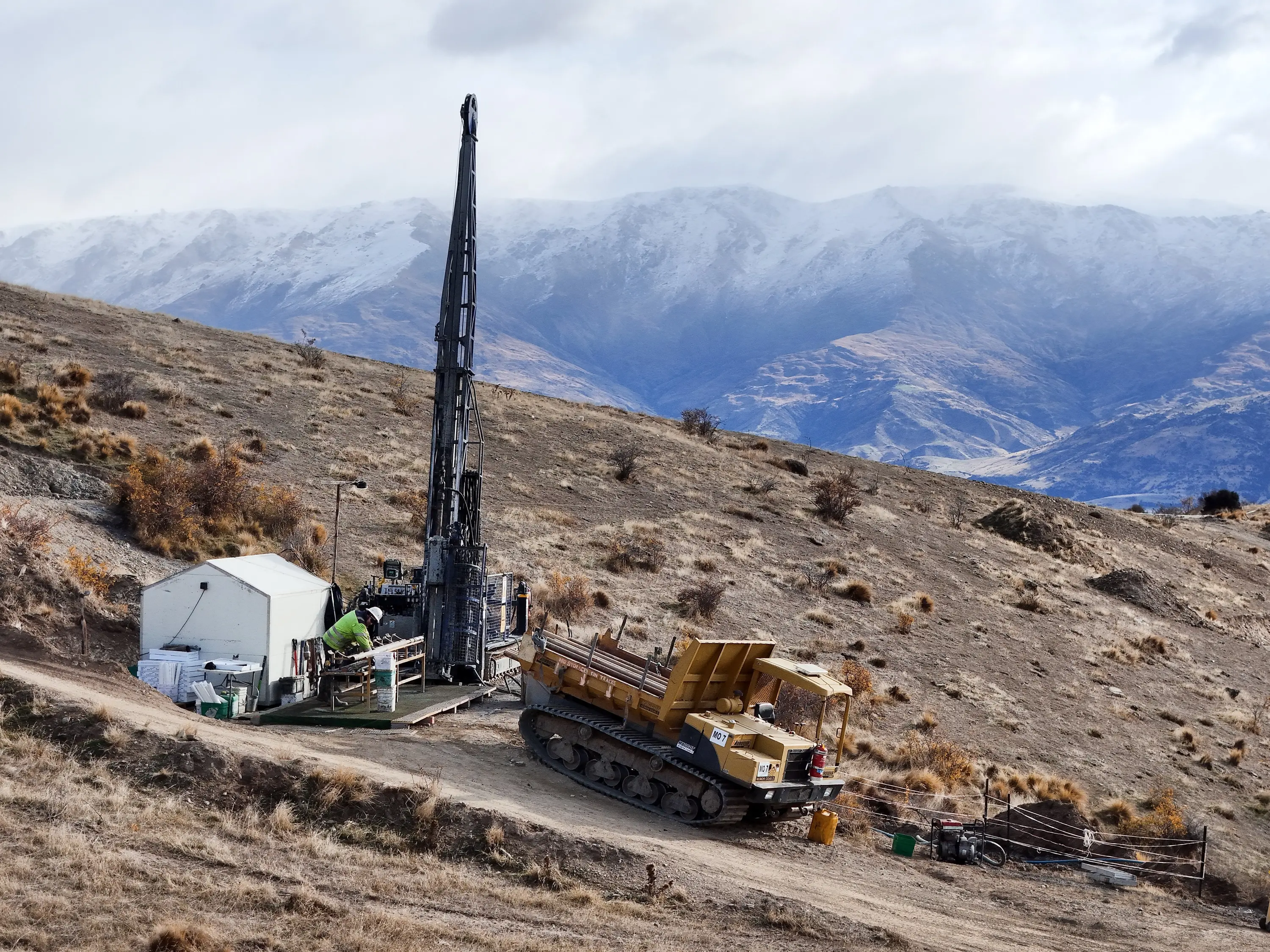
Decision time on the Santana Bendigo gold mine now looms large.
This is of particular interest to us all, but especially we members of the Central Otago and Upper Clutha communities.
We should need no reminding. This is not outback Australia or the Nevada desert we are talking about. This proposed mine site is at the beating heart of our very own outstanding natural landscape.
Why am I writing this? I have lived in Otago my entire life.
I love this place and all that it offers those of us fortunate enough to live here.
And so, what is it that this overseas company, Santana Australia, is now proposing for our slice of paradise?
And what would be the likely impact for our Central Otago and Upper Clutha communities, should it proceed as currently proposed?
The company now holds a licence to prospect for gold across a wide slice of our outstanding natural landscape, ranging from Bendigo in the upper reaches of the Lowburn Valley, and, from there, across the Dunstan Range to Ophir at the far side of the adjacent Manuherekia valley.
Santana now seeks to convert that prospecting licence into a full mining licence, initially in respect of the specifically defined area at Bendigo.
The company has quite clearly declared that its long-term intent is to expand its open cast goldmining operations right across the entire area contained in its existing prospecting licence.
It is not surprising therefore that many might see the granting of a licence for the proposed Bendigo mine as the thin end of the wedge for Santana, enabling it to achieve its stated intent to open up more mines from Bendigo right across to Ophir.
So who then is likely to benefit most if Santana gets the go ahead for its Bendigo mine ?
The company has sought to persuade people of the numerous benefits it claims will accrue for us Kiwis if its mine is permitted to proceed on terms as presently proposed — high-paying jobs, significant tax revenues, generous royalties, funds set aside for environmental rehabilitation once mining ceases.
All this needs to be seen for what it truly is — ‘‘pie in the sky’’ spin perpetrated by interests who seek to exploit our resources primarily for their own personal enrichment.
The reality, however, is that Santana is an overseas company and, if that company is being properly run, its directors will be ensuring that its costs (think tax, royalties, wages, land rehabilitation contributions) are minimised in order to maximise profits, from which dividends will be distributed among the company’s shareholders.
And, if that’s the case, why is it that we, the local communities of Central Otago and the Upper Clutha — to whom this space presently belongs — should assume the burden of the risk that this Santana ‘‘adventure’’ here is quite clearly going to generate?
It is our landscapes that are likely to be irreversibly misshapen, our water and air to be polluted, the infrastructure that we have already bought and paid for to be compromised.
Santana will doubtless be aware that a significant proportion of our local communities are still quite firmly opposed to its Bendigo proposal.
It might help blunt that opposition if the company were to publicly support the establishment of a new Central Otago/Upper Clutha Community Development Fund — and make some sort of a seeding grant to help get such an initiative established.
And for it to publicly undertake that no future mines will be opened up within its prospect zone until previously mined sites are rehabilitated to the satisfaction of the appropriate governing authorities.
- Mike Horder is a former Otago lawyer, now retired and living in the Upper Clutha.