
PHOTO
Dear Sir Ian Taylor,
I love your public commentary and believe you contribute a lot to general debate about issues that impact New Zealand.
However, your recent open letter to Infrastructure Minister Chris Bishop about mining and the fast-track (Opinion ODT 20.1.26) cannot pass without comment.
I’m pleased you believe "mining still has a place in a modern economy" given how reliant the world (and your company) is on mined minerals. It is frustrating when anti-mining groups don’t acknowledge this and try to dismiss mining while benefiting directly from minerals.
So it appears your objection is mainly on the "not in my backyard" (Nimby) lines; that is, not in the vast and largely untouched Otago region, as well as some misunderstanding of the fast-track process. Please allow me to speak to these points.
Virtually all industries impact the environment and throughout most of New Zealand they are in a seismically active regions. Let’s not pretend that mining is the only industry that has an impact on the environment and on freshwater.
In fact, mining is probably the most regulated in that regard and any water that leaves a mine site and enters a waterway must meet appropriate regulations which are monitored by local authorities.
Mining in Otago is of course vastly different from when it began there in the 1860s, because of all the advances in science and technology. Many great scientific and tech minds are engaged in responsible mining in this country.
Mining in our backyard is better than in some other countries because of the stringent laws, rules and regulations that govern it — that is across worker health and safety and employment conditions and environmental safeguards.
Many people want provenance of supply chains to match their values and New Zealand has an edge in that regard.
Among the many safeguards are mine closure plans. You cannot just mine and walk away. Mining companies here spend millions of dollars restoring mine sites close to a pre-mining state and sometimes to become community assets.
Those dollars are spent on conservation, predator and pest control and restoring biodiversity throughout the life of the mine. This is, in fact, one of the many conditions of mining permits.
It is because of the vast array of laws that mining projects belong in the fast-track process.
Fast-track law is not intended to circumnavigate environmental law — that is a myth.
It brings all the applications into a one-stop shop, which streamlines the process . It enables a project to develop faster than under a process that requires knocking on the doors of many government departments for approval of one aspect of a mine, with varying levels of understanding and willingness to see success.
Fast-track projects get a great deal of scrutiny from the decision-makers and the conditions imposed are rigorous.
If you take the time to look at any of the mining applications in the fast-track process you will see thousands of pages of science and environmental management plans.
The risks associated with mining are well known and mitigated around the world. I’d back New Zealand over many other jurisdictions to be responsible about risk management.
As you point out, a major earthquake will likely occur in New Zealand one day. If the Alpine Fault ruptures, there will be a lot to manage and catastrophic loss of life.
People often ask me how I can live in Wellington knowing that the big one will wipe us out. New Zealand is probably not the country to live in if you are worried about natural disasters, but it is important to note that our design standards factor in seismic risk.
You talk about proportionality, so let’s go there. The mine you are objecting to in your broader backyard will be barely visible in a vast and largely untouched landscape.
It will bring jobs to a region and a country that needs jobs.
Mining is the most productive sector of the New Zealand economy. Jobs are high paid — mining wages average $101,100 compared with the New Zealand average of $66,000.
In addition to export revenue, which is on a par with wine exports, mining is critical to many regional economies and in Waitaki it is 26.5% of GDP.
The percentage of Māori employed in mining, at 24.6%, is much higher than the equivalent figure for Māori in the population (17%). The annualised income of Māori in mining is $78,624, compared with $60,537 Māori earn in all other sectors.
There is talk of wanting to retain Otago as a vast untouched area. That is at no risk from a couple of mines.
I lived in the Netherlands, which is roughly the same size as Otago. I was one of about 18 million people. Otago, in the 2025 census, had 253,900 people. Mines in New Zealand are but a pinprick on the total land area.
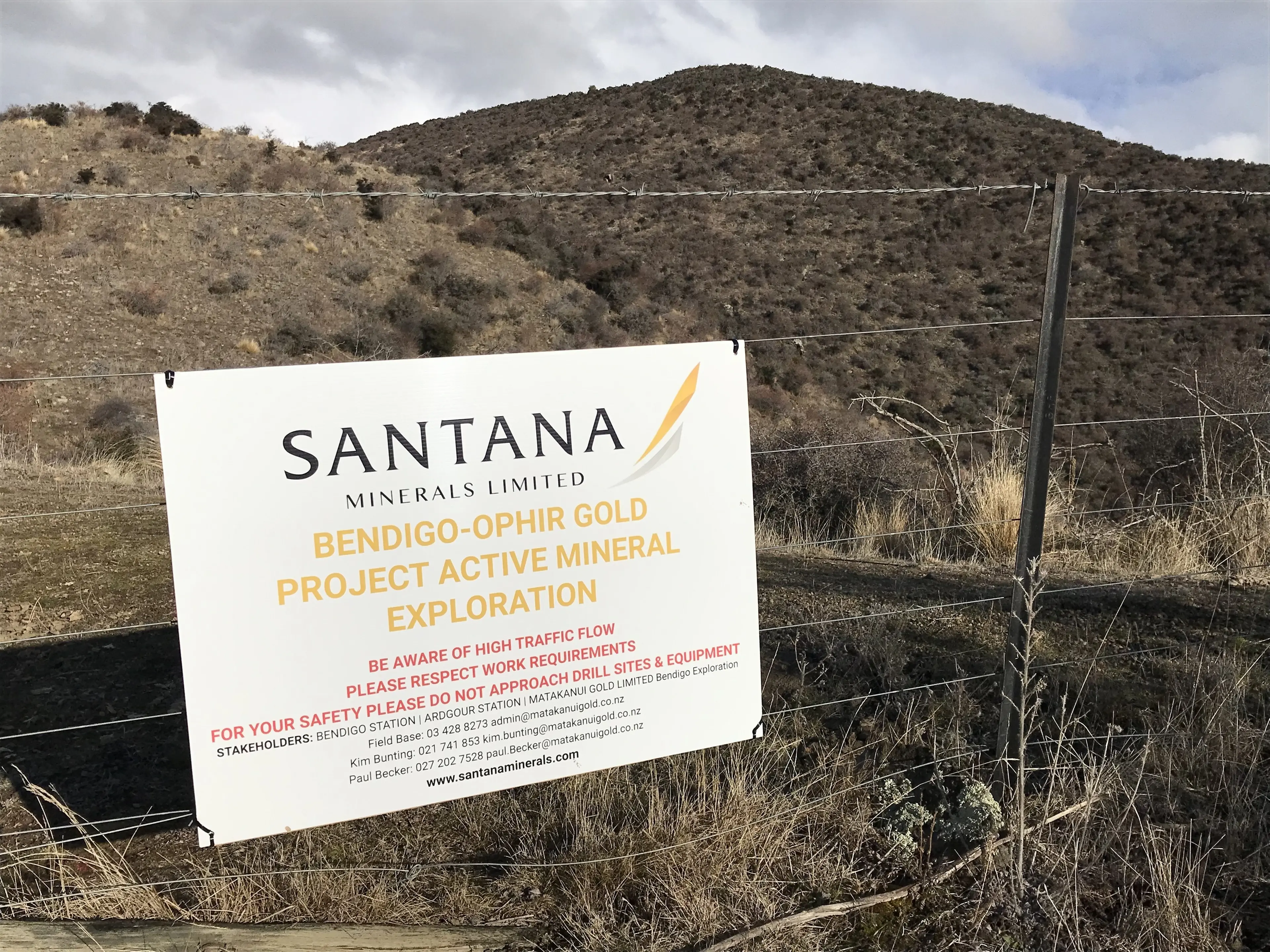
I have spent time in Otago and visited the mines there, including the Santana mine site. You will struggle to notice it from most vantage points.
We are not isolated from the world, much as some of the NIMBYs would like us to be. Geopolitics assault us on the news every morning.
New Zealand has minerals and we should be able to mine them to meet global demand, like everyone else.
I reckon, like many things, we do it better than most.
• Josie Vidal is the chief executive of the New Zealand Minerals Council.