
PHOTO
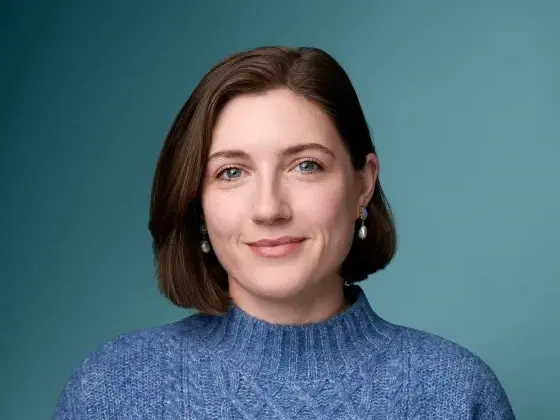
.
Who's afraid of free speech? From Auckland to Sydney to New York City, it feels like everyone, from institutions to corporations to just everyday people, is afraid that if they speak their minds, or allow others to freely do so, there will be a cost to pay.
The scary thing is — they might be right.
In the United States, I’ve watched with growing alarm as the burdens have piled on to Americans’ free speech rights. Over the past year, the federal government has overseen a barrage of attacks on law firms, universities, tech companies, academics, politicians, media outlets, social media users, and many more who have drawn the ire of President Trump and his administration.
The Foundation for Individual Rights and Expression (FIRE), the nonpartisan free speech advocacy group where I work, is helping to combat those threats. We’re defending pollsters’ ability to conduct their work without retaliation, individuals whose online speech has been pressured by the government, and student journalists feeling the brunt of Secretary of State Marco Rubio’s campaign to deport legal immigrants for protected speech.
But threats to free expression weren’t born yesterday, and aren’t native to any one political party or ideology.
Institutions in the US and around the world have long faced pressure to conform to censorship for financial gain or to avoid punishment or controversy. This especially has been the case in higher education, where oppressive governments like China, Qatar, and the United Arab Emirates use the siren songs of money and influence to directly threaten universities to abide by their censorship demands, or sway them to voluntarily self-censor without even needing an order to do so.
The latter is sometimes even more difficult to combat.
What’s happening in the US is not an anomaly. It’s part of a global pattern of receding free speech rights, one that is hitting free and unfree countries alike.
The numbers are alarming: the 2024 Human Freedom Index — the same one that ranked New Zealand second in the world — found that free speech was ‘‘the indicator that experienced the largest decline’’ among those surveyed, with access to that right suffering all over the globe.
And a survey from Vanderbilt University’s Future of Free Speech organisation warned that speech-restrictive developments were vastly outpacing positive ones in democratic nations.
Countries like Russia, Iran, and China unsurprisingly continue to crush critics — in some cases with mass violence — and build out sophisticated technological tools to censor what their people can see and say. But their freer counterparts are getting increasingly comfortable with censorship, too.
Just look at the United Kingdom, which is now investigating thousands annually for what they post online, arresting thousands of peaceful protesters under anti-terror legislation, enforcing privacy-crushing regulations on internet speech, and now even starting to set rules around ‘‘harmful content’’ on Netflix.
Or Australia, where the ‘‘first complaint about alleged hate imagery’’ under new anti-extremism legislation turned a bar into a crime scene because its owner displayed posters depicting Donald Trump, Benjamin Netanyahu, Elon Musk, and others in Nazi uniforms.
And Germany, where rules against insults to elected officials result in absurd outcomes like the police investigation of a Facebook comment calling Chancellor Friedrich Merz ‘‘Pinocchio.’’
As countries from Australia to France to Spain to the US jump on the trend of age verification on the internet, the risk that the global internet will be the greatest victim of the free speech recession rises exponentially.
Citizens of New Zealand should be wary of the global trend democracies are succumbing to right now and recognise the risks and patterns that precipitate a decline in freedoms, and which ones already pose threats.
Recommendations from the education and workforce select committee, for example, for combatting ‘‘harm’’ on the internet should invite caution. Expanding government power to regulate what can be read on the internet, and giving it too much authority to define the slippery concept of ‘‘harm,’’ can offer a solution that ultimately creates even more problems.
While the campaign to ban teens from social media seems at this point like an unstoppable international crusade, that too should be approached with caution.
Too few people understand that age verification is not a duty that will fall on just teenagers, but on everyone, and in the process will create real risks of self-censorship and threats to anonymous speech.
Youth safety matters. But so do speech rights.
Governments can always cite reasons to justify censorship: keeping children safe, fighting misinformation, protecting national security, the list goes on.
But there is never a good enough reason to hand over your right to speak freely or turn civil society, from media outlets to the online public square to the campus quad, into cowardly institutions of compliance and silence.
- Sarah McLaughlin is a senior scholar at the Foundation for Individual Rights and Expression. She is touring New Zealand this month and speaks in Dunedin on Friday.