
PHOTO
The news that we had our first days with zero new cases of Covid-19 will have elicited one of two responses: "Great — let’s free up the restrictions and get things opened up more" or "Great — let’s be cautious and not take any risks".
The first response emphasises the opportunities that could be available with fewer restrictions, whilst the second emphasises the safety to be gained by locking in, and maintaining, our very low levels of infection.
By and large these two opposing motivations — one towards opportunity and the other towards safety — broadly characterise our relationship with risk.
Psychologist Lola Lopes of the University of Iowa has written extensively about risk and our conflicting drives towards exploiting available opportunities whilst simultaneously desiring some assurance of safety. All high-risk technologies and activities, from aviation to mining to infection control, necessarily involve some degree of compromise between these two basic imperatives.
The same conflicts exist within all of us as individuals, with one or the other drive tending to dominate. Those individuals more motivated by opportunity will likely have responded in terms of seeing increased economic possibilities, whilst those more motivated by safety will be keener to emphasise the need for maintaining the health gains. The Government has to strike a delicate balance between these two opposing drives in its approach to continuing Covid-19 risk management.
In doing so it risks antagonising individuals in either the safety-first or opportunity-maximising groups. Which drive is more dominant in us depends on a variety of factors from our psychobiological makeup to the cultural values of the society we inhabit.
It’s important to note that while biology does not determine our destiny, basic psychobiological characteristics such as extraversion and anxiety do influence our experiences of the world and shape our interactions with others.
Psychologists have spent many decades investigating a "sensation-seeking" tendency which is related to numerous behaviours from an interest in skydiving to choice of occupation.
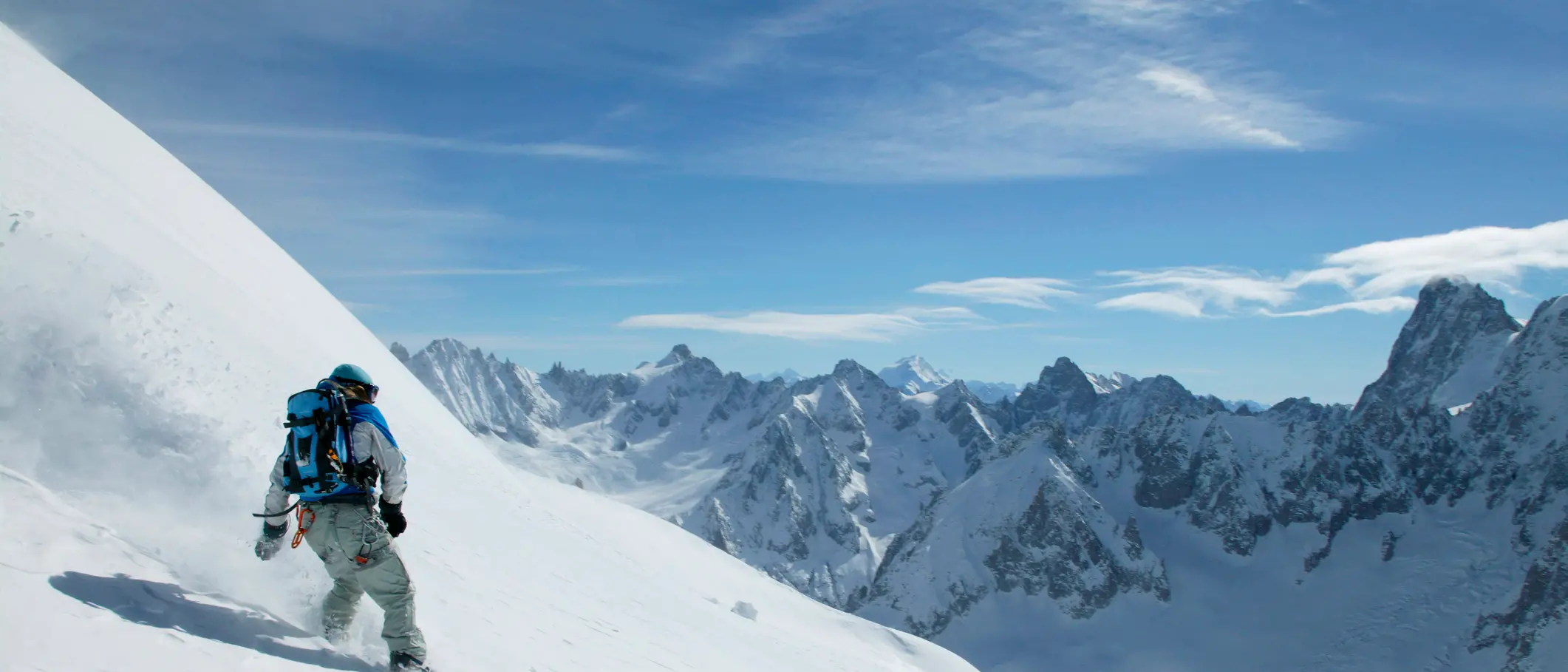
Broadly speaking, individuals high in extraversion and sensation-seeking are more driven towards opportunities for thrill and excitement such as extreme sports, or occupations such as firefighting, whereas those lower in these characteristics and higher in anxiety tend to be more cautious and safety oriented and more drawn to occupations such as public health! These fundamental tendencies influence how we view risks in general and Covid-19 risks in particular.
There is much evidence that how we judge and respond to risks depends to a great extent on the feelings or emotions that they evoke.
Psychologist Paul Slovic, at the University of Oregon, has uncovered the psychological basis of risk perception in a series of studies where people were asked to compare and rate a variety of risks. The main determinant of perceived risk is, surprisingly, not the actual probability of being injured or harmed but the feeling of dread or fear that is associated with the risk. Novel, unknown risks with catastrophic potential (such as a new virus) arouse strong feelings in a way that familiar, long-term risks such as mosquitoes, smoking or car travel simply do not, regardless of the numbers of deaths and injuries they actually inflict.
More recent investigations have looked at how different sub-groups, based on age and ethnicity for example, viewed the same risks. Striking differences emerged between one sub-group consisting of white males and all other groups. By and large a sub-group of white males were likely to perceive very low levels of risk in virtually everything they were asked to rate from guns to nuclear power. Probing further, investigators found the people with the greatest scepticism about risks in general were politically conservative with strongly individualistic and hierarchical views. In other words they distrusted government, strongly valued individual achievement, and were hostile to egalitarianism and equal-rights. The researchers concluded that we view risks in a way that supports our overall preferred worldview.
So what does our response to the continuing risk of Covid-19 reveal about us?
Individually our response is determined by a wide range of factors from our most basic psychological characteristics to the prevailing worldviews of whichever sub-culture we most closely identify with. At the broadest level these come together to express themselves in a drive towards either opportunity or safety, with a corresponding preference for relaxing restrictions to maximise opportunity, or maintaining restrictions to maximise safety.
Governments ultimately make the difficult societal risk decisions about Covid-19.
To date, government responses around the world have largely been consistent with the cultural and world views held by the dominant political party. The most extreme advocates of prioritising opportunity have been the right-wing populist politicians leading the US, UK, and Brazil whilst a much more safety maximising approach has been taken by centre-left leaning governments in many countries including New Zealand.
At this point there is little doubt that the more cautious approach has resulted in far fewer cases and deaths in the short term. As the physicist Neils Bohr is alleged to have said: "Prediction is very difficult, especially where the future is concerned" so the longer-term outcomes are anybody’s guess. Regardless, our Covid-19 responses have already said far more about us, both individually and collectively, than you might have imagined.
- David O’Hare has recently retired as professor of psychology at the University of Otago and currently holds an honorary professorship at the university.