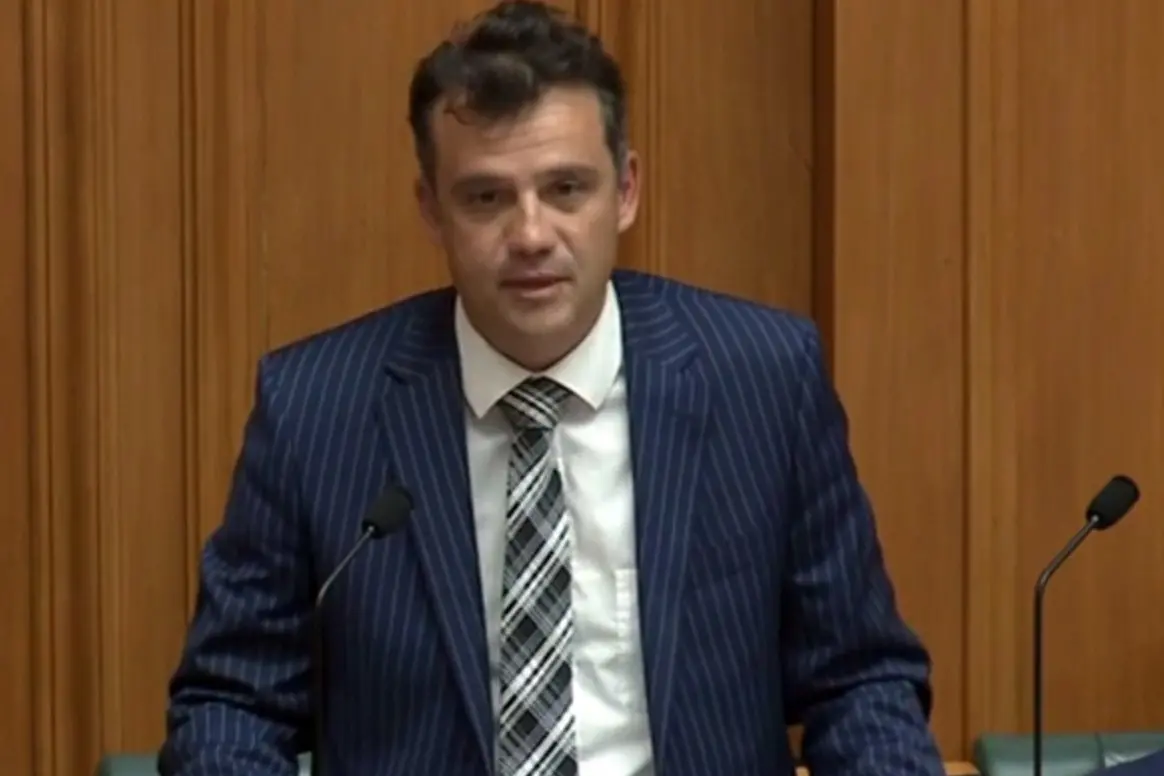
Labour Taieri MP Ingrid Leary. PHOTO: Parliament Back in November 2024, in a sombre debate during which the House demonstrated appropriate unity, MPs assembled for the government’s official apology to those abused while in the care of the State. The apology, the first of several steps planned by the government to respond to a searing, scarring Royal Commission of Inquiry report into this sorry blot on New Zealand’s past, featured suitably regretful speeches and uttered heartfelt apologies from both Prime Minister Christopher Luxon and former prime minister Chris Hipkins, who made suitable speeches and expressions of regret. That afternoon the House passed the first reading of the Responding to Abuse in Care Legislation Amendment Bill, the first of several legislative steps designed to try to offer some degree of compensation to those whose lives were wrecked while under the so-called protection of the State. It felt like people were working together to achieve something important. So how, then, to explain the rancour in the House this week as the Redress System for Abuse in Care Bill passed its hotly contested third reading, amidst bitterness and recrimination? Government and Opposition MPs were chipping each other over the Bill, and tempers threatened to boil over when Assistant Speaker Maureen Pugh called the Bill passed on a voice vote, rejecting calls for a party vote. The House fixed that the following afternoon, holding a party vote after Question Time so that Labour, the Greens, Te Pāti Māori and its former MPs could officially record their objection. So, why all the fuss? Southern Say covered this back in October: the Opposition wants there to be no obstacle to anyone who was abused in state care from receiving compensation, while the government wants people who have subsequently racked up egregious criminal records to have to go through a further step before, possibly, receiving redress. The Opposition’s point is a fair one. Many of these people likely embarked upon criminal lives due to what happened to them as children. But so is the government’s. Many of the taxpayers who are paying the compensation bill, and with few reservations about doing so, would quail at giving money to someone who had lived a far from blameless life. Erica Stanford, the lead co-ordination minister for government’s response to the commission, led off the debate by emphasising that the government was committed to supporting survivors of abuse and neglect in State care. ‘‘While we can never undo the harm and suffering survivors experienced, we are committed to addressing the wrongs of the past and strengthening the care system to prevent, identify, and respond to abuse in the future.’’ She also carefully traversed the controversial section of the legislation, setting out that Bill introduced a presumption against the financial redress for survivors of abuse in State care who were also serious violent or sexual offenders. Those people had to have been sentenced to more than five years imprisonment for a qualifying offence, and their disqualification was not automatic: a soon-to-be-appointed redress officer would consider applications to overturn that presumption. ‘‘I want to be clear that this legislation does not exclude serious offenders from redress. Alongside being able to apply to overturn the presumption, survivors who are also serious offenders can access other forms of redress, such as an apology and wellbeing support.’’ Southland National MP Joseph Mooney. PHOTO: PARLIAMENT Stanford was careful not to play politics on this point but soon after Southland National MP Joseph Mooney — who had just sat through the Bill being scolded by Willow-Jean Prime, Lawrence Xu-Nan and Julie Anne Genter — was in no mood to hold back. ‘‘I have seen and heard many disgraceful things in my years in this House, and, frankly, the behaviour of the Opposition on this Bill is, I think, the most distasteful of them all,’’ he thundered. ‘‘Ninety-eight percent of survivors will have a direct, simplified path to redress as a part of this Bill — 98%. Two percent — 2% — will need to go through a more robust vetting process. Why? It is because they have been convicted of a serious violent or sexual offence ... That indicates they have committed a serious offence against another human being and that there’s another human being in our country who is deeply victimised by their behaviour.’’ Labour Taieri MP Ingrid Leary returned serve with equal vigour, claiming that the Bill should be re-titled the ‘‘Sorry But Not Sorry Bill’’. ‘‘What we have heard tonight is about a system that talks about not bringing this system into disrepute. My question to the government members is: in whose estimation?,’’ she said ‘‘At that point in time, nobody from this House said to them, ‘‘But don’t do this if you’ve committed a serious offence because you will be rejected and marginalised further at the end of the process.’’ Nobody said that to them. If we were going to do that, we should at least have done that at the beginning of this process. ‘‘But instead, we encouraged them forward. We told them they’d be safe. They took witness stands and they shared the most personal stories, the things they had never revealed to anybody. They shared those with the royal commission thinking they would be protected and they would be seen in their totality.’’ But now, Leary argued, the government was wanting to protect the ‘‘so-called’’ reputation of the redress system, rather than enhance the reputation of the royal commission. ‘‘That is what is such a shame about this Bill and this whole process. We are further traumatising the most marginalised people ... My fundamental question is: whose reputation, right now, are we protecting?’’ It is not uncommon for the government and opposition to be far apart on an issue, but this one feels like a profound philosophical divide. Hopefully those at the heart of this debate are not lost in the heat and fury of it all. mike.houlahan@odt.co.nz