
PHOTO
Down here in Dunedin, at the bottom of the world, it can often feel that the actions we take in solidarity with global movements do not matter as much as those taken elsewhere.
For whatever reasons — geographic, cultural, economic — our institutions feel less enmeshed in the world at large, and so the results of whatever efforts we expend seem distant from the changes we want to effect.
International social movements are always stitched together from a patchwork of local efforts, so there are good reasons to push against those feelings and to keep up the good fight. And, right in our own back yard, is a case in point.
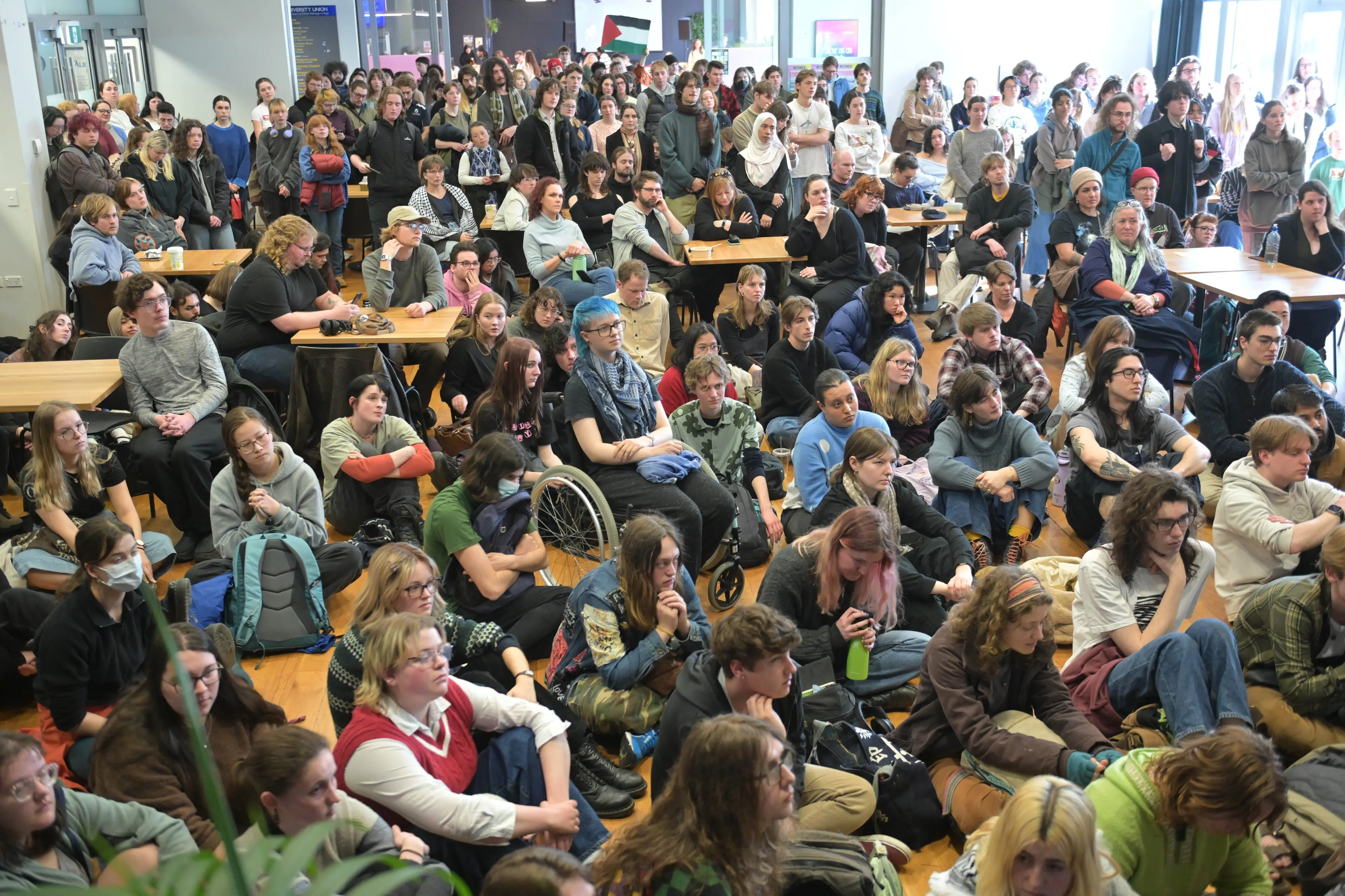
Recently, the students at the University of Otago won a resounding victory for international justice.
Over 99.5% of all those present at the recent student general meeting voted to endorse the Otago University Student Association (OUSA) adopting the policies of the Boycott, Divest and Sanction (BDS) movement, thereby compelling OUSA to take a stand against Israel's brutal oppression of the Palestinians.
Moving forward, OUSA will no longer procure goods and services or receive sponsorship from a targeted list of companies identified as complicit in Israel’s apartheid, ethnic cleansing and now genocide of the Palestinian people.
University campuses, like businesses, churches, or trade unions, are sites where resources are collectively pooled for greater impact, and so are subject to stricter controls, procurement contracts, and to the power of the ever-present financial balance sheet.
When those pooled resources are used to purchase hardware and services from businesses that are intertwined with the anti-human surveillance, carceral systems and violent technology that upholds an illegal occupation, apartheid, ethnic cleansing and genocide, then the logic of the balance sheet itself becomes anti-human and complicit in those crimes.
But when "business as usual" as dictated by financial figures is the path of least resistance, then our institutions will not change of their own accord.
Therefore change advocates need to either disrupt "business as usual" and create a new path of least resistance or, as was the case at the SGM, leverage the existing democratic avenues of mass politics.
It is important to describe, concretely, the work that the students have done to achieve this result. In brief: they learned about the university’s political processes, mobilised around these procedures and engaged — in good faith — with OUSA representatives, taking directions and advice on board.
They complied with regulations along the way, first getting a motion on the students’ annual referendum, and second — when the executive tried to renege on the students’ successful campaign on behalf of that motion — observing the procedures necessary to call a student general meeting (SGM).
Through these efforts, the students, with the help of Jett Groshinski (OUSA’s political representative) ensured that OUSA will adopt BDS, in accordance with the will of the student body.
Whether or not we want to call this “revolutionary patience”, for anyone who has ever dealt with the stubbornness of institutions designed to maintain a status quo — however egregious that status quo might be — the students’ resilience and dedication should be applauded.
More than our applause though, we members of the local community should be taking notes, learning lessons, and defending students against retaliation.
OUSA recently decided to ask Jett Groshinski to resign as OUSA’s political representative as retaliation for his work advocating on behalf of the students' basic democratic rights.
We all — faculty, students and concerned members of the local community — need to stand behind Jett at this crucial moment.
It is difficult to demonstrate to the average student, worker or citizen that they can exercise real power in collective action, because the reality is that the ability to do so requires more than having the best argument, or the most moral position.
We need to ensure this victory remains a victory by protecting those who fought for it.
If we are to begin to treat the political paralysis which plagues so much of our collective life these days, we must first refuse to conflate politics with the periodic rituals of selecting the people who occupy positions of power, whether that be in a student union, a city council, or even central government.
Rather it is to offer everyday people a course of action that would have a material impact, and to galvanise them through deeply held humanitarian and political values.
By engaging in the kinds of collective, grassroots activity exemplified by University of Otago’s student body, ordinary people can generate real material impacts, in Dunedin and beyond.
■ Otago Staff for Palestine is a group of hundreds of University of Otago staff. Too many authors contributed to this piece for them to be named individually.