
PHOTO
The recent Munich Security Conference (February 13-15) was an important gathering of government officials for discussion of international security issues. New Zealand was represented by Minister of Defence Judith Collins.
Two shocks were momentous for the conference. The first shock was in February 2022 when Russia attacked Ukraine. The second one was in January this year when United States President Donald Trump denigrated Nato at the World Economic Forum in Davos, Switzerland.
Those shocks echoed in the Munich Security Report 2026 released prior to the start of the conference. Titled ‘‘Under Destruction’’, the report warned: ‘‘The world has entered a period of wrecking-ball politics.’’
Russia President Vladimir Putin has been the most violent of the ‘‘demolition men’’ rupturing the rules-based international order. The report focused mainly on Trump as the most powerful demolition man.
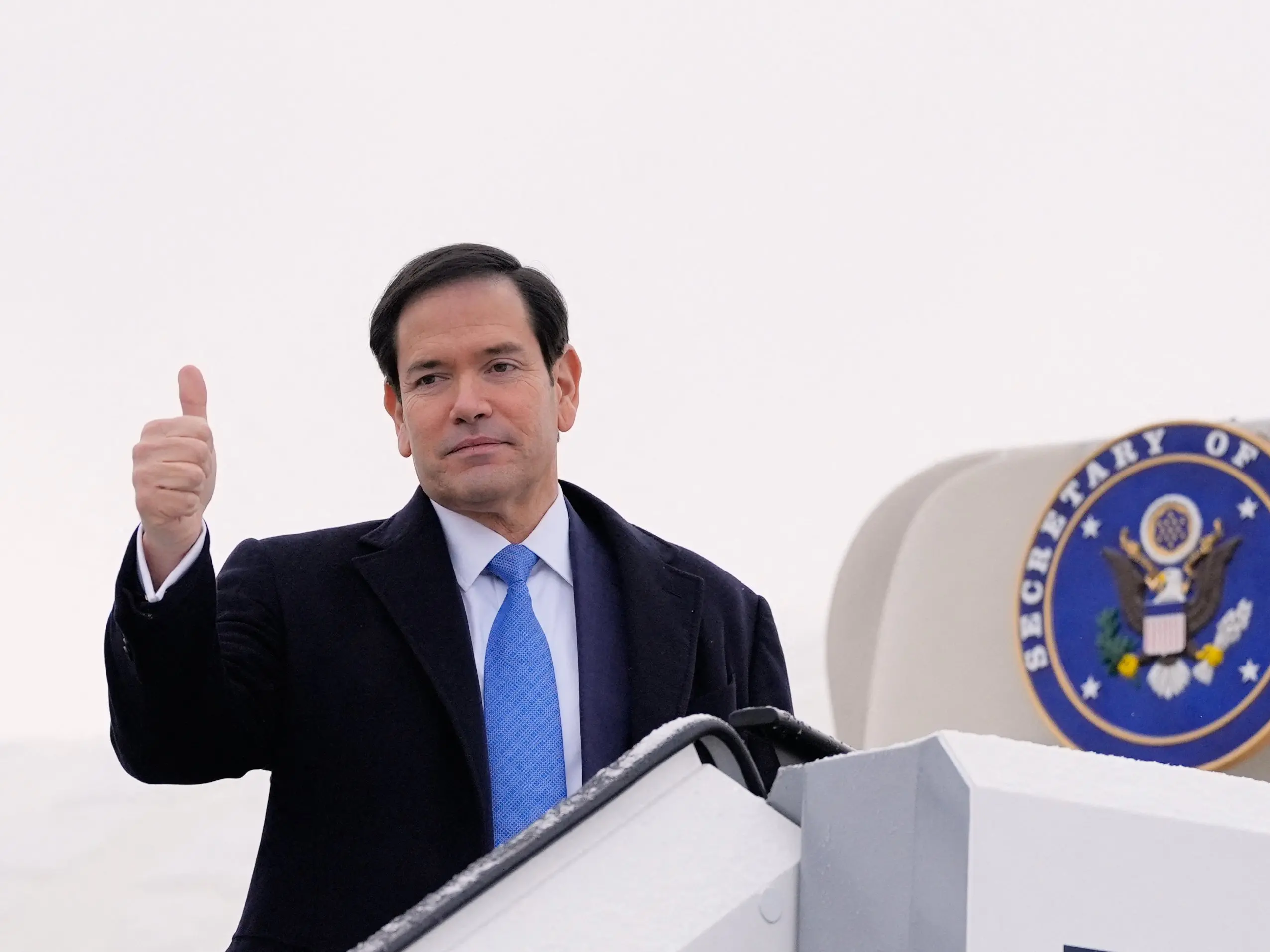
Germany Chancellor Friedrich Merz was the featured speaker on the first day of the conference; US Secretary of State Marco Rubio on the second day.
Merz spoke frankly about disagreements between the United States and its Nato allies. He noted that the Trump administration does not share values that are important to the Europeans such as no tolerance for hate speech, transition from fossil-based energy to alternative sources, and free trade.
A key point in Merz’s speech was that the US and Europe must ‘‘forge a new transatlantic partnership.’’ They have vital shared security interests. The Europeans need to build ‘‘a self-sustained strong pillar within the alliance’’.
Furthermore, Merz emphasised, transatlantic mutual trust must be restored.
Anxiety in the audience was palpable when Rubio walked to the lectern for his speech. Mainstream Europeans had been offended by US Vice-president JD Vance’s speech last year in Munich. They had been offended again by Trump’s speech this year in Davos.
The needle on the anxiety meter moved higher as Rubio criticised the Europeans for policies that appeased ‘‘climate cult’’ opposition to fossil-based energy, outsourced sovereignty to international institutions, and allowed mass migration into Europe.
The needle moved downward as Rubio talked about historic affinity between the US and Europe. The US is ‘‘a child of Europe’’; they ‘‘belong together.’’ And the audience applauded again when Rubio declared the Europeans are ‘‘our cherished allies and our oldest friends.’’
As was clear in Merz’s speech, mainstream European leaders agreed with the point in Rubio’s speech that the US should have allies capable of defending themselves. They were relieved Rubio did not include Trump’s demand for Greenland in his speech and disappointed he did not include Russia’s aggression against Ukraine.
There is disagreement in Nato on assessment of Putin’s foreign policy. Trump has consistently interpreted Putin as wanting peace with Ukraine, trustworthy for respecting a negotiated peace settlement, and not a threat to Europe.
Mainstream European leaders reject that interpretation. They believe Putin is not trustworthy and fear his ambition for Russian territorial expansion extends beyond Ukraine into Europe.
On the third day of the conference, Collins participated on a panel for discussion of the topic ‘‘Double Trouble? Europe, the Indo-Pacific, and Connected Security Challenges.’’
She said New Zealand was strengthening its capability for defence and pursuing co-operation for security with like-minded countries. She worried Europeans seemed to lack awareness that security for Europe was connected with security in the Indo-Pacific region. Collins also noted that security involves defence from destructive weather events and climate change.
Trump’s disdain toward Nato and the EU has led some analysts to suggest Nato is in an existential crisis. In a recent column in the Otago Daily Times (19.2.26), Gwynne Dyer called this year’s Munich conference ‘‘a wake’’ for Nato. ‘‘Nato is dead: long live Nato 2.0.’’
He predicts Nato 1.0 with the US will turn into Nato 2.0 without. This is a startling foretelling.
Dyer used the Dead Parrot sketch from Monty Python as an amusing metaphor for the death of Nato 1.0.
Speakers at the Munich conference talked about Nato’s deficiencies, but I didn’t see a wake. Nato and EU officials attending (e.g. Emmanuel Macron, Keir Starmer, Merz, Mark Rutte, Ursula von der Leyen) talked about overcoming reliance on the US for security in Europe, but they did not envision Nato without the US.
Although Rubio’s speech contained criticism of the Europeans, nothing in his speech indicated the US wants out of the alliance.
American membership in Nato has strong support in Congress and the public. Taking the US out of Nato would be a bridge too far for Trump.
An amusing counter to the dead parrot metaphor for Nato is the misquoted Mark Twain retort to hearing rumours he was dying or dead: ‘‘Reports of my death are greatly exaggerated.’’
- Richard Byrne is a retired professor of government and history at the University of Maryland Global Campus, who is now resident in Dunedin.