

Today, I learned that it doesn’t. The excitement is overwhelming.
That you learn something new every day is a cliche. It is also untrue.
We say "you learn something new every day" only when we are surprised by having learned something new.
And we are surprised because, generally speaking, we don’t learn something new every day. Nor do we want to.
We could if we wished. We could travel to new places, meet new people and shake up our habits.
But it would be exhausting. Moreover, learning new stuff might endanger the opinions that we hold dear.
We would have to adjust our thinking, broaden our minds, think for ourselves even, and who wants to do that?
How much simpler to stick with what we know. Routine is comforting. Ignorance is bliss.
And it is simplest to think and speak in cliches. Cliches such as "ignorance is bliss".
For anyone trying to use the language well, cliches are to be shunned. But they are forever on the sidelines of your mind, beckoning, gesturing, begging for inclusion.
"Look at me," they cry, jumping up and down, "I am just the phrase you need to express your thought, all dressed up and ready to go. Use me, use me. You’ll not find better."
Sometimes of a morning I’ll read the few hundred words I wrote the day before and find that, despite my vigilance, cliches have snuck in under the radar. Cliches such as "under the radar".
Orwell advised a writer never to use a phrase he was used to seeing in print. Precisely. But it takes work.
Martin Amis, the novelist, published a collection of his essays under the title The War Against Cliche. But Amis is dead now, rest his bones, and those old cliches, they just keep rolling along.
Christmas is thick with them. Merry Christmas and a happy new year, we find printed on the inside of the Christmas card, thereby saving us the trouble of remembering the formula.
And it is a formula; Christmas is always merry, the new year always happy and never the other way round.
"Tis the season to be jolly", as if jollity can be switched on and off like a hose. Though if you asked the police constable on duty over the holiday, "tis the season for domestic strife".
But the cliche, like all delusions, is preferable.
The phrase "peace on Earth and goodwill to all men", which comes so readily from our mouths at this time of the year, derives from that bastion of peace and goodwill, the Middle East.
And yesterday afternoon I stepped gratefully out of the summer heat into the air-conditioned supermarket only to be met with Welcome to a Winter Wonderland.
All of which indicates the nature of cliches. Through overuse they separate words from their meaning and ideas from reality.
In the late 18th century the word cliche in French came to mean a stereotype, but not a stereotype in the sense of a lazy psychology. It was a stereotype in the sense of printing.
In traditional printing you had to typeset a book before printing it. But having done so, and run off your 1000 copies, you didn’t want to leave 300 pages of expensive metal type lying idle in a cupboard just in case you wanted to reprint the book in the future.
So you made a cast of the type, using plaster of Paris, and then you poured molten metal into the cast to form a replica of the type. This replica could be used to reprint on demand. Its name was a stereotype.
It is easy to see how this became a metaphor for our tendency to put people into repeatable categories. And it is similarly easy to see how the word cliche came to mean what it means today.
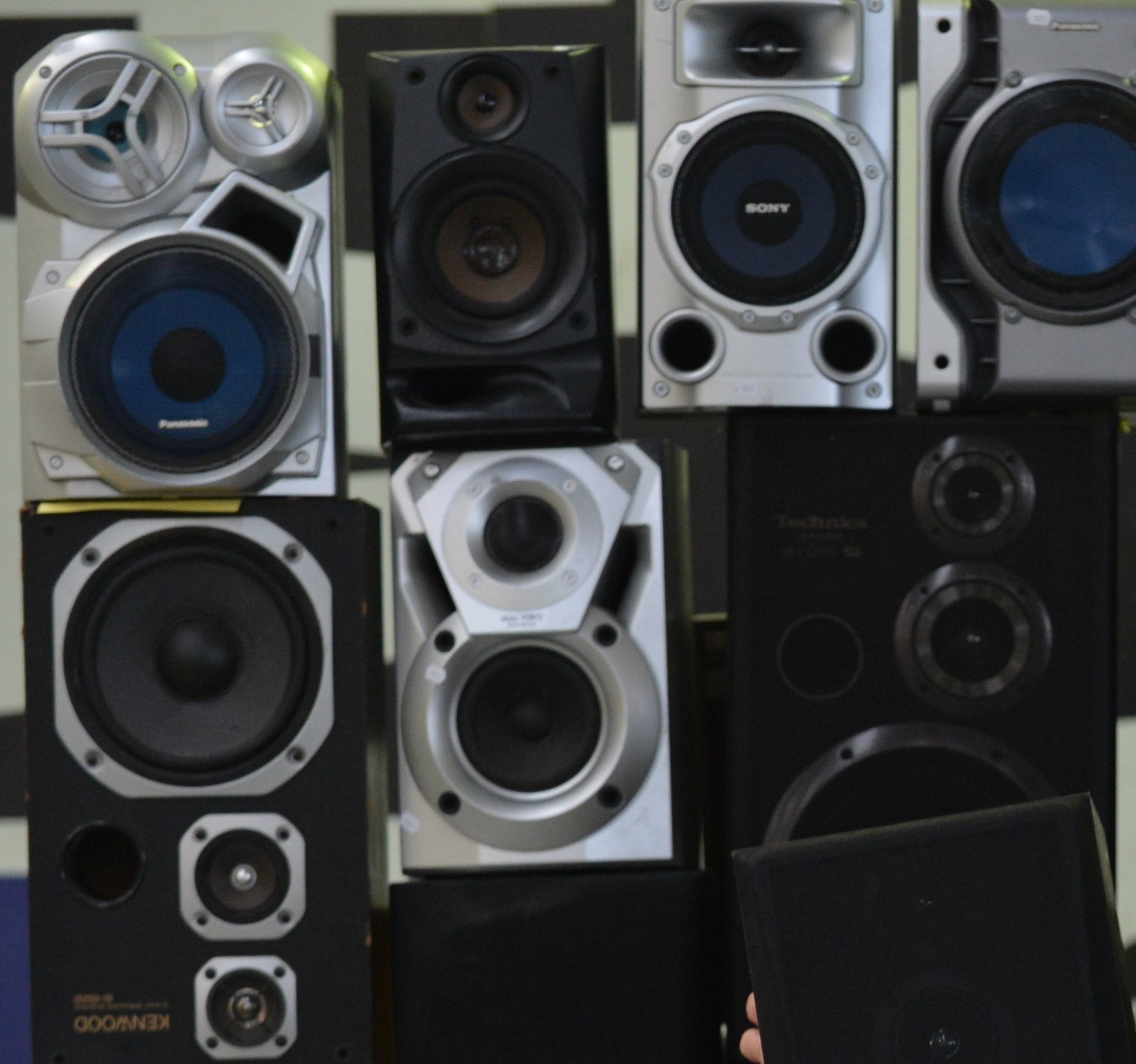
What it isn’t easy to see is how this relates to the musical reproduction device that my generation knows as a stereo.
Stereo is short for stereophonic. Phonos in Greek means sound, and stereos means, not two, as I had always supposed, but solid, hard, three-dimensional.
The inventors of stereophonic sound sought to create a more solid and immersive form of musical reproduction. It had nothing to do with the number of speakers.
And that’s what I learned today.
■ Joe Bennett is a Lyttelton writer.


