

Many have the owner’s name or bookplate inside the front cover and I picked up a couple for that reason.

My intact copy records the stories of the old English country inns of the type at which the characters of Pickwick Papers alighted from their coach and bustled inside to sample the drinks and food on offer.
I suspect that none of Aldin’s inns have survived, so reading about them and gazing at the pictures brought much pleasure.
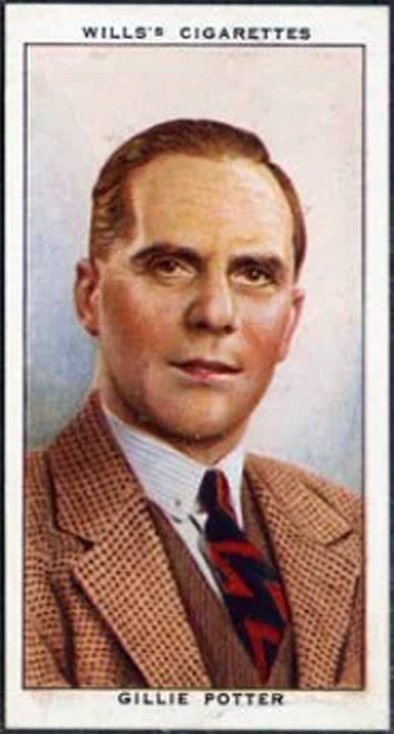
Even more pleasurable was signature on the flyleaf of the book’s original owner. ‘‘Gillian Potter’’ dashed off with a flourish. It rang a bell, reminding me of the name of an English comedian of last century.
Gillie Potter was known in New Zealand in the 1930s through occasional broadcasts of his humorous monologues which were also available on gramophone recordings but in England he reached star billing. His opening lines, ‘‘Good evening, England. This is Gillie Potter speaking to you in English,’’ became a catchphrase and his stories about his brother ‘‘who was educated at Borstal’’ were popular.
Humour of simpler times and often described as having echoes of Punch and Beachcomber. His tales of the mythical English village of Hogsnorton were keenly followed.
Interestingly, when Dave Luther, an English immigrant to New Zealand, was dreaming up a name for his band and chose Hogsnort Rupert, it was memories of Gillie Potter’s village which produced the first part of the name.
Not only did Old Inns include Potter’s signature it boasted a handsome bookplate with a sketch of Potter and the words ‘‘Ex Libris Hogsnorton.’’
One of Potter’s enthusiasms was described as ‘‘Englishness’’ — and what could be more English than ancient inns? It’s hard to know which to enjoy most: the inns’ stories or the Potteresque provenance of the book itself.
My Every Boy’s Annual is a prize presented to William Tank in 1886 for being the most popular boy at Waimataitai School in Timaru. In the school concert he acted in a sketch called ‘‘Choosing a Schoolmaster’’.
I doubt if William ploughed his way through much of the pretty turgid stuff in the annual but now, as the book’s custodian, I wanted to know more about him.
He was born in 1871 to Robert and Elizabeth Tank, his father being a railway surfaceman based at Washdyke. William was caught up in the cycling craze of the 1890s and joined the Tourist Cycling Club.
As a wheelman he travelled widely and courted Eliza Cooper, the daughter of John Cooper, a Temuka plumber and painter. They married in 1901 and had two sons, Leslie and Wilfred.
In 1904, perhaps on a visit to his in-laws, William fell off his bicycle while heading to Temuka and was taken to hospital with a broken arm. He was a member of the committee of his old school and became chairman in 1913.
He was employed in the grocery store of Robert Bowie, a prominent businessman and fellow school committee member.
William rose through the grocery ranks until he was appointed manager of the Timaru branch of Dunedin-based Star Stores. William died at the age of 80 in 1951 and Eliza died in 1959 aged 83.
No doubt their descendants know much more about the couple, but we know that William was highly respected in school, church and business circles.
How his 1886 prize book ended up in Central Otago is a mystery, but if the family would like to add it to their memorabilia I’m happy to pass it on.
On the other hand, Gillie Potter’s Old Inns, having found an unlikely home in Central Otago, is such a handsome book about a fascinating topic it will be in the bookcase when my family need to do the great clear-out.
• Jim Sullivan is a Patearoa writer.


