
PHOTO
New Zealand now hovers on a precipice after ‘Local Water Done ... ’ has passed its September 3 deadline and, as predicted, failed to deliver.
This is a serious failure that will expose ratepayers to unprecedented financial burdens. It is essential that our communities get their heads around this threat because the time to avert the looming "cluster stuff" is rapidly running out.
The cloud of confusion that has hung over this process for almost a decade now has served our nation poorly and last week’s announcement from the Minister for Local Government Simon Watts claiming success and stating "as a result of these reforms Water Service Entities will be financially sustainable" only adds to the confusion.
There is a big difference between a financially sustainable Water Plan and a financially sustainable community. A financially sustainable Water Plan forces councils to increase debt, like Dunedin’s recent announcement that the council will have to increase group debt to $2.3 billion in 10 years.
Or water rates, like Waitaki’s prediction of a 90% increase in the next two years.
Councils throughout our nation may have been forced to produce sustainable plans, but I will leave it up to the readers to decide if the figures are sustainable for communities.
It is widely acknowledged that the Three Waters council functions under are no longer fit for purpose: they were designed in the era of the night cart.
At present, New Zealand has 67 councils, with 67 mayors, 67 CEOs, 67 groupings of councillors and 67 workforces. This unwieldy duplication places us all in a weakened bargaining position, clamouring over each other to get work done, control and negotiating power sits with the contractors, and communities pay.
Add to this, the legal imperative around councils meeting consent requirements; if we delay or try to bluff we end up in court, ultimately getting our butts kicked and returning to the negotiating table in an even more enfeebled position.
This is a pathetic and antiquated structure desperately needing to be replaced with as few groupings as possible, maybe four or five for a wee country like New Zealand.
The September 3 deadline for councils to present their water plans to government produced a very dangerous outcome with the number of proposed entities now slightly down to just over 40.
Fundamentally, nothing has changed. We are now stuck in no-man’s land. Not only have we failed to get the efficiencies required, but we have also taken a long time to achieve little, and time will work against ratepayers because every year that passes will see most councils forced to achieve consent requirements, which are the triggers to projects and costings.
They will now have to take on these projects without the protection that collective strength would provide.
We know that the public are over this topic, and that there is a plethora of agendas and misinformation that have dogged this process for almost a decade.
If the public could strip this issue down to its genesis, they must now see why we have consistently maintained the same message. If we don’t sort this out immediately, people are going to be bankrupted, they will lose their homes and suffer financial hardship.
Every step in this Wellington-induced nightmare has failed to attain the required results, the political backtracking that would be required to remedy this crisis is not materialising, and confusion remains the greatest barrier to the public formulating an understanding cohesive enough to force change.
Dabbling was never going to fix this. The problem is far too big, with hundreds of millions of dollars in Three Waters projects over the next 10 years.
There is the slightest possibility that this cluster could be avoided, but it would require the government to "grow one" and knock a few councils back into reality; forcing them to seek the collective strength of their neighbours (groups like the Southern Water CCO).
But will they? Maybe one or two will get a reality check but any more is mandating, something that many in the Beehive today must be pondering on, because that was one of the trigger words they used to motivate the manipulated.
Like this process, I too am running out of time. With around five weeks left before I waddle into retirement, I’ve never lost a battle as bad as this one.
Looking back on the last 10 years, I can’t believe that collectively we have been too shallow to do the right thing by our fellow Kiwi. With so many councils wanting to be the winner, or refusing to get out of their bunker, there is blame on all sides.
But for now we wait, transfixed in this unnecessary quagmire. The government instigated this process; they set the rules and ignored the warnings. Councils don’t make the laws and have taken that much of a beating in recent years that we now lack the cohesion and trust required to wrestle back any semblance of control.
This is the government’s gig. It always has been, and only they can fix things.
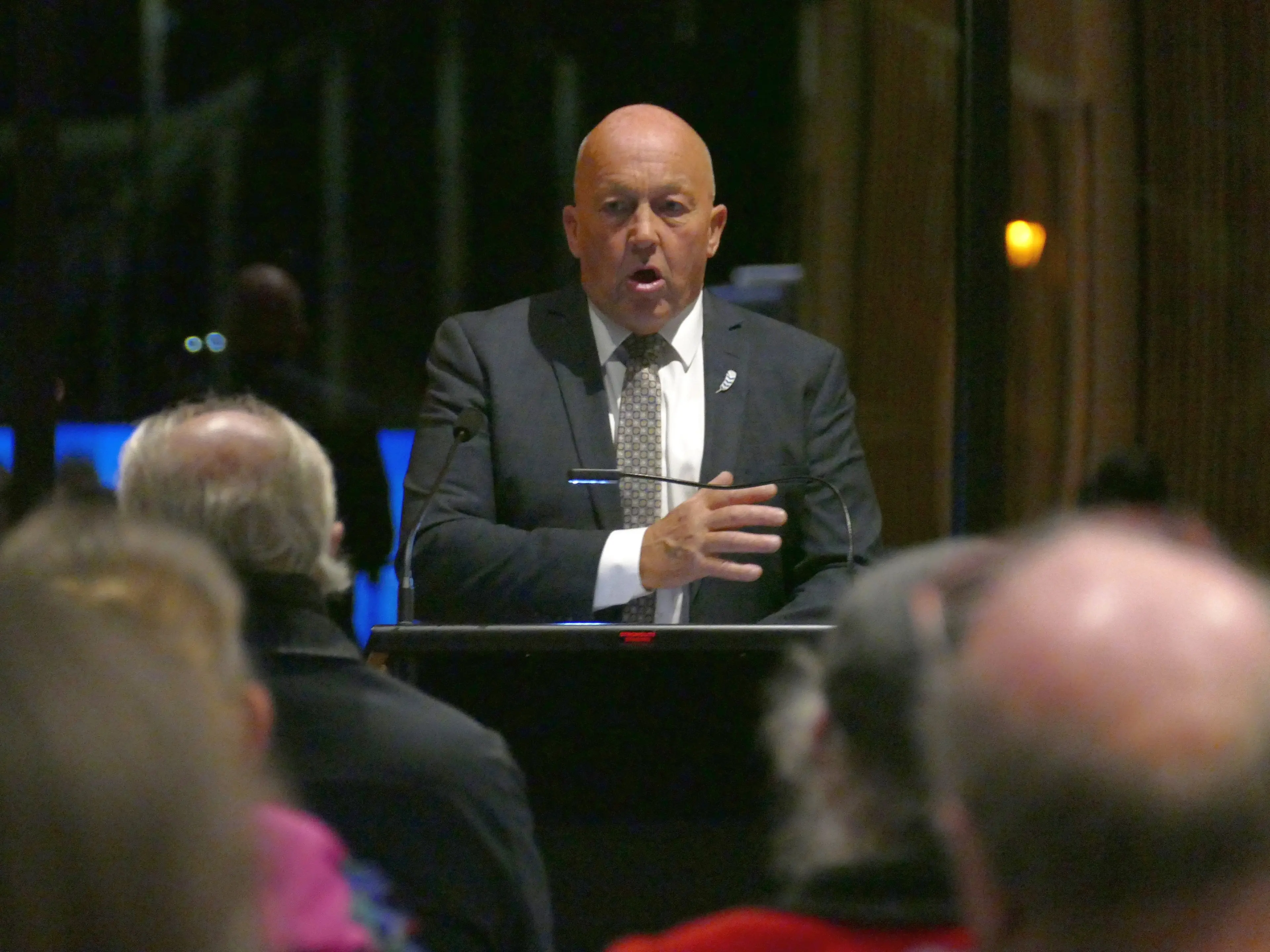
■ Bryan Cadogan is the retiring mayor of the Clutha District.