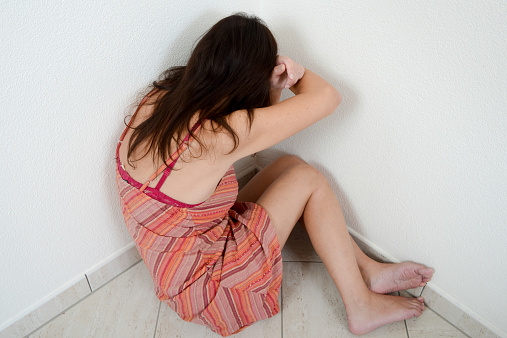
Every four to five weeks a child is killed by an adult in New Zealand.
That's three times more than in Australia. It is usually men that do the killing.
Identifying the type of men likely to harm children before the fact is extremely difficult, but that is not the case with men who harm women. Judging by recurrent court reports published in the Otago Daily Times, New Zealand men have a tendency for terrorising women. Day after day, year after year, it goes on and on.
Yet violence against women cannot be explained as a Kiwi male characteristic. Most men believe in the protection of women.
This means to begin taking this matter seriously, we need to identify the men who terrorise women as a specific group and deal with them. They are usually men in a relationship with their victims and are not difficult to identify.
The words incorrigible, inveterate, incurable, unrepentant and unashamed exist to remind us that no matter what education and laws are in place, some men are oblivious. They are unwilling to change.
For them, punishment is no deterrent and rehabilitation is futile.
This does not just apply to men who terrorise women of course, but they are a significant sub-category of lifestyle criminals.
The way the law currently deals with these men is to trespass them, sentence them to community-based penalties or, depending on the severity of the violence in the eyes of the judge and how often the offender has terrorised women, put him in prison for a while.
Fortunately, men so absorbed in their own perverse wants and who have no concern for anyone else's needs are readily identifiable. Obviously, if we are going to be serious about protecting women from such men, we need to take this fact into account when sentencing.
How can you be certain that, given the opportunity, someone is going to do what they have always done?
Racegoers rely on past performance to place bets. A horse with a record of losing will not attract backers except from those who are careless or have a sentimental attachment. It may not be a scientific assessment but being guided by past performance is a safe bet.
How can it be justified to invest in a man's transformation against a logical prediction that he will, given the opportunity, do what he has always done?
Being incorrigible, many of these violent men have reached middle-age and are still indulging their desire for violence and power over women, as they have done for most of their lives.
The judiciary's ways of dealing with this problem are limited. Judges know from experience that after serving a short sentence of imprisonment, the incorrigibles come out and continue terrorising women.
Judges cannot be blamed for preferring not to think about this.
Parliament shies away from the answer. Perhaps because to contemplate locking these men away for 40 years requires courage, even if courage would protect women.
But a virtual life-sentence for a domestic? For that's how even the police used to describe a man battering his woman, his property not so long ago; a domestic.
Given such violent men tend to beat-up women many, many more times than the odd occasion they find themselves in court, the gains for women and society if abusers were put out of action almost permanently could be immense.
For children too are exposed to acts of "family violence" and likely to have their development distorted by it, leading to following the example of their fathers.
What at first sight makes this proposed solution seem harshly punitive is the practice of skewed compassion common since at least the 1960s. Society, or at least the upper echelons of society, has accepted the view that it's wrong to shame and label perpetrators of crime, almost to the point of putting the feelings of criminals before the needs of their victims.
It would be wrong of course to ignore the tragic facts some violent men carry with them from their own childhood, as well as foetal alcohol syndrome and any number of other brain distortions that make the fairness of a level playing field impossible.
But such important considerations do not alter the fact that the safety of women should be paramount.
It is evident when reading court reports that protecting women from violence is not the paramount concern. Paroling violent repeat offenders is charged with the hope and prayer the offender has changed.
That he will no longer impose his power on an unsuspecting woman. One imagines the individuals involved in his release will have a sense of liberating a man wearing an explosive vest. The only lingering question is the identity of the victim.
My desire to see these persistent offenders imprisoned for lengthy sentences is not about punishment, which for these men is ineffective.
It is about stiffening the security of protection for women. If parole boards knew the identity of the next victim of the person they were setting free, I doubt they could do the job.
It is only their ignorance on this point that enables them to put away their fears and attend to the next applicant for release.
Not all addictions are amenable to treatment and, as is clear from the number of violent offences against women committed repeatedly by the same offenders, not all violent men want to change.
Therefore, putting these men out of harm's way makes sense.
Nevertheless, while prison security should not be compromised, I expect long-term imprisonment for these men to be civilised, with acceptable conditions and a reasonable amount of autonomy in keeping with prisoners serving virtual life sentences.
• Christopher Horan is a former probation officer.