


But the Accident Compensation Corporation is warning the extra workload comes at a cost.
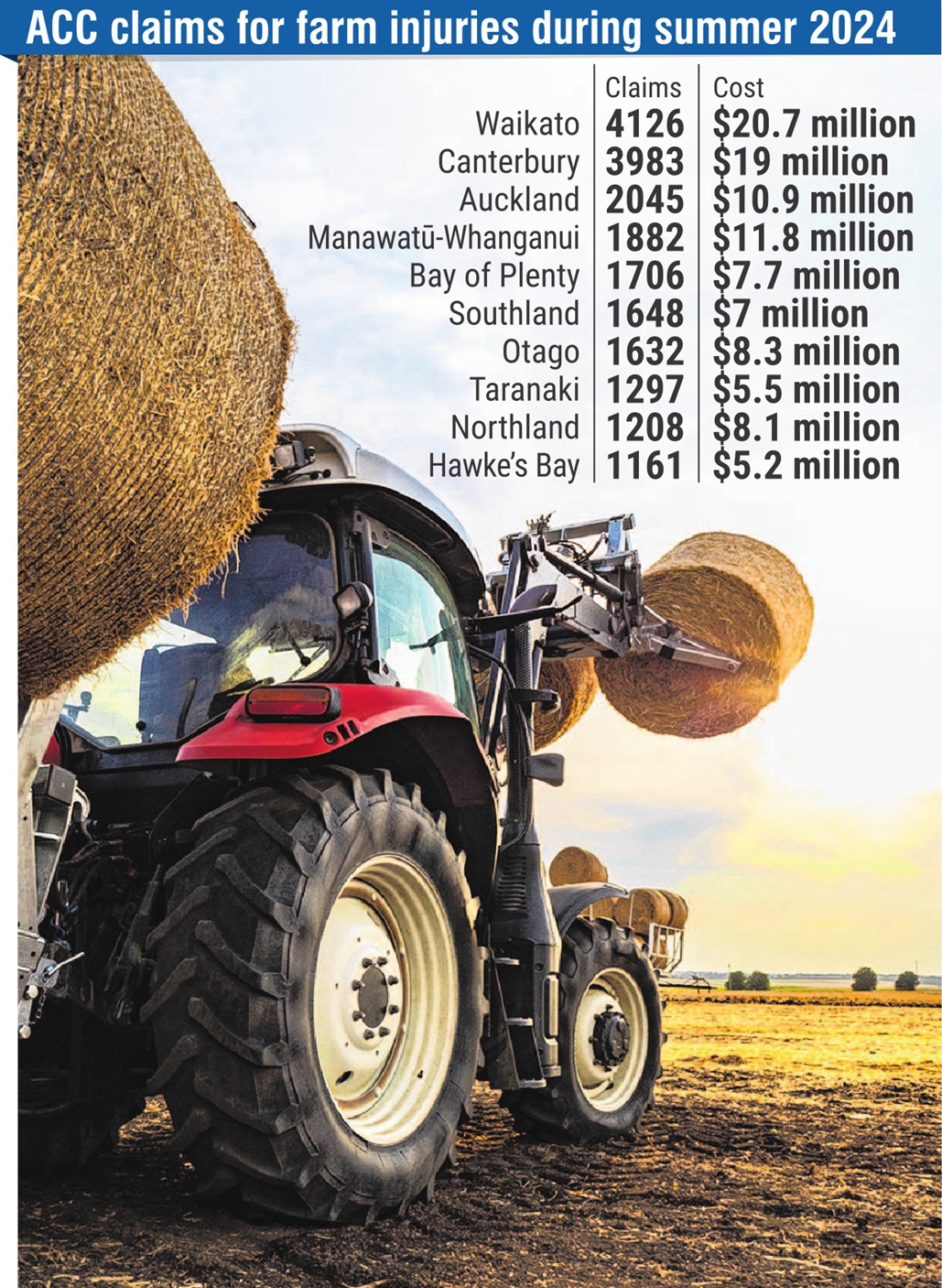
ACC data shows there is a major spike in injuries on farms over the summer season — including in the southern regions, where 3280 claims were made over summer last year, costing $15.3 million to help farmers recover.
The Waikato region had the highest number of claims (4126, costing $20.7m to help farmers recover from their injuries), followed by Canterbury (3983, costing $19m), Auckland (2045, costing $10.9m), Manawatū-Whanganui (1882, costing $11.8m), Bay of Plenty (1706, costing $7.7m), Southland (1648, costing $7m), and Otago (1632, costing $8.3m).
In total, ACC received more than 23,000 claims for injuries on farms last summer, costing about $120m.
Males accounted for 15,171 claims and females made 8205.
The majority of injuries were soft tissue injuries (15,943), followed by lacerations, punctures or stings (3566) and fractures or dislocations (1392).
ACC workplace injury prevention manager Paula Wood said the organisation was now working with Safer Farms to encourage farmers to stop and think before getting stuck in this summer.
"During the summer, people’s fatigue levels can increase due to the long days and warmer weather," she said.
Research showed exhaustion, lack of sleep and being unable to take a break all added to the risks that a farmer or farm worker would have an accident.
"When you’re tired and rundown, it affects your decision-making, so take a break when you need it.
She said common causes of injuries were from lifting and carrying things, twisting and about a third of all injury claims were caused by falls.
Safer Farms chairwoman Lindy Nelson said more people typically visited farms at this time of year.
Whether it was children home on school holidays or other family and friends coming to visit, they were often unfamiliar with farms.
"Transport them around the farm safely, separate young children from the work being done — especially around stock — and give them age-appropriate tasks."
She said quadbikes and Utility Terrain Vehicles (side by sides) were one of the biggest causes of farm fatalities at this time year and she urged farmers to be wary of visitors using them.
"They aren’t recreational vehicles for inexperienced or young riders."
There was always inherent risks in physical industries like agriculture that involved operating heavy machinery and handling livestock, she said.
"It’s important to be aware of who is on your property at all times, and if you see a potential hazard, sort it out straight away — whether that’s marking it clearly for everyone to see, or if something is broken, fixing it as soon as you notice it.
"If everyone is aware of the ‘no-go’ areas and hazards, it’s easier to keep everyone safe."


