

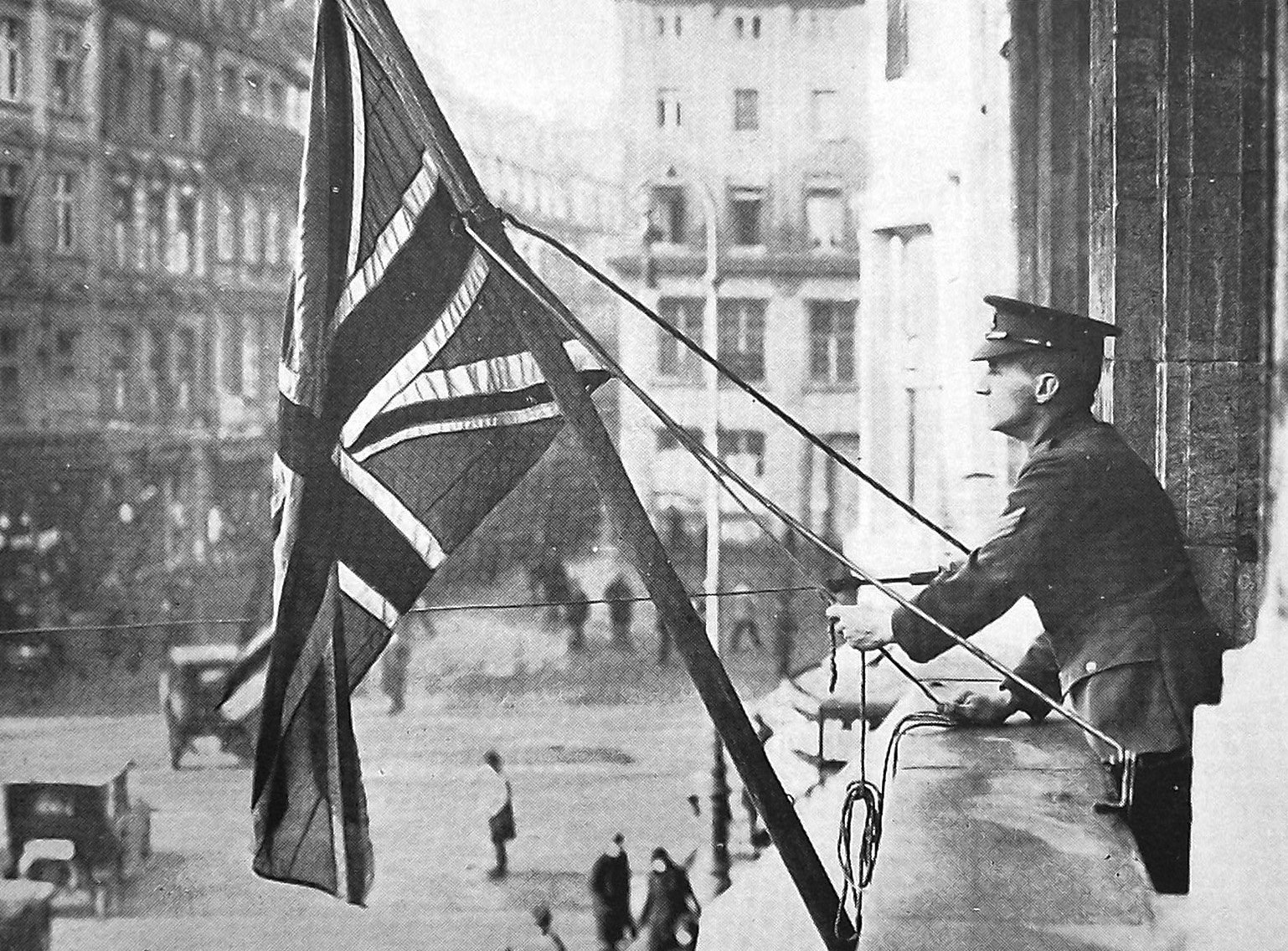

On the stroke of midnight on Sunday the booming of the Deutsche clock, the gigantic bell which replaced the Kaiser Clocke, which was sacrificed in war time, was the signal for an outburst of jubilation at the departure of the occupation troops. Rockets shrieked joyously skyward, torchlight processions were formed, and the whole city, relieved from seven years’ occupation, surrendered to the spirit of revelry.
The chief feature was a speech by the burgomaster, which was begun punctually on the stroke of midnight before a vast concourse in the illuminated cathedral square.
France and Britain have agreed to reduce the Allied troops in the Rhineland from 75,000 to 60,000. The Germans contend that 45,000 are sufficient.
French leave
"Tell the people of Dunedin through your paper that the officers and men of the Cassiopee have had a beautiful and glorious time during the past 10 days, and I wish you to convey my heartfelt thanks to everyone for the wonderful hospitality shown to every member of the ship’s company."
These were the parting words uttered by Captain Decoux to an Otago Daily Times reporter just before the sloop left her berth at the Rattray Street wharf yesterday afternoon for northern ports.
Ravensbourne seeks upkeep
Last night, at a meeting of the West Harbour Borough Council, the town clerk reported that a tally had been taken of the traffic passing through the borough in one week. This tally showed that a total of 1519 vehicles had traversed the main road in seven days. — The matter was discussed at some length, and it was then decided to approach the Dunedin City Council and the Port Chalmers Borough Council for assistance in the upkeep of the main road to the city.
More instruction needed
The circumstances attending the death of a lad aged 16, an assistant linesman, who recently fell from a pole at Outram and fractured his skull after contact with a live electric wire, call for comment. The coroner’s verdict seems to have been clearly shown that no personal blame was attachable to anyone at the time. This exculpation may be definitely conceded without losing sight of some pertinent considerations.
The coroner’s discriminating review of the evidence left him in some doubt as to whether sufficient instruction in regard to the danger of contact with live wires was given to junior linesmen, and the public may see some reason for apprehension on this score. The city electrical engineer, giving evidence at the inquest on Monday, appears to have taken the view that the risks of electricity must be faced with philosophic fatalism. He does not seem disposed to admit that there is any need for cautionary regulations other than those in present use.
We suggest, however, that it may be found possible to devise more far-reaching means of protection and instruction, first, as regards the technical workers, and, secondly, as regards the general public. The coroner plainly intimated that he was not satisfied as to the first point, and the public may be expected to appreciate the significance of the second.
— Editorial
— ODT, 3.2.1926


