

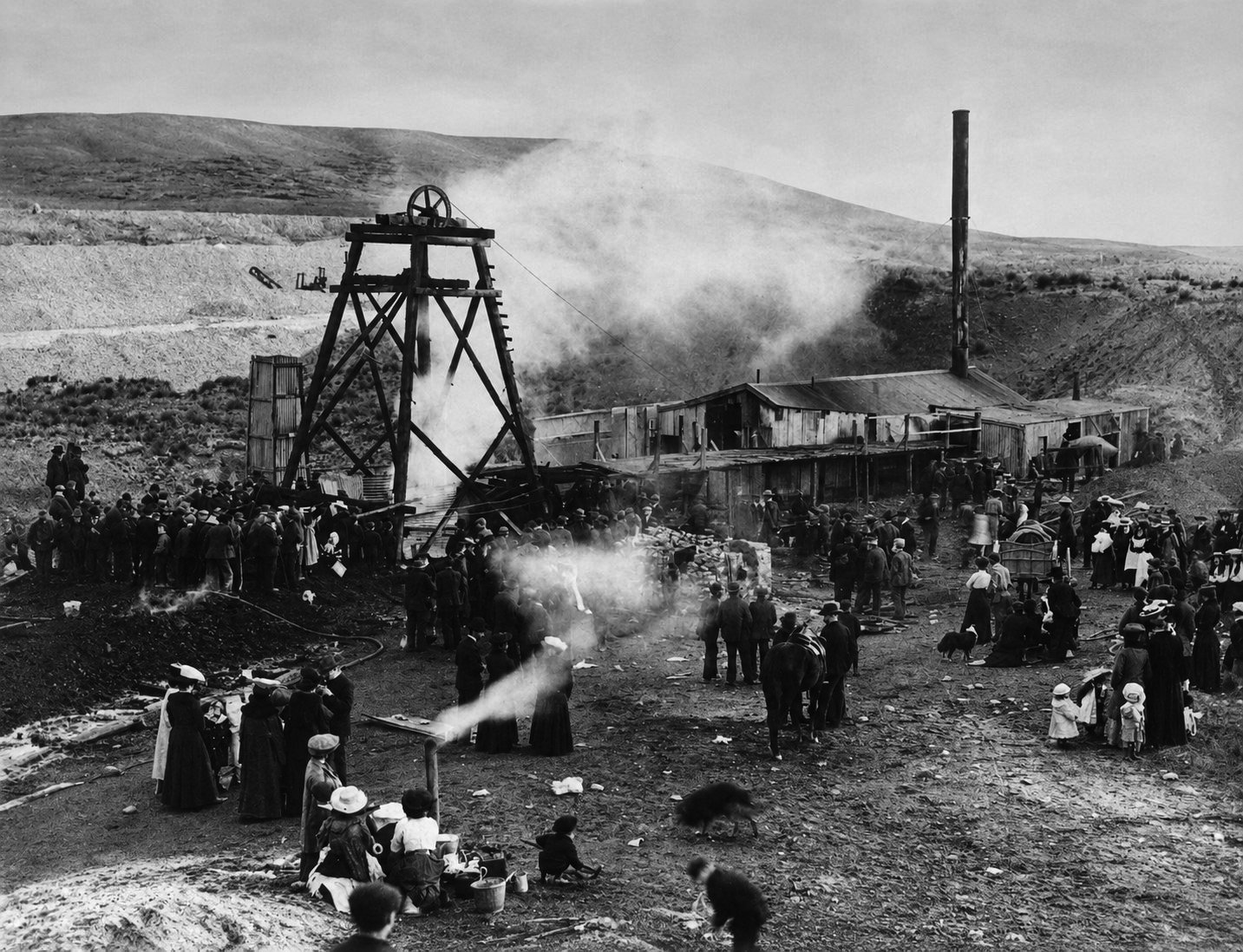
One hundred and twenty years later, local historian and author Russell Garbutt is retelling the story of the monumental rescue effort at Central Stories Museum and Art Gallery, in Centennial Ave.
Mr Garbutt, who is writing about the event himself, said the deeper he researches Central Otago’s history, the more stories he finds.
"There is just so much there.
"I’ve always been fascinated by it, have always been writing little bits of history for years, and this is such an amazing story to tell."
It’s a history that runs deep beneath the town.
The Molyneux Coal Mine sat on the east side of the Molyneux River (now the Clutha River), roughly a mile and a-half from the town centre.
The mine ran around the clock, six days a week, 24 hours a day.
While four local men were working their shift, a fire broke in the mine about 2am.
The workers continued underground having no idea anything was amiss, and it wasn’t until 4am that they became aware of the danger they were in.
The blaze started near the base of the shaft — the mine’s only way in or out, used both for lowering workers into the workings and for ventilation. With no second exit or escape route anywhere in the mine, once the fire took hold at the shaft, it sealed off the one path back to the surface.
One worker above ground tending to the steam engine powering the underground pump noticed smoke from the shaft at 3am, while a miner below found the fire from the other end.
He quickly returned to the other three men working to warn them, but with the only exit blocked by fire, there was nothing they could do but conserve energy and hope for rescue.
Above ground, the town swung into action.
The first response was a bucket chain to douse the burning structure on top of the shaft.
But it was quickly realised a far greater response was needed.
Water was diverted from the borough water race, and redirected into a newly dug ditch running straight into the mine shaft.
The ditch or water race, was around 400m long — was dug by hand in roughly 90 minutes, a feat Mr Garbutt said would have been phenomenal.
"Nobody had seen anything like it, and rarely since on that scale — where the whole town was needed and rallied together in that way," Mr Garbutt said.
Once complete, the water was fed through large-diameter hoses and then into the fire brigade’s own hoses, before being poured down the shaft. This process enabled rescuers to direct a controlled, sustained jet of water down on to the fire.
The shaft itself was wood-lined, making it highly flammable and generating thick, heavy smoke that slowed every stage of the rescue.
Visibility underground was almost non existent, making the area pitch black and nearly impossible for rescuers to judge how close they were to both the flames and each other.
Archie Ashworth, head of the fire brigade, was among the first lowered into the scene, to fight the flames directly.
Very quickly Mr Ashworth was overcome by the heat and thick smoke, losing consciousness before he could be brought back up, but this started the chain of community members heading down to the burning mine.
Rescuer after rescuer was hauled to the surface after briefly battling the conditions, many unconscious, others burnt or injured.
This relay of rescuers and volunteers continued for hours, taking turns to clear debris and collapsed timber, trying to get water on to the flames ahead of them before pushing further into the mine.
"Bit by bit, it was a slow and very difficult process," Mr Garbutt said, the rescue effort slowly gained ground.
But it wasn’t only those battling the fire directly who carried the day. Across Alexandra, both men and women pitched in — running makeshift field hospitals, preparing food, and keeping exhausted rescuers fed and cared for so they could return to the effort.
"People just dropped everything."
Hour after hour, the fire was gradually brought under control and a path cleared towards the trapped men. When rescuers finally reached them, it was in complete darkness, under gravel, dirt and metres below the surface.
All four miners were found alive, and by 10pm that night, everyone who had gone underground during the rescue was accounted for.
Mr Garbutt’s telling of the story explores more than just the immediate response and actions of a heroic community.
It also delves deep into the region’s mining past and what remains of it today.
"The network of tunnels that existed, and many still do, beneath where we live is like a whole other town beneath the surface," he said.
Coal from mines like this one was essential to the local economy, fuelling the dredges that worked the Clutha River.
"The industry was extremely important for Alexandra and Clyde."
As part of the evening, Central Stories displayed the bicycle of William King.
Mr King was one of the four rescued miners — the artefact providing a physical link to the men at the centre of the story.
Mr Garbutt brings decades of storytelling experience to his heritage work. He spent much of his career in broadcasting, including with TVNZ and working within natural history before retiring to Central Otago more than 10 years ago.
Since then, he has thrown himself into researching and recording the region’s history.
As a trustee with the Central Otago Heritage Trust, he is heavily involved in sharing its stories, helping produce the Heritage Trust podcast covering everything from colourful gold rush characters to oral histories and Central Otago’s only unsolved cold-case murder.
The talk forms part of an ongoing heritage speaker series at Central Stories, which has previously covered subjects including the history of the moa and the Haast’s eagle.
Tuesday’s session quickly sold out, but due to popular demand a second talk has been added and will be held — Thursday July 16, 6.30pm–8pm — at Central Stories Museum and Art Gallery, Alexandra. Entry is by koha, and bookings are available through the Heritage Central Otago website.


