PHOTO
Queenstowner Hamish Roberge is powering the future of New Zealand events.
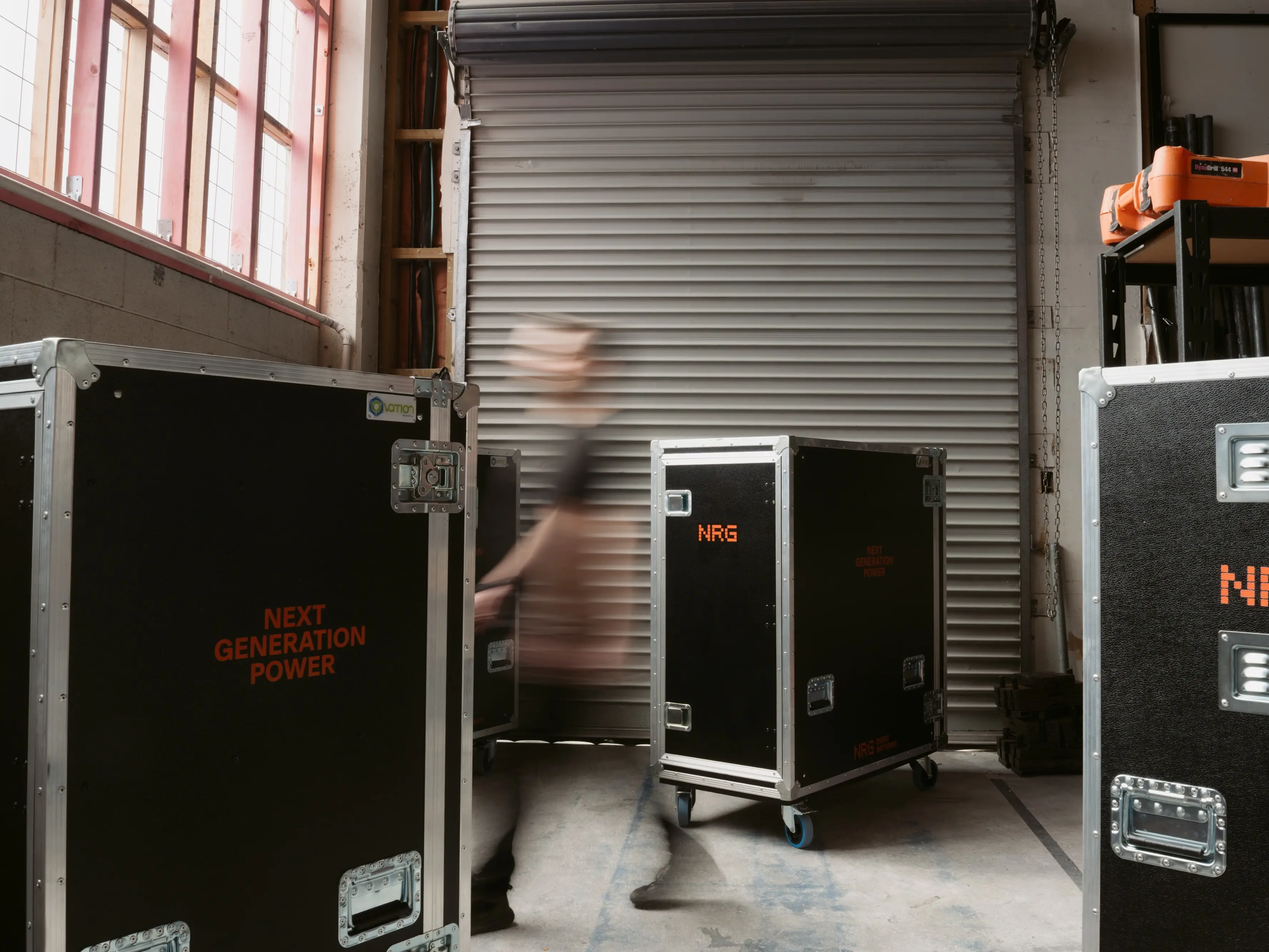
Roberge, TomTom Productions’ managing director, has just launched NRG Event Batteries, the country’s first event-specific battery system.
The system provides three-phase power, replaces diesel generators and handles high transient loads from professional audio and lighting, while being recharged from NZ’s renewable electricity grid.
Developed by local industrial electricians and event techs, it makes no noise and produces zero emissions during operation.
NRG’s backed by TomTom, and grew out of that business’ work to measure and reduce the footprint of event delivery, where diesel generation and fuel transport repeatedly showed up as major emission hotspots.
In the case of diesel generators, Roberge says in the music industry, for example, once the system’s going it stays on 24/7, despite only having a load on it for half to one-third of the time.
‘‘That’s a massive amount of carbon that’s being wasted just for the best practice of the security of the event.’’
While there are some alternative solutions available, they’re largely geared towards the construction industry, are in huge shipping containers, cost millions to purchase and are expensive to transport, and off-the-shelf battery systems often aren’t suitable for live productions.
So he started thinking about what the ideal solution for the events industry looked like, what capacity it needed, and how it needed to be deployed.
Working with Cam McHardy, of Conductive Solutions, the pair came up with the first iteration of their game-changing system, which is packed into modular road cases to travel with existing production equipment.
Officially launching last Thursday, Roberge says they’ll continue to refine the system and, ideally, build another six more over the next year.
‘‘Maybe we’re a bit early to market, and we’ll probably make some mistakes along the way, but I think that’s probably more important than just sitting back and not doing anything.’’
He also notes large corporations now need to start disclosing their carbon, citing one upcoming event in Queenstown for which the client’s flying someone out to audit their carbon and waste.
‘‘It’s really important for us to front-foot that and have a solution for them.’’
Roberge is also integrating AI into power calculations — he says in the next fortnight they have seven events on the go, during which they’ll save about 750kg of CO2 by using the NRG system.