

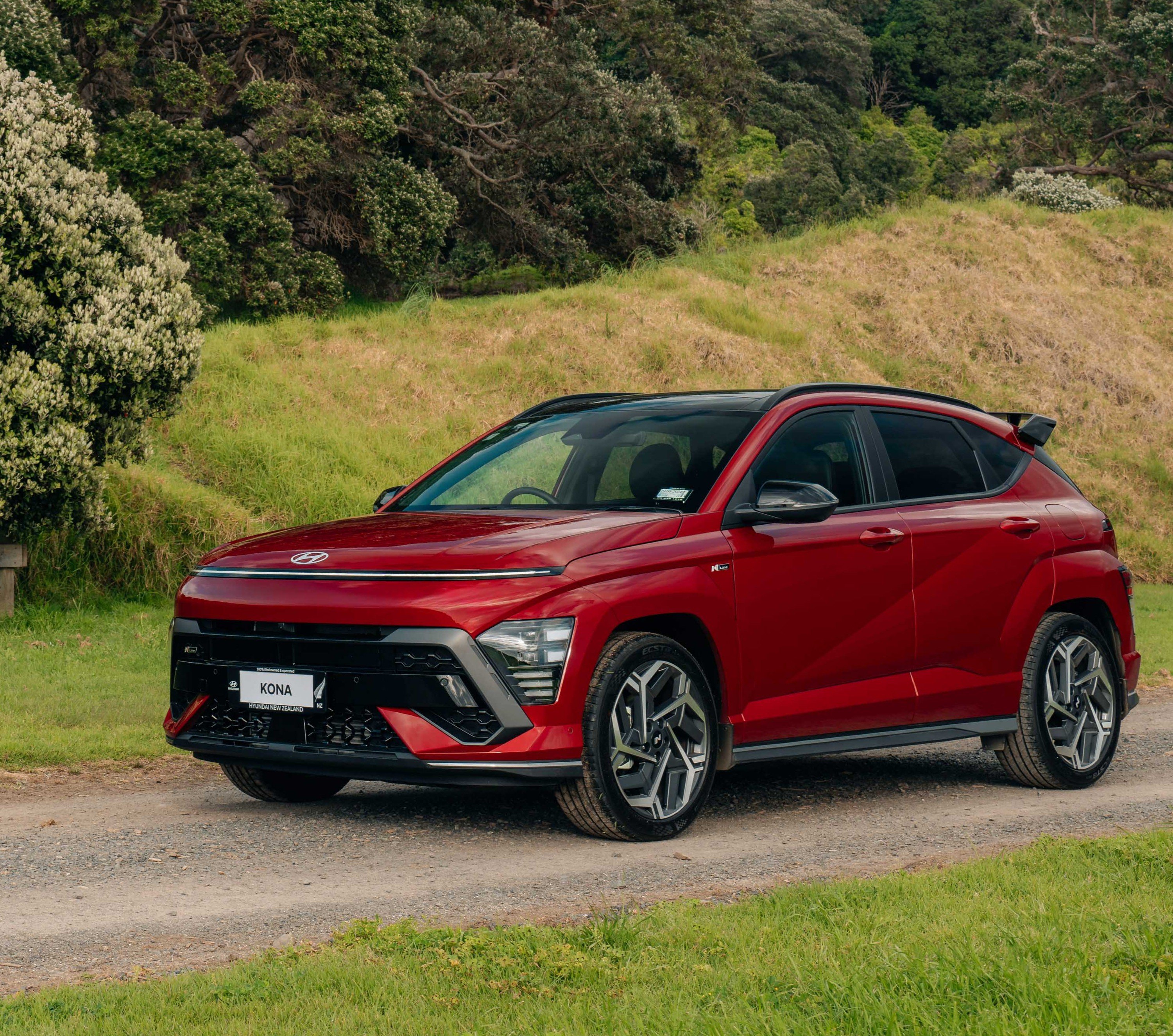
Hyundai had high hopes for this new model that have yet to materialise in our now fiercely competitive urban SUV market. The original Kona also reaped the rewards of being the first fully-electric South Korean model sold here, and was a top-notch one at that, for the money.
The timing was perfect with new car buyers back then who were ready to take the all EV plunge, especially vehicle fleet operators, with the obvious environmental and fuel savings of electric propulsion.
This latest iteration of the Kona is battling for sales in a cauldron of fresh-faced and keenly priced and well-appointed rivals from China, even more entering the sales fray from that part of the automotive world. The Hyundai matches them in most departments but the Chinese are masters at building very affordable and well-equipped cars. These hit the sweet spot with those on limited budgets, seeking maximum bang for their new car-buying dollar.
Compared to the Mark 1 Kona, this one is superior on several fronts including a more spacious cabin, advanced technology and safety features.
A lot of effort has gone into sharpening up the styling over its conservative-looking predecessor. This started with a distinctive frontal design, featuring seamless horizontal lighting and signature separated headlights, with active air flaps used in place of a conventional grille.
While the efforts to lift the vehicle’s styling game are laudable, it still manages to look a bit awkward and quirky from some angles, and lacks the crisper flowing lines of its larger sibling the Tucson.
Refinement is neatly nailed with the clever use of noise and vibration isolation innovations, from the rigid body structure to absorption materials and a sound-insulating acoustic windscreen.
The waves of change have not exactly swept through the engine bay with a lot of carry-over motors from the previous model. The Kona these days is a six-model lineup starting at $39,990 for the entry level 2.0-litre petrol Active and levitating to a lofty $59,990 for the Limited N-Line hybrid featured here.
This is about $5000 less than its original launch price. It makes it more competitive and it needed to be. However, there is no room for a pure electric that is available in an Australian model.
The decision not to go EV on this side of the Tasman was made when the plug was pulled on our generous EV clean car rebates in early 2024. This, and an EV market brimming with cheaper Chinese EV offerings, probably made it the right call by Hyundai New Zealand.
Adding the performance zip is a 1.6-litre turbo petrol that is now even feistier delivering 146kw, a 15kw power bump.
Less impressive is an average three-year new-vehicle warranty on the Kona, when five years is the typical new vehicle warranty here. Some Chinese brands are offering up to 10-year warranties on their vehicles.
The Kona’s hybrid set-up is not exactly class-leading, using a naturally aspirated 1.6-litre petrol engine with a battery electric system. Performance is adequate, unlike the excellent claimed miserly fuel consumption figure of 4.3L/100km. During a 250km drive peppered with hilly terrain, and three people and their luggage aboard, I saw an impressive 4.7L/100km. With 104kW and 265Nm of torque, flexibility and frugal fuel consumption is the test vehicle’s forte, rather than performance.
For the most part it is driven using the petrol engine, with an electric motor — powered by a 1.32kWh battery — chipping in with a handy additional 32kW and 170Nm as required.
Smart regenerative technology allows the hybrid system to recover braking energy that would be otherwise lost in a conventional vehicle, and diverts it to recharge the high-voltage battery.
As expected, the petrol and electric engines do most of heavy lifting in day-to-day open-road driving. However, I was surprised at how far the test vehicle would run in purely electric mode in town, driving at speeds of up to 50kmh without a helping hand from the petrol motor.
Performance is less convincing on steeper hill climbs under load, while engine noise also climbs with the extra exertion. A smooth and well-sorted 6-speed automatic is a plus.
There is plenty of people space thanks to a noticeably larger cabin and more voluminous rear cargo hatch. Rear leg and headroom is another big improvement.
All models feature alloy wheels as standard, LED headlights and tail-lights, and dual-zone climate controlled air conditioning. Top-shelf variants such as the Limited N-line have additional touches such as an 8-speaker premium audio system and power tailgate. Latest in-car connectivity and technology is showcased on a 10-inch touchscreen multimedia system. The display audio is upgraded with wireless Android Auto and Apple Car Play for wireless connectivity of your phone to the audio display.
The Kona has solid safety credentials headlined by a plethora of driver assistance features, such as parking-collision avoidance, assist-reverse, blind spot-view monitor and surround-view monitor.
There is nothing especially ground-breaking about the vehicle’s underpinnings. These trek down a tried and true path with MacPherson strut front suspension and a multilink rear end set-up for the hybrid and 1.6 turbo.
In the transition to this latest model, the suspension received further refinements, such as redesigned rear suspension mounting bushes, and retuning the springs for improved ride comfort.
Road holding and crisp, accurate steering are positives, less so is the amount of noise, especially over coarse chip seal road surfaces.


