



Standing on a deforested hilltop in the Catlins, surrounded by farmland and forestry plantation blocks, there are dead branches sticking up like sticks above a swathe of remnant coastal forest.
The crowns of the taonga red-flowering rātā trees have been chewed to destruction by possums and are visible because other tall trees, previously surrounding them, were cut down for logging in the last century, along with deforesting for farms.
The dead rātā branches and lowered canopy - in some places around half its original height - are tell-tale warnings of a pest problem inside the forest that poses a mortal threat.
While possums munch at varying heights, there is a plague of other, non-native pests eating out the forest floor.
Red deer, pigs, goats, possums, feral cats, stoats, rats and mice are leaf nibbling, branch breaking, seed eating, digging and trampling seedlings and saplings faster than adult trees can create them.
As adult trees topple from old age, they will not be replaced and the forest will have died from the inside out - if the pests are not stopped.
Renowned conservationist Fergus Sutherland, who lives in the Catlins, says going into the forest now is "just so sad because you can look right through it".
" It never used to be like that. There is deer sign [faeces and damaged foliage] everywhere.
"There are definitely huge numbers. It is devastating."
Thanks to possum control efforts, there are places where rātā trees and other species are blooming and recovering, but locals say that the overall pest problem is severe, with conservationists, farmers and forestry block owners all mentioning deer and pigs as obvious - and highly visible - culprits.
They wander at will across a patchwork of landowner boundaries including privately-owned farms, forestry plantation and the bush - largely owned by the Department of Conservation but also iwi and others.
Doc wild animals manager Mike Perry says "we’re already seeing changes in parts of the Catlins where it looks like browsing animals are restricting the growth of tree seedlings and saplings ... as older trees die off, there will not be a strong cohort of young, healthy trees to replace them."
Climate change symptoms like storms and drought could contribute to the forest’s decline.
An obvious solution to the present danger is reducing pests, he says.
"Without ongoing control of browsing animals, these processes will continue pushing the forest towards a different baseline."
A significant problem is lack of government cash.
Doc carries out sustained predator control of rats, stoats and possums in the Beresford Range, including aerial 1080 operations to protect precious species including scarlet mistletoe, mohua/yellowhead, kākāriki/yellow-crowned parakeet and pekapeka/long-tailed bats. It encourages recreational hunting in the Catlins-MacLennan, Tautuku Forest and Waikawa areas.
However, Doc’s finite resources do not stretch to pest controlling Catlins ungulates - meaning hooved animals deer, pigs and goats. Their ungulate control happens elsewhere in New Zealand.
Now, locals are grabbing the deer by the antlers and preparing an Invasive Mammal Management Plan for the northern part of the Catlins with a little funding from Otago Regional Council (ORC).
However, funding for its pest control recommendations, due in June, is a matter of hope.
Caged plants tell the story
One Catlins landowner is the charity Forest & Bird, which owns the Lenz forest reserve near Papatowai.
The reserve does not benefit from a pest-proof fence and pests are evidently here - despite the efforts of Forest & Bird pest control officer Gavin White, who is constantly shooting and trapping.
To demonstrate the difference between a deer-free and a pest-riddled forest floor, Forest & Bird built an "exclusion pen" in the reserve in 2017.
It is a cage, only a few metres wide, with native seedlings thriving inside and deer kept out.
"Notice the richness and density," says Mr White, but the plants are not yet trees.
Forest recovery takes time and is reliant on a complex cycle of life including seeds falling on soil enriched by leaf litter, dead branches, fungus and tiny insects.
If soil enrichment is limited, seeds are chomped by rodents, and seedlings and leaves have little chance against ungulates and possums, the forest is not really a forest.
It is a bunch of trees that are edging towards death.
The forest floor next to the exclusion pen is bare by comparison.
Mr White says Catlins old-timers tell him that the baseline has already shifted.
They mention "the level of damage and impact ... If we want a diverse forest there must be effective pest control.".
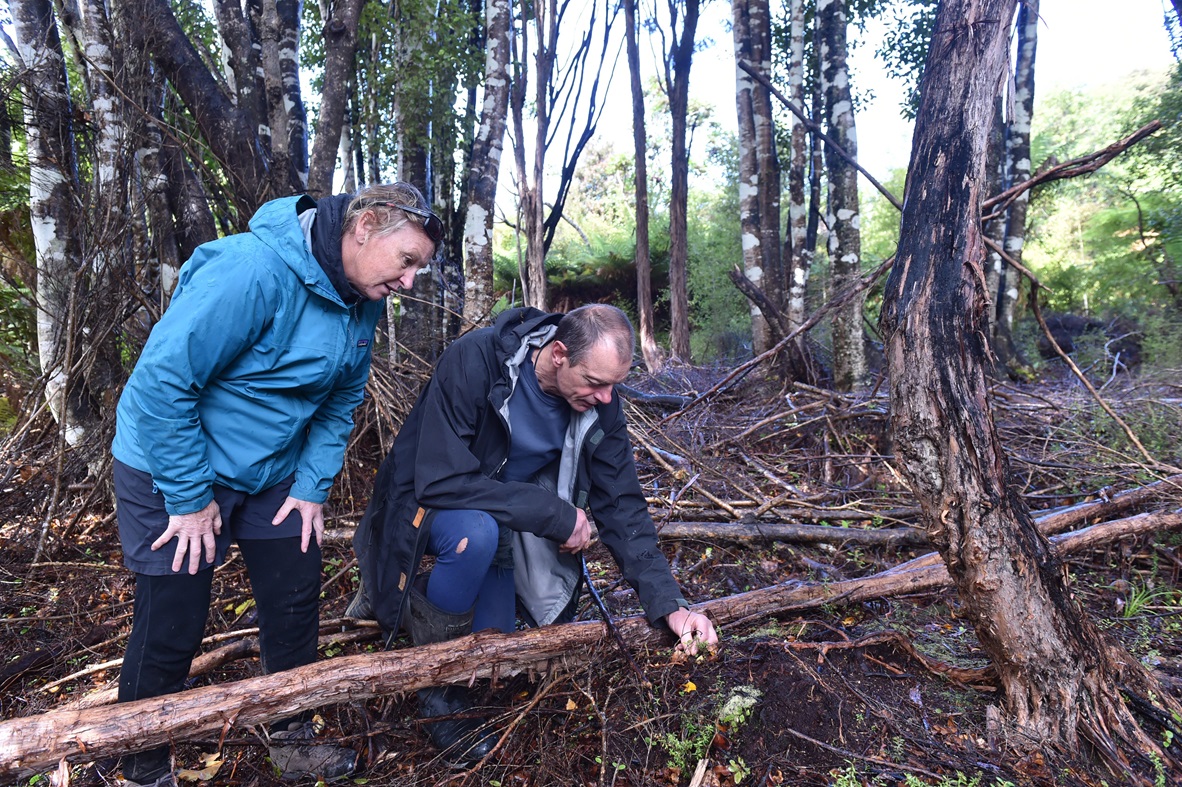
He takes the ODT on a tour of the reserve and other areas of bush, explaining pests prefer more "palatable" species, but even non-palatable species are impacted.
Serious damage includes: palatable branches nibbled clean and short; saplings rubbed up against until they died; and areas denuded of seedlings entirely, some dug up by pigs.
However, without an expert in tow, it can be hard for people to spot the damage.
Chats with touring tourists on short bush trails in the Catlins confirm they are not seeing the trees for the forest.
The forest is "lush", "amazing" and "beautiful".
When the damage is pointed out to them - such as a grove of tree ferns that have lost their umbrella of leaves to possums’ stomachs - their faces fall.
The deer problem
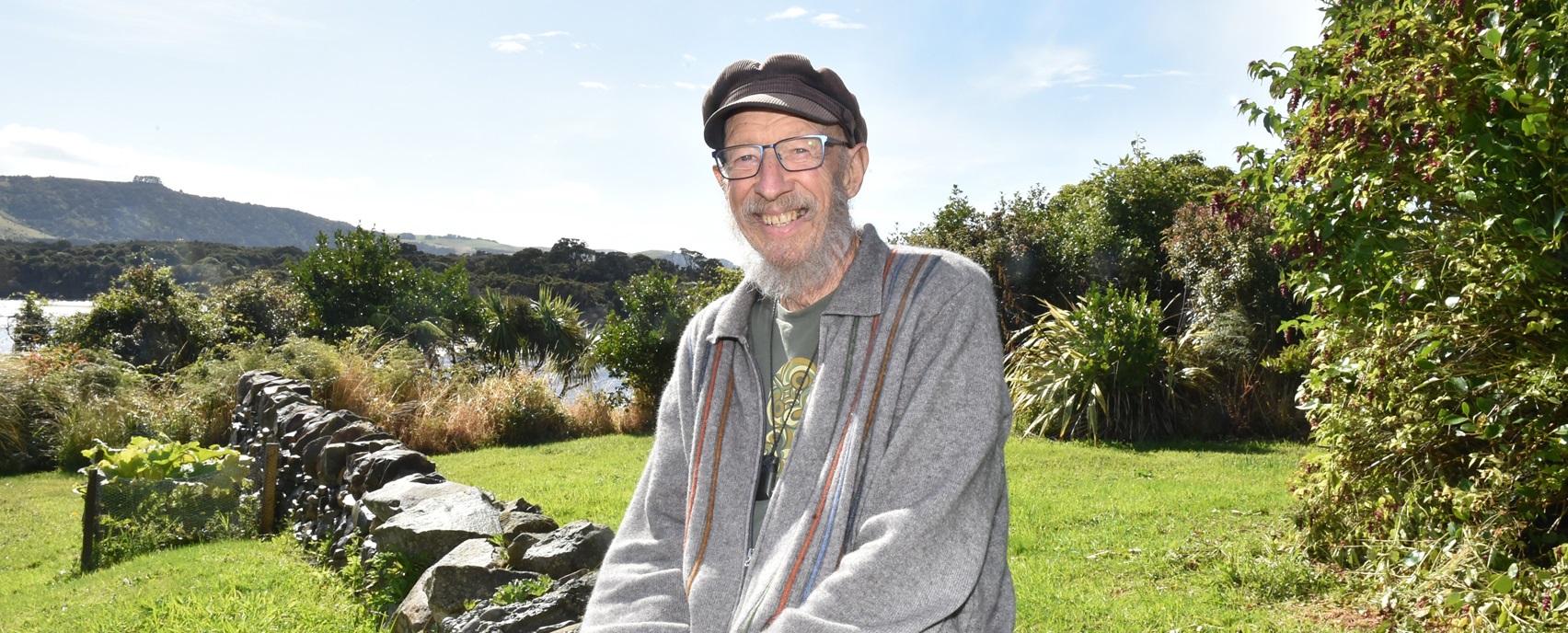
Conservationist Fergus Sutherland is a longtime resident of Papatowai and his house, next to the estuary, has a view of a spectacular tall rimu trees on the other side, sticking up above the canopy.
They are lucky to be escapees of the logging industry and could be 1000 years old.
Mr Sutherland tells a story of an old-timer called Kangaroo Bill who deflected government officials from logging the trees during World War Two, by guiding them to short trees elsewhere. The officials went home.
However, one day Mr Sutherland saw one of the rimus fall and it was "pretty horrific".
In the 1980s and ’90s, he wrote management plans for the Lenz reserve and he still the 1993 plan.
It says pigs are present but deer are "rare if not absent".
The explosion of deer since then has happened due to deer farming, he says.
"Of course there were escapes - and then a major build up."
Recreational hunting is not the solution, he says.
The Catlins has a low population and people who come from elsewhere "kill a few animals but there are thousands".
He calls on the ODT to ask Doc if they knew the extent of the pest problem including deer and whether they have a policy or plan to stop it?
"They will probably say they have no money."
The blame game
Mr Sutherland’s point about limited locals is illustrated by two recent events; the closure of the Catlins Tahakopa School - which opened in 1876 and at one time had 100 pupils - and the opening of furniture giant Ikea in Auckland.
The connection is a rise of forestry plantations in the Catlins - owned by companies including Ikea - on land previously farmed.
The change emphasises the Catlins’ variable ownership and land boundaries that pests can roam across.
While Doc does not control ungulates, pests on private land are variably controlled, depending on where they stand and landowner awareness, concern and money to do it.
Southern Forests manager Josh Cairns has responsibility for about 3300ha of plantation forest called Wisp Hill, at the Catlins estuary headwaters.
It was a sheep and beef farm but bought and converted by Ingka Investments, Ikea’s investment arm.
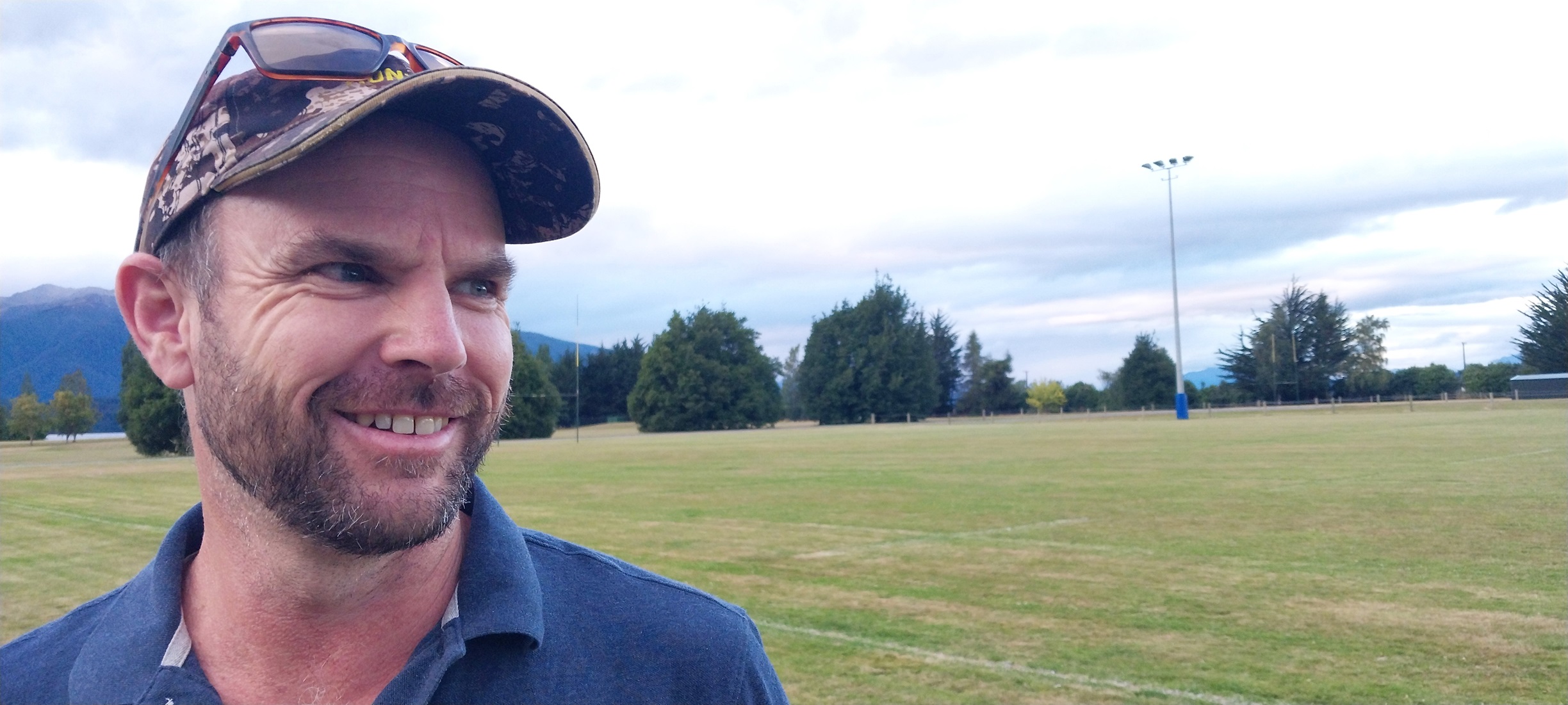
Mr Cairns employs three contract shooters to control deer and pigs up to four nights a week.
Two thirds or more of the deer killed by his shooters are taken around the Doc boundary, he says, which "continually feeds our land with them".
He is "frustrated" by farmers who blame forestry companies for harbouring pests.
Some farmers had deer and pigs on their land but "kept hunting access to a minimum, whereas if you look at our forest we manage the pests and track the numbers we are taking out and the results speak for themselves."
Catlins sheep and beef farmers Rachel and Craig Napier have clung on to farming in the Catlins, including keeping pockets of native bush on their land and are adamant they are not the problem.
Plump deer and pigs keep popping out from adjacent forestry and conservation land to eat their crops, they say.
Shooting them, while also running a farm, is time consuming, bullets are expensive, the animals clever, the forests should be fenced and Doc sort out a solution, Mr Napier says.
Doc priorities ‘elsewhere’
Where Doc controls ungulates it is shooting them from helicopters and from the ground and as yet does not use poison, although "1080 gel, which can be ground laid, is accepted for potential use", Doc’s wild animals manager Mr Perry says.
Another poison, that kills pigs, is in the process of being registered for use in New Zealand.
However, Mr Perry is transparent about his department’s lack of deer and pig control in the Catlins and the extent of the problem.
"Unfortunately, we are unable to manage ungulates or introduced wild animals everywhere. We know people want action in their own area, but Doc has to focus where we can make the biggest difference."
There are 57,000km of boundaries between public conservation land and private land in New Zealand, he says, and "while we understand farmers’ frustration about deer and pigs moving on to their properties, these animals are already widespread and highly mobile".
He lists four factors that influence Doc’s choice of other regions for ungulate control: biodiversity at greatest risk; conservation requiring deer-free or goat-free status; high reinvasion pressure from elsewhere; and regional partners ready to collaborate.
Forest and Bird’s regional conservation manager Nicky Snoyink says Doc’s lack of cash to pest control everywhere is an "eternal narrative" and much more money is needed.
"Funding needs to be increased with clear and strong direction to reduce feral animals to protect forest health and primary production."
Community action
A recent community effort to produce a Catlins Catchment Action Plan resulted in a small fund - $100,000 - from ORC for the most important community-led actions. Just over half of it has gone towards the imminent plan to manage pests.
The plan is being prepared by Catlins Pest Management, set up specifically to help lead strategic thinking and planning to control pests in the Catlins.
It is run by the directors of Leith Contractors, a respected and iwi-owned, Catlins-based firm.
The father and son team, Tony and Vincent Leith, each have more than 30 years’ experience of pest control across the southern half of the South Island, dating back to the early 1990s.
They say pest control initiatives that they have worked under in the past have helped to knock pest numbers down for a while, including lowering Tb risk, but do not fix the problem long-term: things eventually revert to square one.
Vincent Leith hopes the pest plan will lead to "meaningful, continual, long-term, not fragmented pest control with good collaboration - everyone knowing what is going on and money spent in the right way".
Landscape-scale pest management and control would enable good outcomes including supporting sustainable jobs, improved biodiversity, the fight against the spread of Tb and include mana whenua inputs.
The plan, which aims to identify the priority pests and priority areas to tackle, was being prepared with "as much feedback as possible" from the Otago Catlins community, mana whenua, government agencies, other non-governmental organisations, stakeholders and landowners.
He hopes there will be a similar plan for the southern part of the Catlins, with Environment Southland involvement.
Vincent has a personal dream, and it is big. He pictures an end game of radically reduced pests and a fence around the Catlins.
It would have breaks for roads and rivers and would not stop all pests, but would help slow re-entry, particularly of deer and possums.
"Things need to change. This can’t be brushed aside and we will get there. We absolutely will ... But first, let’s do the control and get the pest numbers down."


