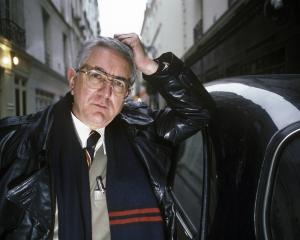
A former rural GP and a national advocate for public health, Dr Pezaro served the Upper Clutha community for 32 years before retiring from his practice in 2006, but was a dedicated doctor in Wānaka for more than 50 years.
He died peacefully with family on November 16, aged 83.
His daughter, Sarah Pezaro, said her father had a legacy that opened doors and transcended communities.
She considered him among a small number of influential pillars of the Wānaka community at the time, among the likes of John Lee — the pioneer of Cardrona Alpine Resort and a longtime friend of Dr Pezaro’s from university, dying just a month after him — Warbirds over Wānaka founder Sir Tim Wallis and former Queenstown Lakes deputy mayor and Wānaka board chairman Bill King.
‘‘He really was a significant part of the Wānaka, Upper Clutha, Central Otago community,’’ she said.
‘‘He was a big man with a big character.’’

He was raised in Kohimarama, east of Auckland city, attending Kohimarama School (1947-55) and Auckland Grammar (1956-60).
He began at the University of Auckland, in 1961, before heading south to study at the University of Otago for the next six years.
He was elected president of the Otago University Students’ Association in 1966.
He moved to Wānaka in 1971 where he assisted the then-sole GP as part of his medical studies, relocating there permanently two years later with his wife of five years, Olwyn.
Dr Pezaro served Wānaka and its surrounding regions since 1973, first as its sole-charge rural GP in co-operation with the practice and hospital in Cromwell and later as a representative on several community boards and organisations.
He helped to establish the Wānaka Medical Centre in 1977.
Sarah said her father seemed to relish having a go at almost everything, going above and beyond to work in areas one would not necessarily expect of a country GP.
At the age of 31, he was covering a district which extended from Tarras to the top of Haast Pass, across to the Crown Range and out to the West Coast.
‘‘It was truly a massive area and completely impossible for one person to manage on their own — but he did.
‘‘He absolutely loved it.’’

While not necessarily known for his punctuality, he was entirely dedicated to those in his presence.
Your time was never up until it needed to be — even if that meant staying up past midnight.
The reputation he cultivated locally as ‘‘Dr Dennis’’ also afforded him several luxuries, she said.
‘‘You could drive his vehicle in excess of the speed limit and wave to the policemen as you went past and they thought you were Dr Dennis.
‘‘He would drive to the front of the skifield carpark after everybody had arrived for their day skiing ... and he’d say, ‘I’m Dr Dennis’ and, somehow, he just parked in the very front.
‘‘He would go into Dunedin Hospital to visit his patients and he would go to the telephonists and say ‘it’s Dr Dennis’.
‘‘I’m not sure that people ever really knew his family name — he was just Dr Dennis.’’
Wānaka resident Simone Elliot in 2006 praised Dr Pezaro for the support and care he provided to her partner Karl Hesson and their family after diagnosing Mr Hesson with phaeochromocytoma, a rare form of cancer.
‘‘He is the epitome of what you would imagine a rural doctor to be,’’ she said.

It was not only through his work as a GP that Dr Pezaro found ways to help people, also putting his expertise to use in the political arena to get the best health services possible for rural and remote communities.
He served on the New Zealand Medical Association from 1991-2003, in 1995-96 as its chairman of assembly and in 2003 became the first rural doctor to be elected as president and a fellow of the association, representing the group’s interests to the government during his term.
He was also a great public speaker, announcing himself at various meetings or forums with a little cough or a rattle of papers and asking questions that were always intelligent, searching — sometimes even a little embarrassing for those it concerned.
Dr Andrew McLeod, who worked with Dr Pezaro at Wānaka Medical Centre for close to 30 years, described him as ‘‘an amazing gentleman’’ who had ‘‘an aura of humility and wisdom and gentle patience’’.
He was the sort of person who, no matter how awkward the situation got, was always in control.
‘‘Whether it was literally at a helicopter crash, or a motor accident, or somebody having a heart attack, or all the things that as rural GPs we would get called to,’’ Dr McLeod said.
‘‘You might be seeing kids with sore ears and then, five minutes later, you’re in a fire engine or an ambulance going somewhere.
‘‘Dennis took all that absolutely in his stride.’’
His first memory of Dr Pezaro was seeing him on television ‘‘in his trademark cardigan’’, talking about the plan for the dams on the Clutha River.
He was instrumental in the development of the medical services Wānaka now enjoys, which began by strong-arming a lot of specialists from Dunedin who happened to have holiday homes up in the town.

Whether you were a knight of the realm or a toddler, you got the same level of respect and good, confident attention from him.
The one thing he was never any good at was arriving on time, Dr McLeod said.
‘‘People would grumble but basically they knew that if they were being held late because Dennis was seeing somebody, it was because people needed it, and if they needed it in the future they would get the same privilege and whatever time was required.
‘‘We used to talk about Wānaka time — but it really was Dennis time.’’
As his practice grew, Dr Pezaro became involved in the Clutha Valley Hydro development and the development of the Treble Cone and Cardrona skifields.
He founded the medical services at both skifields and trained most of the ski patrollers, the early supply of medical services on the skifields also helped bring other young doctors to the area.
A keen skier, Dr Pezaro was identifiable by way of a notice on his jacket which read ‘‘official ski tow’’, often with a child on his back, one between his legs and another on a rope out in front while his family took to the slopes.
Dr Pezaro founded the Wānaka Senior Citizens Club, Wānaka’s Concert Society and Wānaka Wastebusters, of which he was chairman.
He was also the chairman of the Wānaka Primary School Board of Trustees, from 1988-93, and served as president of the Wānaka Rotary Club in 1988.
Dr Pezaro retired from fulltime practice in April 2006, from there spending a few years locuming for other GPs in and around the Otago and Southland areas.
That same year he was made a Member of the Order of New Zealand in recognition of his commitment and service to the health of the Upper Clutha.
At the time, he said the award was ‘‘more about a service rather than a person’’ and described it as a tribute to rural communities and their self-sufficiency.
‘‘Wānaka has such wonderful health services for such an isolated community and an award like this is for all the people and staff who support the health practices of our town.’’
Dr Pezaro is survived by wife Olwyn; children Sarah, Carmel and Daniel; and grandchildren Avi, Kit, Zac and Aria.
— Tim Scott.