
PHOTO
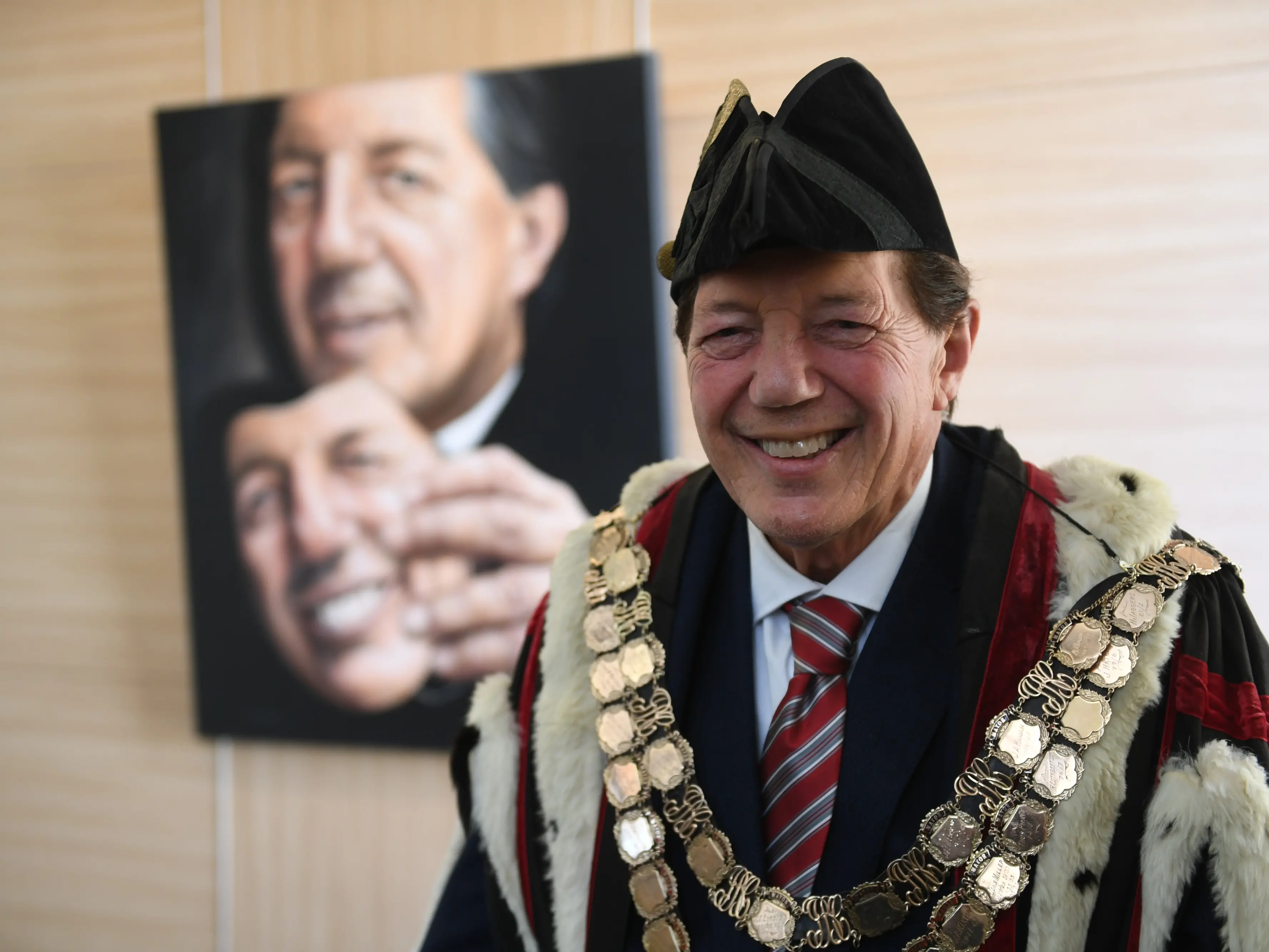
Some people claim not to have a political bone in their body.
Timothy Richard Shadbolt did not just have a political bone — he had a full skeleton of political bones. He breathed policies, laws and issues from his early years until his death.
For those in the South, Sir Tim was best known as the avuncular Mayor of Invercargill, who deployed his toothy grin in advocacy for the southern city for 27 years.
But he had lived an entire life’s worth of politics and then some before then, having risen from being a student activist to becoming an unlikely and maverick mayor of Waitemata City.
Chuck in several attempts to make it into Parliament — some of them quixotic, some of them genuine — and it all added up to a life lived out loud and dedicated to demonstrating and promoting his ideas.
Tim Shadbolt’s unlikely journey from scruffy ratbag to Sir Tim Shadbolt KNZM began on February 19, 1947. Sir Tim was the eldest son of Donald (also known as Tim) and Josien (Poppy). His father was a pilot who had fought for the British Navy in the Fleet Air Arm during World War 2.
Back in New Zealand he had become a teacher, but when the Korean war broke he re-enlisted. While on a training flight his aircraft crashed and he was killed. His son was just 5 at the time.
Sir Tim attended Blockhouse Bay School and became a foundation pupil at Rutherford College. He took public speaking classes from an early age, something which stood him in good stead in later life.
In 1966, Sir Tim enrolled in the University of Auckland, and in the heady days of student activism and psychedelic music he found an environment in which he thrived. Apart from taking a year off in 1967 to work on the Manapouri Power Project, Sir Tim became one of the university’s most identifiable students.
As well as being a member of the Auckland University Student Association executive, and editor of student newspaper Craccum, Sir Tim was present at most left-wing protests. He joined the radical left organisation the Progressive Youth Movement and set about compiling a notable police record — he was arrested an estimated 33 times at political protests.
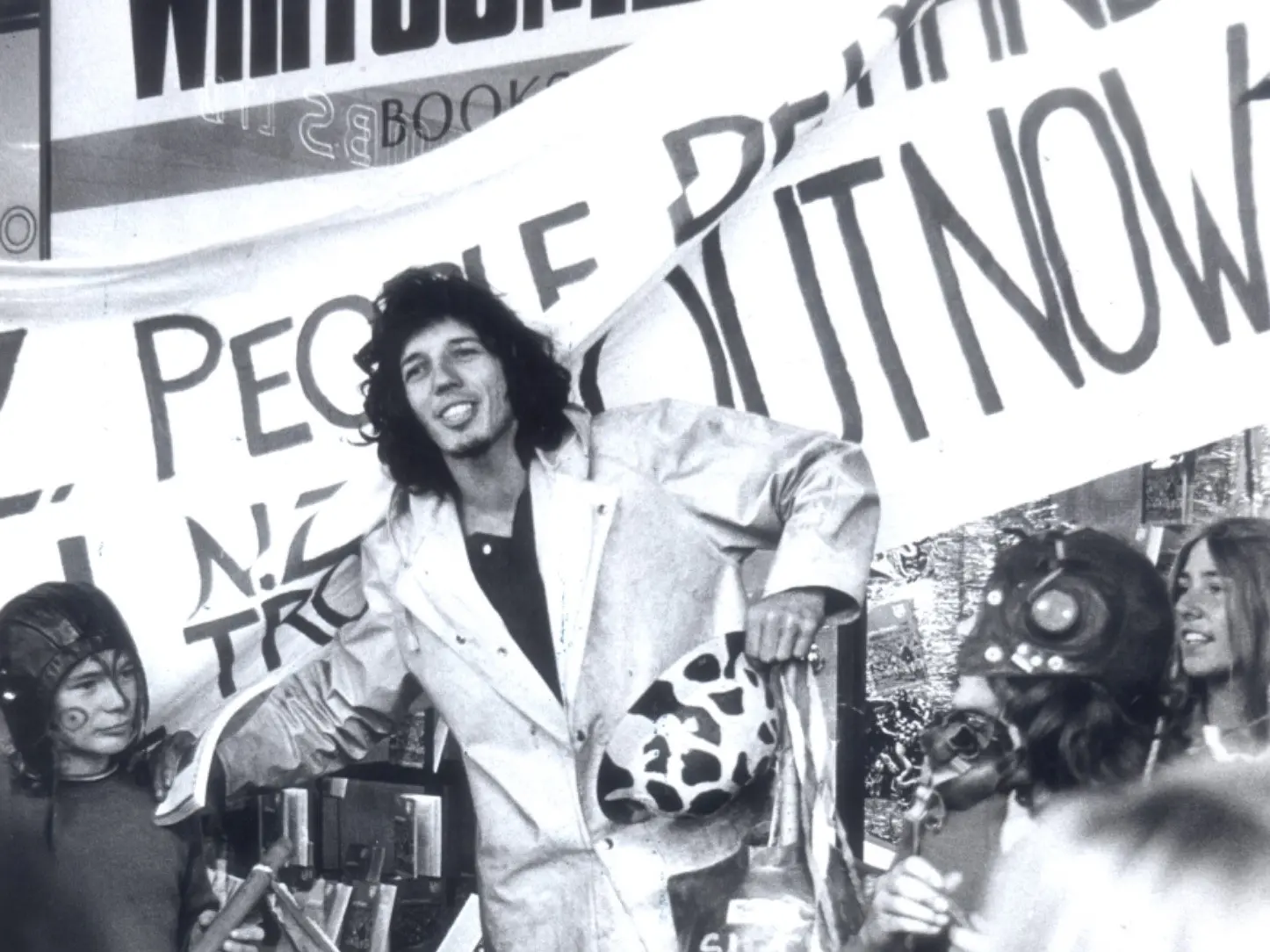
He also became a published author; fellow free-spirit Alister Taylor published Shadbolt’s notorious volume Bullshit and Jellybeans, a 1971 tome which scandalised staid old New Zealand.
Like any self-respecting hippie Sir Tim then founded and lived in a commune in the West Auckland hills, but soon youthful idealism gave way to practical economics. He moved back to town and worked on his concrete business.
Already the father of a son from an earlier relationship, he married Miriam Cameron in 1976. They had two sons, but divorced in 1992.
Politics were never far from Sir Tim’s thoughts though, and in 1983 he put his name forward for the mayoralty of Waitemata City.
Sir Tim said at the time that he only stood because otherwise the incumbent would have been elected unopposed, but what had seemed an impulsive, even maverick campaign took on a life of its own.
He pledged that he would use the mayoral limousine to tow his concrete mixer — a promise he later kept — and romped home by 1200 votes. Three years later, fronting the ‘‘Tim’s Team’’ ticket he won again, although his second term as mayor was soon bogged down in wrangling over his political management of his council supporters.
In 1988, Shadbolt’s deputy Gary Taylor resigned, leaving behind an explosive list of allegations against the mayor in his wake. A subsequent investigation did not substantiate many of Mr Taylor’s claims, but highlighted enough areas of concern for Sir Tim to have little hope of winning the mayoralty of the newly-established Waitakere City in 1989.
After his defeat Sir Tim took to the road, both as a performer and raconteur who spoke extensively around New Zealand, and as a political candidate.
For a while it seemed if there was an election, Tim Shadbolt was standing in it. He tried, and failed to become the Mayor of Auckland (twice), the Mayor of Dunedin, and an MP — in West Auckland and then in Wellington Central.
In 1993, Sir Tim made his biggest and most unlikely political comeback. Invercargill Mayor Eve Poole had died on Boxing Day the previous year, and the well-travelled Sir Tim rolled into town to stand in the by-election.
A large field of 14 played in his favour, as did his celebrity status. On a high turnout of nearly 80%, Sir Tim secured a third of the vote and won with a majority of 4326.
Becoming mayor was one thing, staying mayor was quite another. Sir Tim continued to be distracted by national political ambitions and in 1994 he stood in a by-election in the Canterbury seat of Selwyn for New Zealand First.
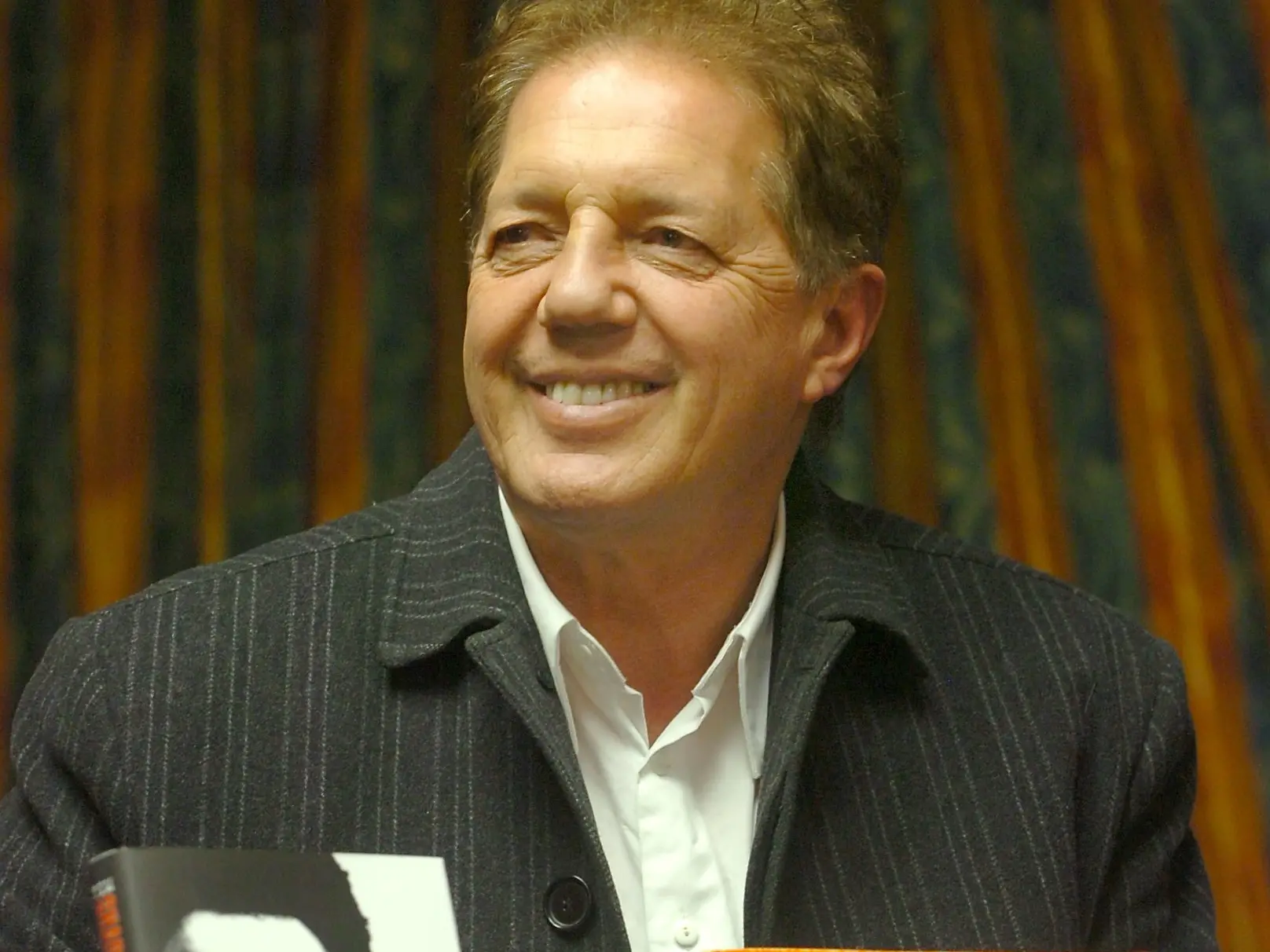
He was a well-beaten fourth, and then Invercargill voters registered their displeasure by turfing Sir Tim out as mayor in 1995: he lost by nearly 8000 votes.
But barely chastened, he was on another ballot soon after, standing in the 1996 general election for the Aotearoa Legalise Cannabis Party.
Sometime in the intervening two years Sir Tim settled down, both personally and politically. After briefly flirting with the idea of running for the job of Queenstown mayor, Sir Tim — perhaps realising it might be his final chance — made a determined effort to regain the Invercargill mayoralty.
A non-stop, high energy campaign had him here, there and everywhere around the city, toting a trademark soapbox with him for many planned and impromptu street corner meetings.
As with many of his campaigns, it deployed guerrilla tactics, and captured the imagination. He reversed the results of the previous election, bolting in with a 5753 majority.
Back at the head of the council table, Sir Tim entered a golden age as mayor when seemingly little could go wrong for him. Having mellowed with age, he switched from kicking against the pricks to trying to kick goals for Southland.
In the process he became incredibly popular — he ran unopposed three years later, and scored five-figure majorities over either one or two rivals in the two elections after that.
He also maintained a national profile through fronting many of the city’s promotional ads, coming third in the 2005 Dancing With The Stars TV series, and cropping up in a cameo performance in the Burt Munro biopic The World’s Fastest Indian.
Despite being an Aucklander, Shadbolt grew to become synonymous with Southland, and the province could not have had a more enthusiastic cheerleader. Notably, he threw his support full square behind the SIT’s zero fees scheme, an innovative attempt to revive the fortunes of the city’s polytechnic which has since been credited with helping to rejuvenate the city.
Other initiatives of the Shadbolt mayoralty included an extension of Invercargill Airport, development of Stadium Southland and the SIT Velodrome, and renovations of the Civic Theatre.
However, Sir Tim’s once vice-like grip on the mayoral chains began to loosen. In 2016, faced by two robust challengers, his majority fell to 5500, and he spent much of 2018 enmeshed in a bitter defamation case which, despite the fact that he won, was ruinously expensive.
An acrimonious election ensued in 2019, which he won by 3427 votes. However, he at least had the honour of contesting that campaign as Sir Tim Shadbolt, having received a knighthood in the 2019 New Years Honours list for services to local government and the community.
Sir Tim’s final term as mayor was marred by a sad, slow decline. His trademark broad smile and booming laugh became ever rarer as he clashed with the ICC’s chief executive, his deputy mayor and other councillors, and continued questioning of his capability to do his job.
In 2022 came the end of an era as Sir Tim lost to former deputy mayor Nobby Clark by 847 votes.
The previous year he had been diagnosed with muscle tension dysphonia, an ailment which particularly affects one’s speaking ability, and which curtailed any further political ambitions that he may have held.
His death on January 8, at 78, revealed that even if Invercargill had eventually voted him out, the city was not ungrateful for his contribution.
Sir Tim was afforded the rare honour of a public funeral service, held at a packed Civic Theatre.
He is survived by his partner, lawyer Asha Dutt, and their son. — Allied Media