
PHOTO
Cross-country skiing
The basics
Twelve races with a variety of distances, formats and styles.
Classic style is a forward-striding technique. Freestyle is side-to-side. Skiathlon combines both styles.
There are sprints, relays and longer distances.
What can we expect?
A battle royal for medals with the Nordic nations leading the way. Johannes Klaebo, of Norway, and Russia’s Alexander Bolshunov are the two biggest names on the men’s side. Natalya Neprayeva (Russia), Therese Johaug (Norway) and Ebba Andersson (Sweden) are among the leading women.
New Zealand Chances
No competitors.
What’s new?
There are no major changes to the sport or the equipment used ahead of the 2022 Games.
When?
February 5-22.
How did we get here?
Cross-country skiing is one of the oldest winter sports and is believed to have originated in Norway. It has been part of every Winter Games since the inaugural event in 1924 and is hugely popular in the Nordic region, central and Eastern Europe and North America.
Skeleton
The basics
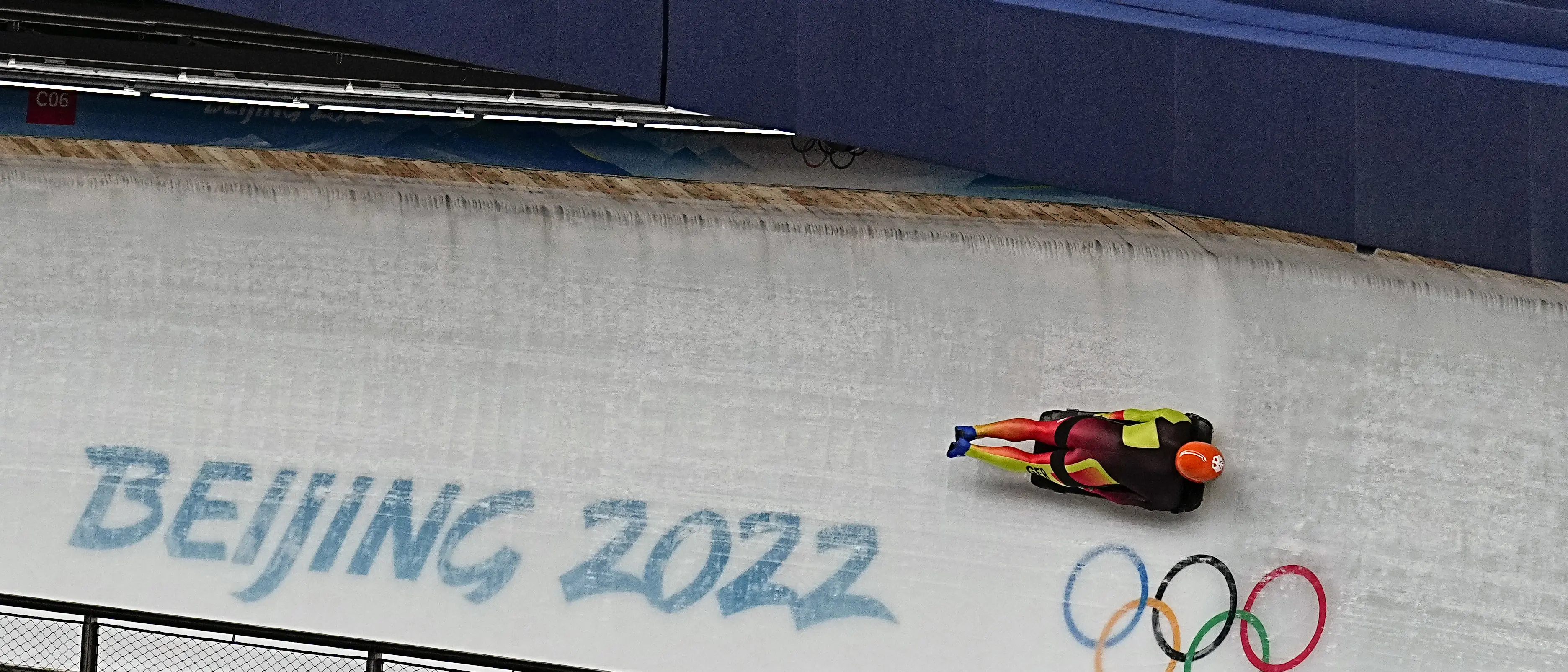
One of the Winter Olympics’ most exhilarating sports, individual athletes push their sleds to build momentum before leaping aboard and plummeting headfirst down a steep and icy track at speeds exceeding 129kmh. With only two events for the skeleton — the men’s singles and the women’s singles — it has joint-fewest medals at the Olympics. Winning margins normally come down to hundredths of seconds. Corners are the most brutal part for athletes with G-forces up to five times normal levels — higher than some rocket launches.
What can we expect?
Latvia veteran Martins Dukurs finished fourth four years ago after a poor start, but he will again be a force to be reckoned with in Beijing after winning the world cup competition for the 11th time last week. Great Britain’s Yarnold has retired, so her country will look to Deas to keep up the winning streak. However, she faces stiff competition from Germany’s Loelling and Tina Hermann.
New Zealand chances
No competitors.
What’s new?
Touted as the "Flying Snow Dragon" due to its zig-zagging shape, the sinuous sliding track features a first-of-its-kind 360 degree loop.
When?
February 10-12.
How did we get here?
The skeleton supposedly takes its name from an entirely new, skeleton-like steel sledge, introduced in 1892.
Like other slide events, the skeleton’s spiritual home is the Swiss resort town of St Moritz. While the skeleton featured in the 1928 and 1948 games, it fell into obscurity as bobsleigh and luge became more popular. It made its return in 2002 in Salt Lake City.
Speed skating
The basics
For the individual events, athletes race around a 400m oval ice rink for set distances ranging from 500m to 10,000m for the individual events. In the team pursuit event, two teams of three skaters race around the track in an elimination contest. The mass start event kicks off with up to 24 skaters beginning all in one go in a chaotic opening.
What can we expect?
The Dutch are facing more competition than ever from countries such as Japan and the United States.
Top-ranking US athletes Erin Jackson, Brittany Bowe, and Joey Mantia are well positioned to aim for gold, while Japan’s Kodaira will be seeking to maintain her title.
New Zealand chances
Peter Michael could be the dark horse in the Kiwi camp. He was fourth in the 5000m at the last Olympics and has been in good form.
What’s new?
Beijing will host the speed skating events at the National Speed Skating Oval — the only venue to be newly built for the Beijing 2022 Games. The rink, which covers an area of 12,000sqm, opened in October.
When?
February 5-19.
How did we get here?
Speed skating is said to have originated in Scandinavia and the Netherlands more than a thousand years ago, when people would cross frozen bodies of water with skates made from animal bones. The Dutch hosted the first world championships in 1889, and the sport has been part of every Winter Games since 1924.
Luge
The basics
The fastest sport in the Olympics, a single rider goes feet-first and face-up, steering themselves down a special track with their calf muscles and shoulders down, at speeds of more than 130kmh.
There are four disciplines: men’s singles and doubles, women’s singles, and the team relay in which both sexes can compete, although it tends to be men.
Germany has dominated the sport, cleaning up 18 gold, 10 silver and nine bronze medals in past tournaments.
What can we expect?
Germany will be the team to beat again, though Austria’s David Gleirscher was strong in last year’s world championships. Natalie Geisenberger, already the most decorated female luger in Olympic history, will be looking to pick up a third successive medal.
New Zealand chances
No competitors.
What’s new?
China’s luge team will be making its Olympic debut on home ice after starting from scratch in 2015. It is coached by Liechtenstein’s Wolfgang Schadler, who was in charge of the US team for 24 years. He was about to retire before being approached for this unique challenge.
When?
February 5-10.
How did we get here?
Luge, the French word for a small sled, has been around for centuries, but it started to enter its modern form with dedicated tracks in Swiss resort towns in the 19th century. The sport made its Olympic debut in 1964.
- Additional reporting Reuters