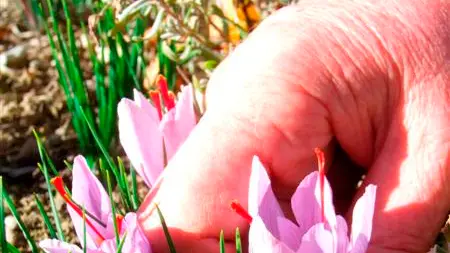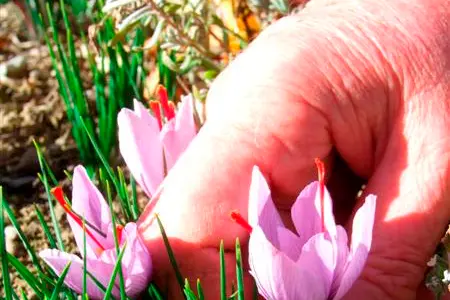
The world's most expensive spice is being grown in the Mackenzie district.
Saffron - the red stigma, or threads, from the crocus sativus flower - commands a high price.
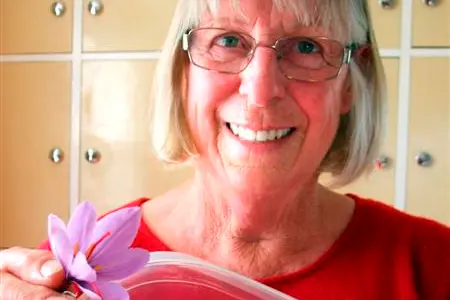
But for Central Otago woman Roberta Laraman, growing saffron at Twizel is "a love thing".
"I'm not in it for the money. There's just something when you read the history of saffron, something quite special about it," Mrs Laraman said.
So for about five weeks a year, she leaves her Cromwell home and heads to Twizel to harvest the saffron - a most labour-intensive and painstaking job.
After seeing "acres and acres" of saffron growing in Iran, on countryside similar to the barren hills around Alexandra, she was inspired to plant some corms at Twizel, where the climate was ideal.
She sourced them from her daughter, Amber MacMillan, who also grows saffron near Cromwell, and had a vision of creating Aoraki Saffron.
While saffron was traditionally grown in Spain, Iran, India and Greece, New Zealand saffron had more intensity, due to the drying method, she said.
Dehydrators were used rather than the traditional method of drying threads in a sieve over an open fire, which caused the volatile oils to escape.
Unlike most plants, all saffron's leaf growth took place in winter.
Growth dried off from late spring, and the soil needed to be warmed to more than 20degC to set new flowers in the corms.
Flowering and harvesting occurred in early April, or when soil temperatures dropped below 17degC. It happened later this year as the weather had been so warm.
There were 150 flowers to 1g of dried stigma and Mrs Laraman struggled with the concept of Iran exporting between 175 and 220 tonnes of saffron to Spain.
Top restaurants in New Zealand could pay about $19 a gram for "top quality" saffron.
Saffron flavouring could be used in many dishes, both sweet and savoury, including sauces, dressings and soups, with fish, chicken, vegetables and in baking.
Saffron ice-cream was "simply delicious", Mrs Laraman said.
When it came to using it,less was better than more.
The flowers smelt like "runny honey" when picked.
Over centuries, saffron has been highly revered. Buddhist monks' robes were dyed with saffron and it has had many medicinal uses.
Picking at Twizel was a solo job and she did not mind that it was very labour-intensive.
"I'm retired, what else am I going to do?" she asked.
A lot of people had planted saffron corms - "a bit like me, originally with the romantic idea of it all" - but not all had been successful.
Plots needed to be rabbit-proof, and some people found the work of weeding and harvesting too hard.
Those getting into saffron with the aim of making money would need to have a "huge plot".
The harvest could not be relied upon unless it was large-scale.
Mrs Laraman's plots were fairly easy care, apart from weeding.
"You largely forget about it for most of the year and then it's all on."
At the moment, it was the height of picking.
"You get, very, very dirty, broken, stained nails," she said.
Most of her saffron ended up at The Mediterranean Market in Queenstown.