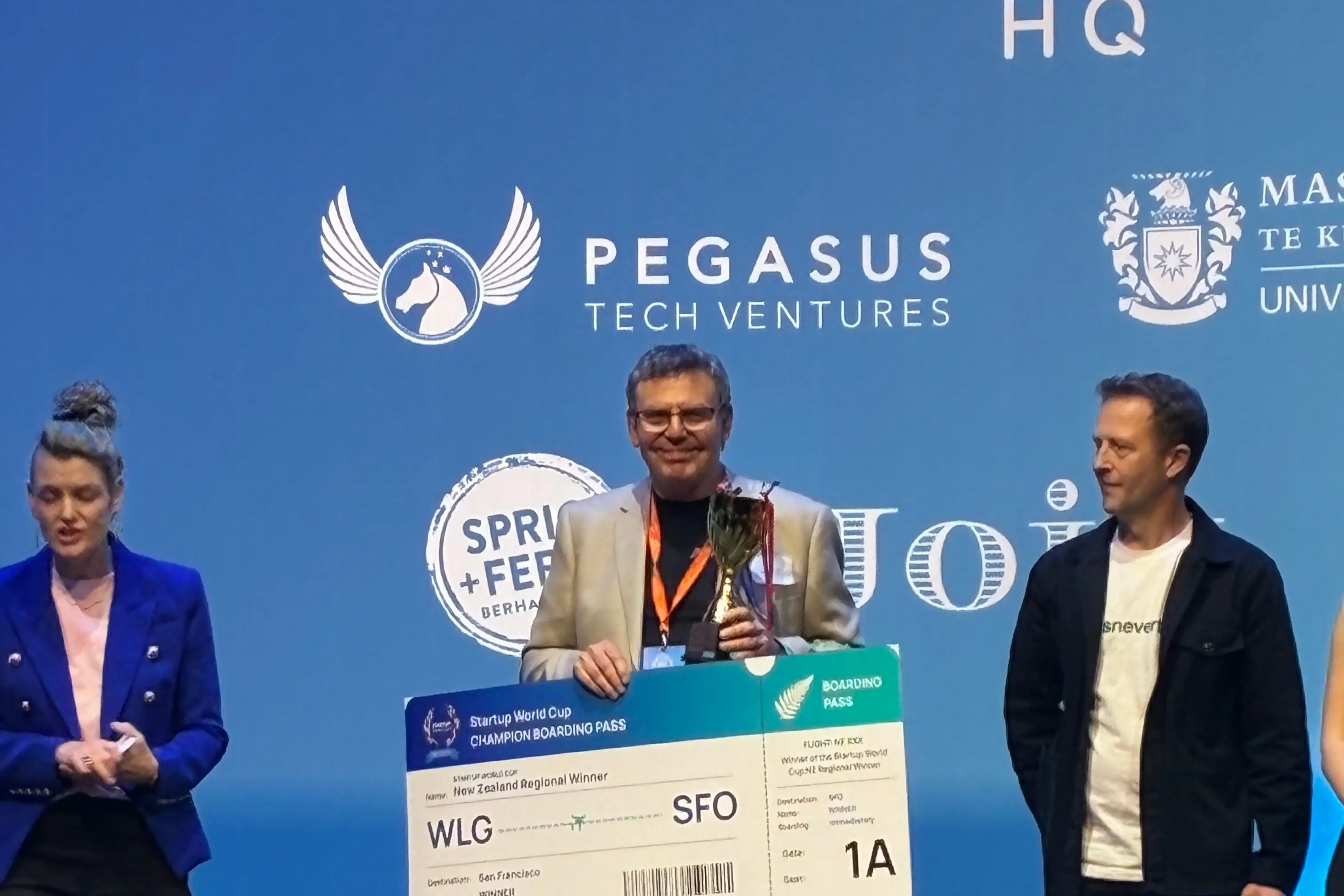
Professor John Reynolds was “floating on air” yesterday after the neuro technology startup he co-founded in Dunedin was named winner of the 2026 New Zealand Startup World Cup final. The Neumic Therapeutics team would be flown to Silicon Valley to represent New Zealand at the global final in November, pitching for $US1 million in front of global investors and tech leaders. “A lot of companies are going for it. We can only do our level best to wave the flag for Dunedin and for our company,” a delighted Prof Reynolds said yesterday. Neumic Therapeutics, which is on a mission to restore brain function using focused ultrasound, had sprung from the University of Otago where he had done 26 years of research. His training in medicine in Dunedin and interest in rehabilitation from brain disorders in Whangarei led to that curiosity-driven research investigating the changes that occurred in normal brain circuitry after the likes of Parkinson’s disease. Identifying there was a problem to solve, Prof Reynolds returned to Dunedin to do a PhD on neuroscience with the idea he might be able to contribute something to help. After several decades of research, Neumic Therapeutics was developing focused ultrasound to target treatment for neurological disorders. The first in-human trials were expected to begin in Dunedin and Auckland in 2028 to help people with tinnitus in their ears. Neumic Therapeutics had created a system using a wearable headset that directed ultrasound waves into targeted areas, allowing drugs to be dispatched where and when they were needed. The most rewarding part of the work would be to see people wearing the headsets and improving their ability to move around, without the “terrible movements” caused by Parkinson’s, or having their quality of life improved, he said. That was still a few years away but Prof Reynolds remained passionate about his work and its potential, saying he had a lot of energy and a great team around him. His co-founders included Dr Ralph Highnam, the founder of Volpara Health and pioneer in AI-driven breast cancer screening, who built Volpara from a university spinout into an ASX-listed global healthcare technology company, and Alex Sweetman, a commercialisation and operations executive. It was a new world for those wanting to spin out companies from New Zealand universities, Prof Reynolds said. In November last year, then science, innovation and technology minister Dr Shane Reti announced a new national intellectual property policy to give researchers more control over their inventions and greater opportunities to turn world-class ideas into commercial success. Prof Reynolds said the University of Otago had been “incredibly supportive” of Neumic Therapeutics, which was very much a partner with the university. He was delighted to share the stage in Wellington on Monday night with 11 other companies which had “fantastic ideas”. They were mostly young founders and he found them inspirational. Neumic Therapeutics would open a seed round from October this year and was looking for about $7m investment, he said.