
PHOTO
Billboards are popping up like mushrooms as the November 7 general election looms.
Parliamentary hopefuls are putting up their campaign signs across the country, with candidate nominations open until October 8.
Local councils have a role in policing election signage and rules can vary around the country.
The Electoral Act says candidates can have election signs that are up to three square metres in size and they must be removed by midnight on November 6.
A Waimakariri District Council spokesperson said election signs face tighter restrictions than other forms of signage.
‘‘The key rule is that political signage is not allowed on any council-owned or leased land, including the road reserve (roads, berms and footpaths).
‘‘Signs on vehicles are exempt, unless they create a road risk.’’
The Hurunui District Council is applying the same rules used in local elections.
Signs can be erected in Hurunui road reserves provided rules are followed and consent is obtained from either the council or Waka Kotahi NZ Transport Agency.
Signs on rural roads also need to have a minimum separation distances from other signs.
All advertising, including billboards, must contain a ‘‘promoter statement’’, stating who it is authorised by.
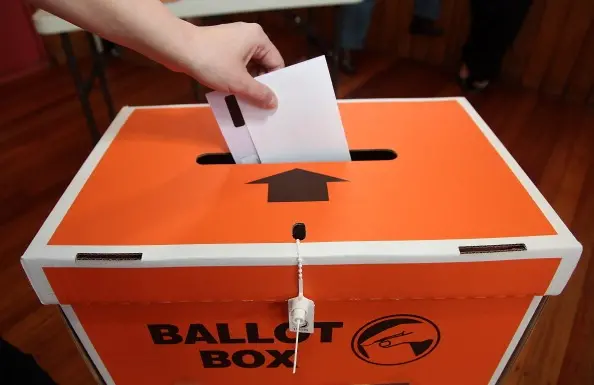
Unlike previous elections, recent legislative changes mean there will be no last minute enrolments at the polling booth.
The last day to enrol to vote will be October 25, with advance voting starting the next day.
Registered voters will get two votes - one for their local electorate representative and the other for the party of their choice.
There are 16 political parties registered with the Electoral Commission, including the Act Party, the Alliance Party, the Animal Justice Party, the Aotearoa Legalise Cannabis Party, the Conservative Party, the Green Party, Free Palestine, the Labour Party, the National Party, New Zealand First, New Zealand Loyal, the New Zealand Outdoors and Freedom Party, Opportunity Party, Te Pāti Māori, Te Tai Tokerau Party, Vision New Zealand, and the Women’s Rights Party.
There are 64 general electorates and seven Māori electorates, with list MPs making up the remaining seats in the 120-seat Parliament.
List MPs are chosen off party lists, based on the number of party votes a party receives and after accounting for electorate seats.
An overhang occurs if a party wins more electorate seats than its proportion of the party vote allows.
North Canterbury candidates
Based on party websites, there are six candidates standing in the Waimakariri electorate, five in Kaikōura and five in Te Tai Tonga.
Sitting Waimakariri MP Matt Doocey (National) is being challenged by Ashley Bettridge (Act), Steve Chick (Conservatives), Jackie Farrelly (New Zealand First), Dan Rosewarne (Labour) and Richard Wesley (Greens).
Kaikōura MP Stuart Smith (National) is being challenged by Jamie Arbuckle (New Zealand First), Matthew Flight (Labour), Oliver Hill Hughes (Independent) and Tom Spooner (Act).
Tākuta Ferris was elected as Te Tai Tonga MP in 2023 standing for Te Pāti Māori, but he has announced he is standing in this year’s election as an independent.
He is being challenged by Tania Hanare (Aotearoa Legalise Cannabis Party), Lisa Marie Murch (Te Pāti Māori), Mananui Ramsden (Labour) and Lisa Te Morenga (Greens).
To check you are enrolled or to enrol to vote go to the Electoral Commission website vote.nz.
■ LDR is local body journalism co-funded by RNZ and NZ On Air.