

PHOTO
A remarkable natural world discovery has been made on a beach less than 20km south of Timaru.
On Wednesday last week, South Canterbury Museum staff were informed of a potential moa bone discovery on a beach in the St Andews area.
South Canterbury Museum director Philip Howe said the museum was contacted about the potential find by Pippa Yates, the mother of a child in the Museum Explorers Club, who had come across the bones while walking her dog.
“She sent photographs up, and we thought, ‘oh, we’d better go and have a look at that’.
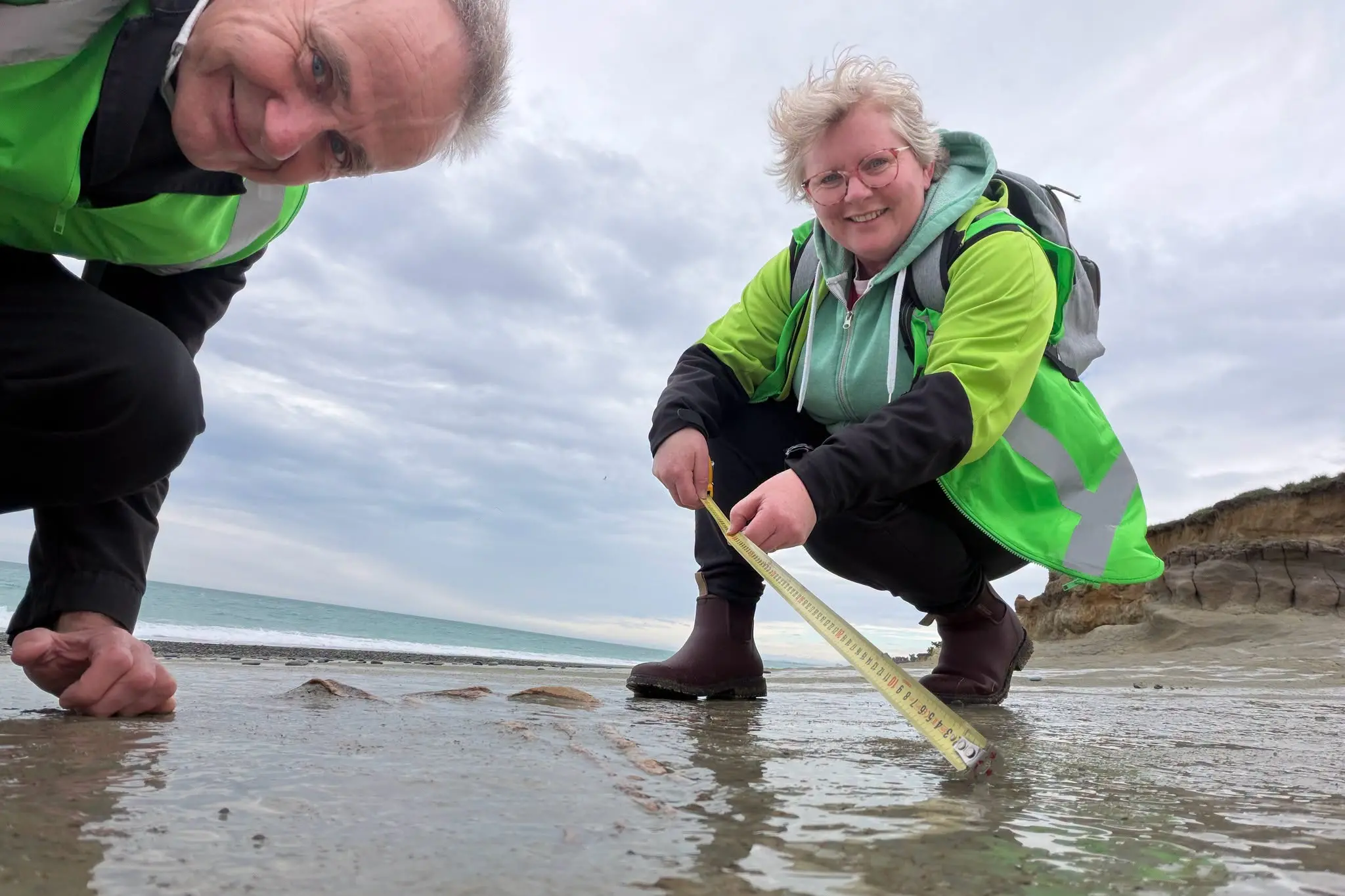
“[Museum educator] Keely [Kroening] and I went down to have a good look … the site itself appears to be quite an extensive area of former forest floor.
“I’m taking a guess that it’s possibly from the last, what’s called interglacial, and at that stage the sea was a lot further out and the lowland area was covered with forest.”
Mr Howe said these types of areas were occasionally exposed, both to the north and south of Timaru, when the sea cut in and shifted material off the surface.
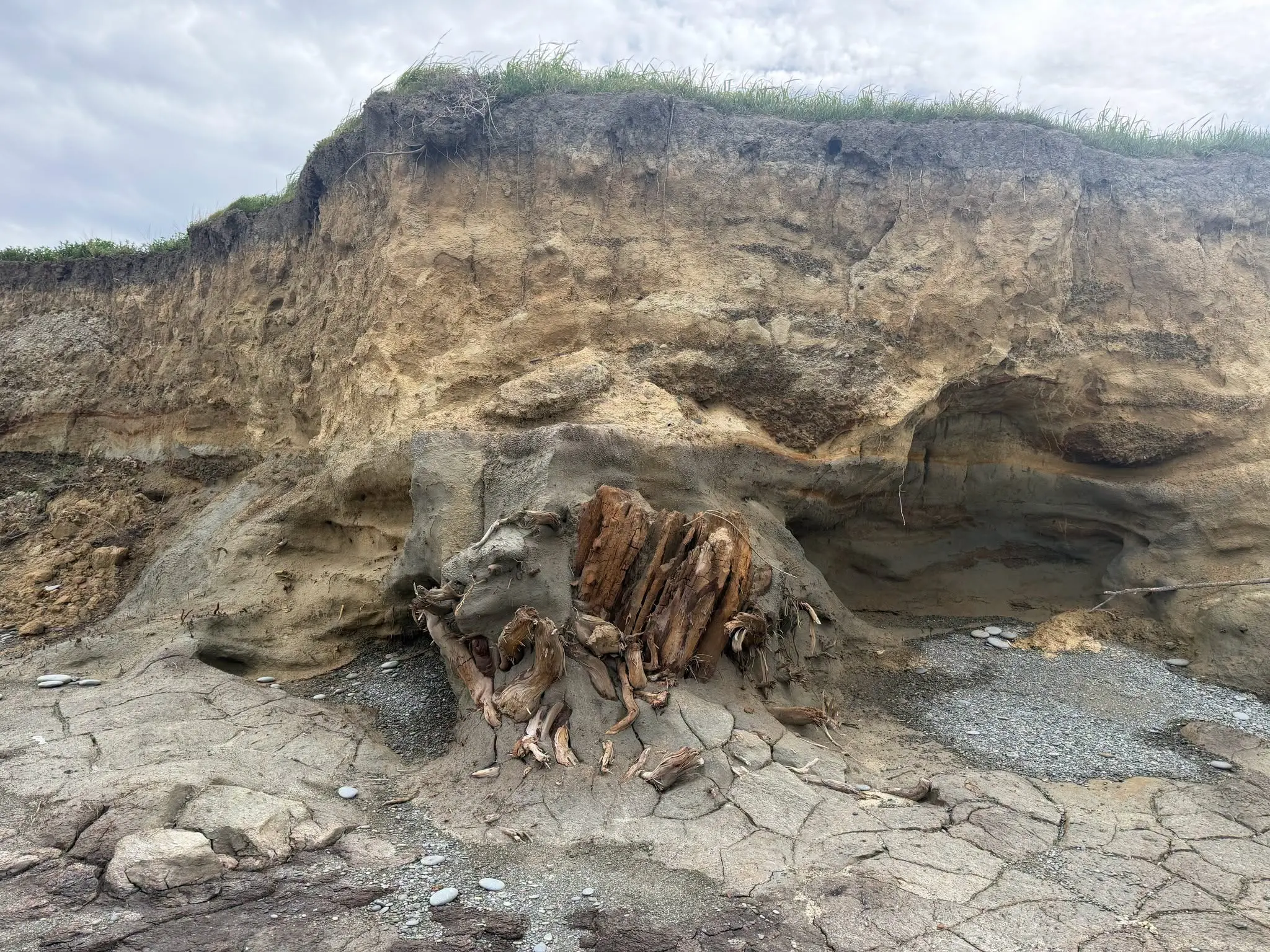
“In this case, there was clearly quite a thick layer of wind-blown loess — that’s the yellow clay-like substance we get around here in vast abundances.
“It’s not actually clay: it’s formed by wind-blown dust from the ice ages. So that was on top, and it had been lifted off to expose this forest floor.
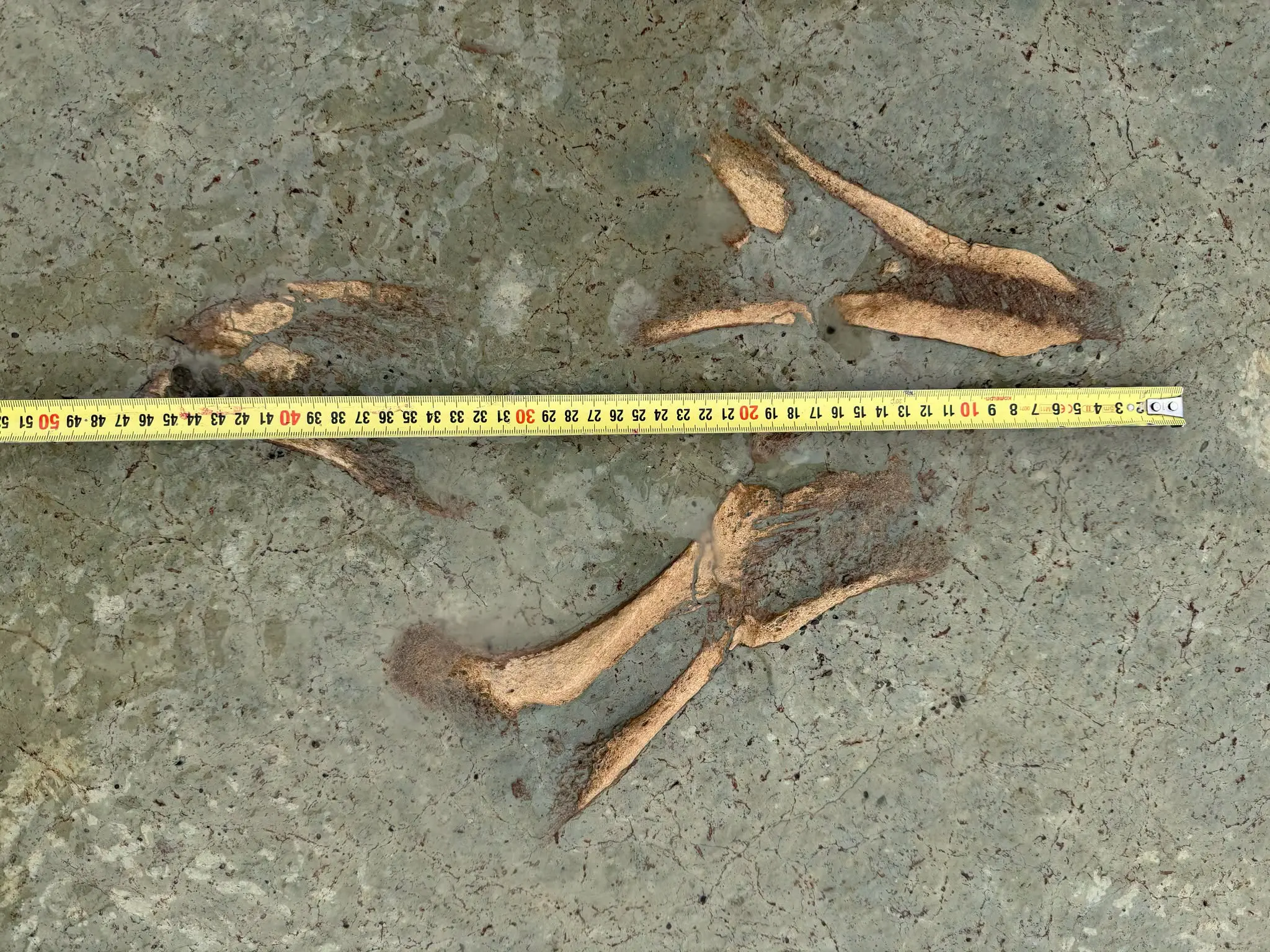
“Then there was this one section which had just a very hard mud surface and the bones were sort of flush. They’d obviously been shaved off; they were damaged.”
He said they had attempted to extract some of the bones but were unable to.
“They were very crumbly as well as pretty small and fragmentary. So we took a few samples and thought we’d just leave it at that.
“There was no point trying to excavate something if there’s not much to excavate and it’s just going to break up anyway.
“I think it’s possible that the wood samples could be dated by someone who’s got the means to do so, as it would be interesting just to get a handle on how old that material is.”
He said it was interesting to see a site that indicated a snapshot in time of the earlier South Canterbury environment and how it had changed.
“During the last few hundred thousand years, there were several ice ages. We’re currently in an interglacial.
“Give it another 20,000 years, and there might be more ice again, depending on what happens with the Earth’s temperature, because now we have man-induced heating going on at a rapid rate.
“There have been cycles of warm and cold over time, and that has a real effect on the landscape and also on the lifeforms, which adapt accordingly.
“It looks like there’s been at least one intervening ice age between that deposit and now. Judging by what I could see on the cliff with the layer of loess, which we know was formed during the ice age, that was above the forest floor surface.”
Mr Howe said it was much rarer nowadays for people to stumble upon these types of discoveries due to land surfaces being modified by human activity.
“In 2022, we had a fellow called Chris Sargent, who lives at Pareora, find moa footprints. That’s a much younger deposit, in my opinion.
“Those footprints and the toe bones that were found were much better nick, much more recent. I suspect that’s from the last 10,000 years after the last Ice Age, before the sea level came up to its present day, and that could have been a coastal swamp deposit.
“Whereas it strikes me that this area had big trees growing where the beach is now, so the coast was probably a lot further out.”
Another moa bone discovery was made in the region in 2017 when Alpine Energy contractors found bones in a farm area inland from Waimate while digging a trench for cables.
While discoveries were rare, Mr Howe still encouraged people to keep their eyes open and to make contact with the museum if they ever came across something.
“Some discoveries that have been found from the natural world come from somebody being in the right place at the right time. You could come back a week later and that site could have been covered over or washed out of the moor.
“These things are a moment in time and are sometimes only here for a moment in time. That’s what makes it interesting.
“We want to document things, and the good thing is, it’s never been easier. Everyone’s carrying a camera with them in their phone, and can take good quality photographs, send them to us, and we can tell straight away if it’s something of interest.
“I’d rather be shown something which turns out not to be anything significant, than to miss out because we didn’t look.”