
PHOTO
Are you a fan of fences, or would you rather ban the barricades?
In the urban setting, some fences act like highways, providing a convenient aerial route for possums to scurry along. However, fences have become an important part of the toolkit working towards Predator Free 2050.
Not just any fence, not your humble low brick wall or sturdy wooden barrier, but rather the sophisticated engineering marvel that is the modern predator-proof fence.
Fenced sanctuaries in New Zealand became well-known in 1994. I remember reading about the research and trials at the time and wondering how successful they might be.
The fences had to stop all sorts of mammals from climbing through, over and even under the barrier. While expensive to build, the first of those fences has lasted well beyond what was projected. They do need to be maintained, monitored and inspected regularly, but the results are amazing.
What is now known as Zealandia was the first of many ecological islands in New Zealand. By eliminating pests and predators within the fence, not only can native plants and animals bounce back, but also spread out into neighbouring areas. They are effectively the first predator-free places on the mainland since people arrived in New Zealand. Some of these are huge. Sanctuary Mountain Maungatautari is a whopping 3400ha, enclosed by a 47km fence!
The nearest fenced sanctuary to Timaru is 45km away in Waimate. Point-Bush Sanctuary is 94ha of native bird habitat, surrounded by a predator-proof fence.
The community is working on eliminating the pests and predators now, with a long-term goal of adding kakaruai (South Island robins) and tieke (saddlebacks) to the korimako (bellbird), tui, Kereru (native wood pigeon), piwakawaka (fantail) and titipounamu (rifleman) already enjoying the remnant native bush.
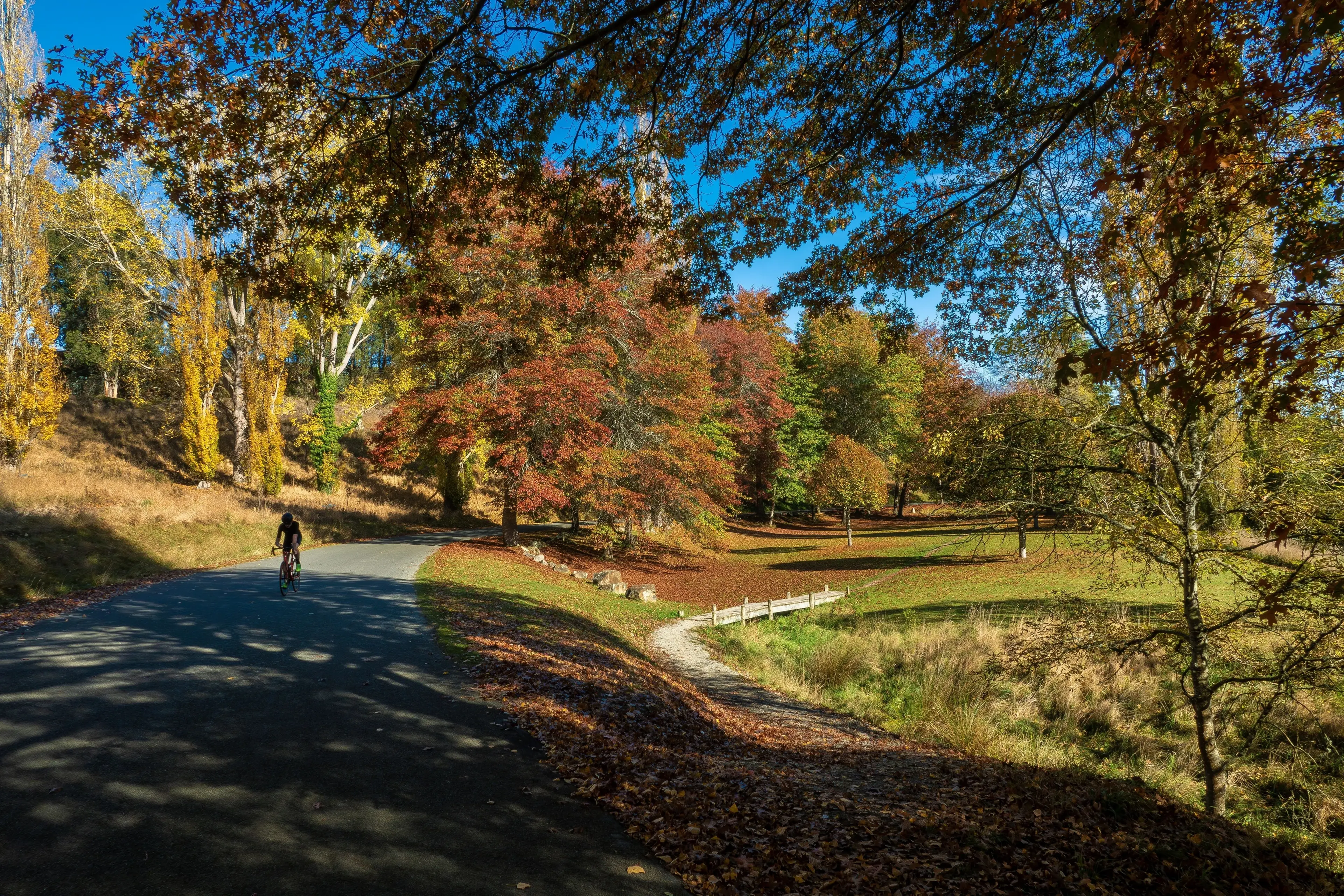
The Scenic Reserve/Centennial Park in Timaru is 65ha by comparison. Right in the heart of Timaru, the area is much-loved and well-used by the community.
Part of the reserve is already designated as a wildlife sanctuary. We already have some native birds visiting and nesting. Could we also surround it with a predator-proof fence, completely get rid of mustelids, possums and rodents, and still retain access?
Absolutely. There are some practical hurdles to overcome, but nothing that hasn’t been done in other places.
Is it worth doing? Ecological sanctuaries are the next step for conservation in New Zealand. Conservationists have done such a good job on offshore islands preserving endangered birds that some are running out of nesting sites. In addition, there are plants and animals unique to South Canterbury that would thrive here if we provide enough food and safe habitat. Imagine the tourist drawcard if we could offer the chance of seeing rare birds, geckos and skinks on your walk or bike through the Scenic, and even bats in the evening.
What would it take? Like every other community-led project: time, energy and money! Is this a project that you could get behind?
■ Predator Free Timaru is a group of passionate locals on a mission to bring back the birds to Timaru by predator control in local backyards and green spaces, and is one of many groups nationwide working towards the Predator Free 2050 vision.