
PHOTO
ROAD TEST
When Europe’s premium brands became really serious about going electric, the argument supporting the logic seemed so solid.
New fuel, new technology, new opportunity. Yes, transition required a certain steely resolve, and local acceptance of some challenges with the recharging infrastructure. Even so, five years ago, it was hard for forward thinkers to find significant fault about this not being a fail-safe for a new future.
But as we all know, EV sales haven’t become the all-conquering dominant force so many were expecting. For all sorts of reasons, some global, others specific to our market, hope of the ICE to EV transition being a speedy, easy switch has eroded.
But electric car development goes on, including for Audi, whose e-tron programme has entered a significant new phase.
The SQ6 on test here doesn’t quite render the Q7, and RS GT electrics of 2020 and the subsequent Q8 into obsolescence. Yet what’s come now is surely a sizable technology leap.
Audi is really putting an emphasis on technology to try to differentiate its electrics; and within that category, a big pull is this car ushering 800 volt architecture. On top of that, a more rounded ability, spanning from having better range to improved towing — it can haul more than two tonnes — and a more pleasing driving feel also figure.
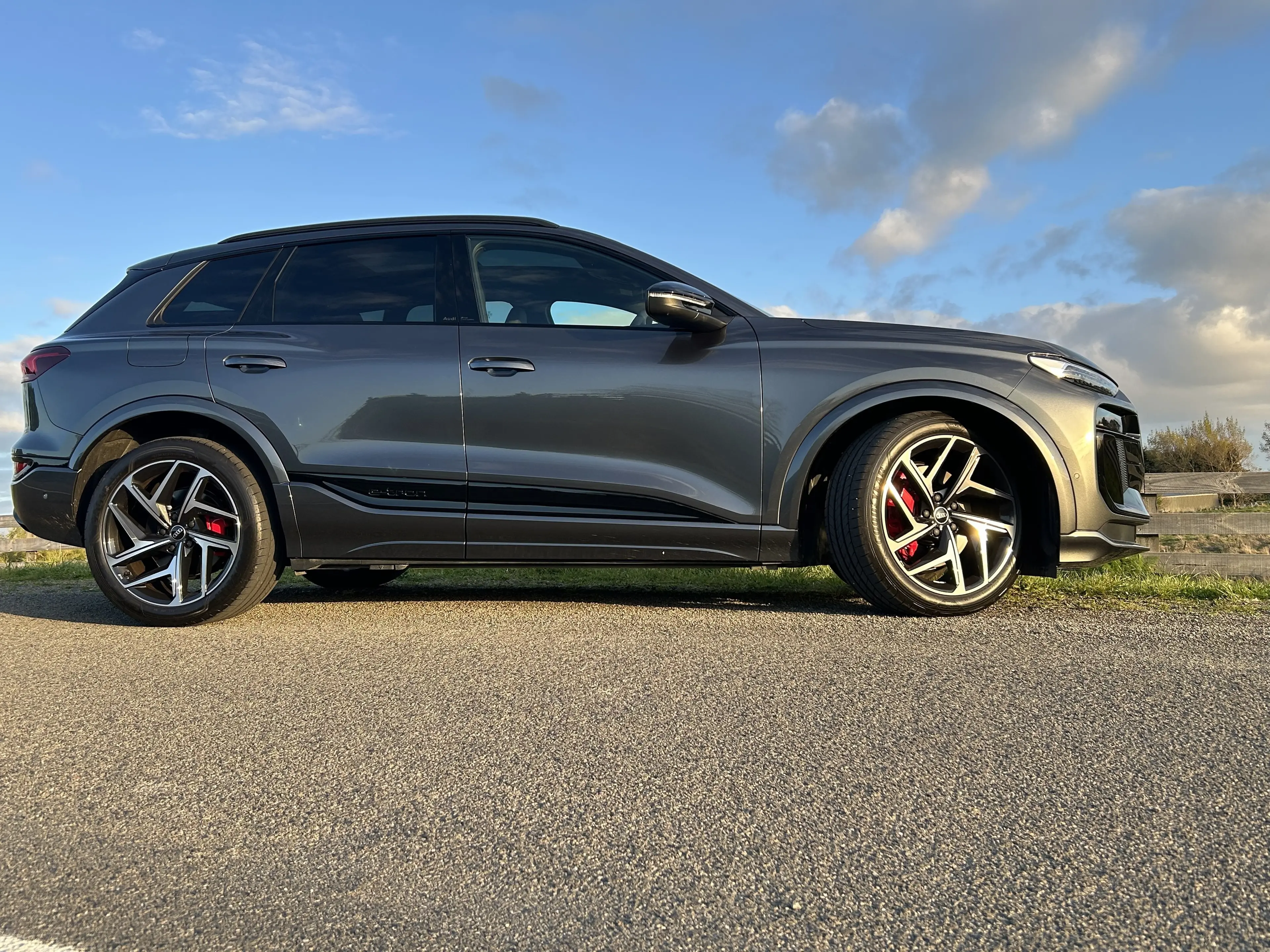
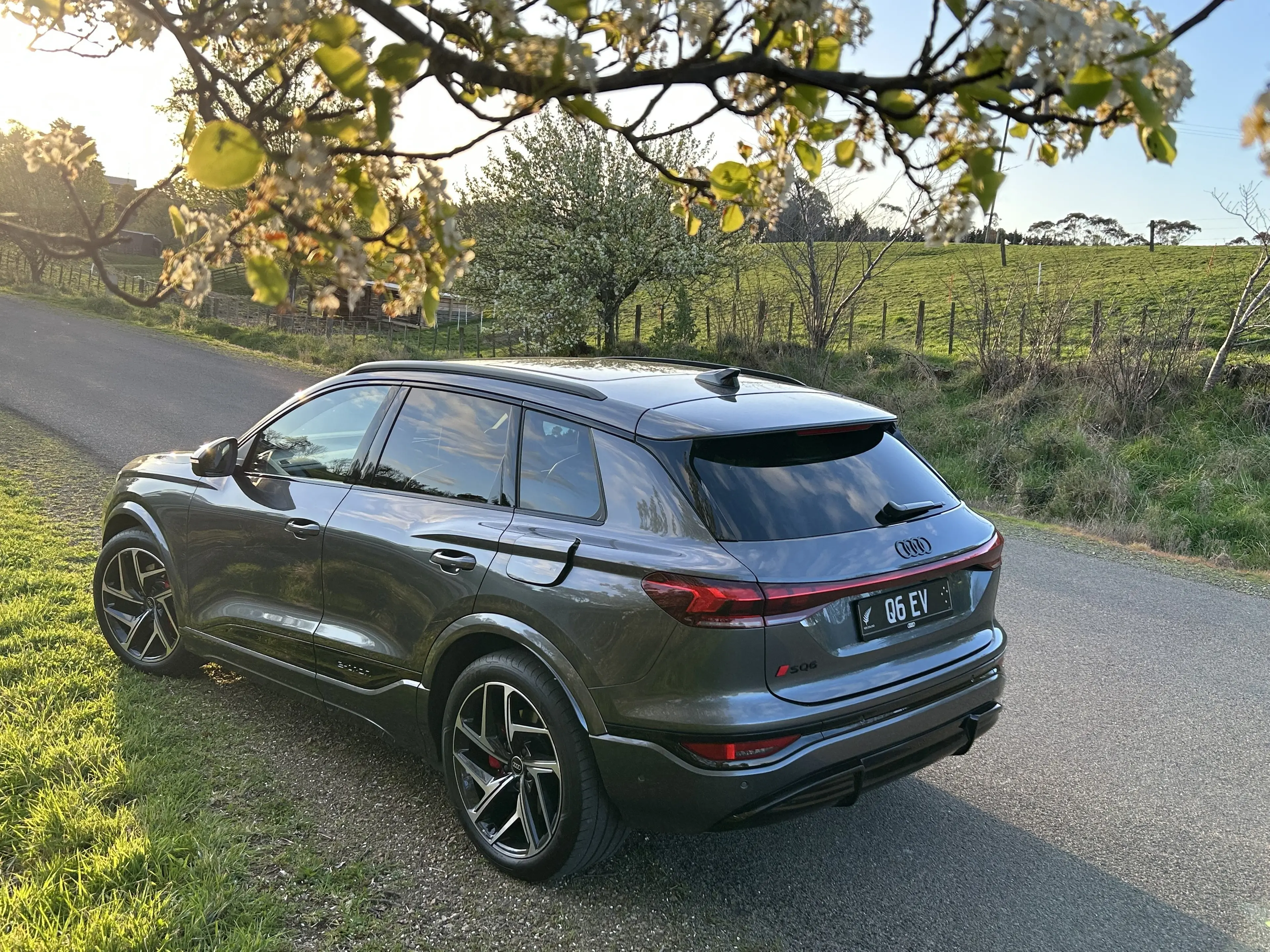
Within the Audi thought stream, this is a mid-sized product, equidistant between the Q4 and the Q8. Yet visually it seems much less a halfway point than an alternate to the larger car. They’re the same width and the Q6 has a long wheelbase measuring 2.89m, which is good news for passenger space.
That’s a sweet side effect of going to new bones. The Q6 announces the Premium Performance Electric (PPE) underpinning, co-developed with Porsche (for the Macan). Twinned with a new electronic architecture, PPE is designed to be highly scalable for medium-sized to large vehicles, with both rear-drive single-motor and four-wheel-drive dual-motor powertrains.
With the Q6, the main power unit is a permanent magnet synchronous motor on the rear axle. To optimise efficiency, an asynchronous motor is used on the front axle.
Audi claims the new system provides 62% more power density and 33% greater performance than the first-generation units on the Q8, while also reducing overall vehicle energy consumption by 30%.
Feed is from a 100kWh (94.9kWh usable) lithium-ion battery that features a new design comprising 12 modules — a third as many as in the Q8’s pack — and 180 prismatic cells, which are now larger and contain less cobalt. The battery also features a new thermal management system to better control the temperature and therefore improve efficiency. A built-in heat pump is standard.
The new design means the battery boasts 5% higher energy content with 30% greater energy density, while also being 15% lighter than the previous generation.
Of course, one clear learning from the past few years is that large capacity batteries only prove to be bigger and better when the infrastructure supporting them is up to snuff.
Thanks to some truly brave entrepreneurial spirit, NZ has done very well to establish a national network, but my own home being just 20 minutes from a 300kW hypercharger was a great reassurance. Sure, to meet Audi’s cited expectation of gaining 200km of range in 10 minutes would require one of those to be working to optimal 270kW output. A tall order in my neck of the woods. But still, even at the more likely peak rate of 150-170kW, I wasn’t lingering too long.
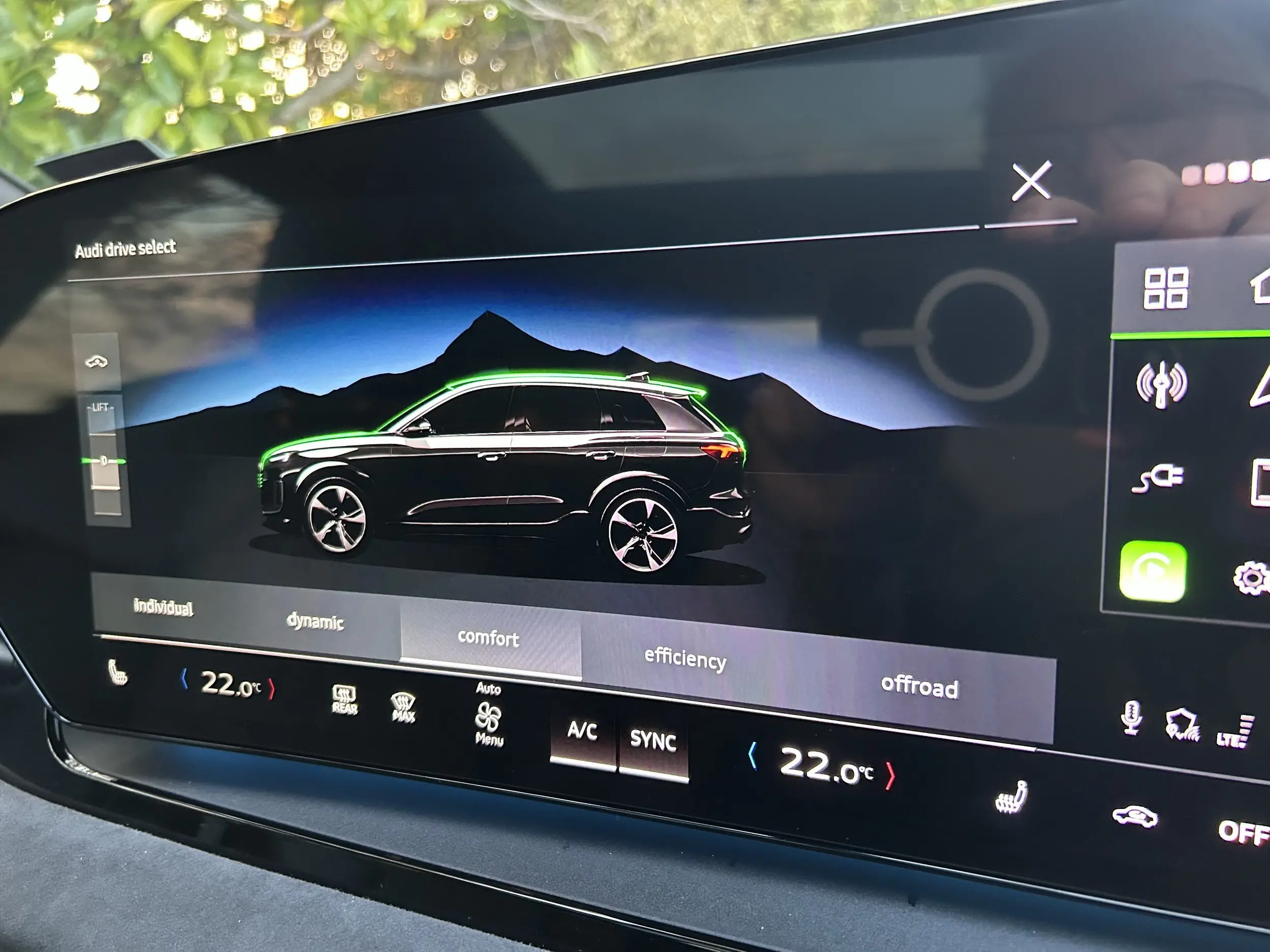
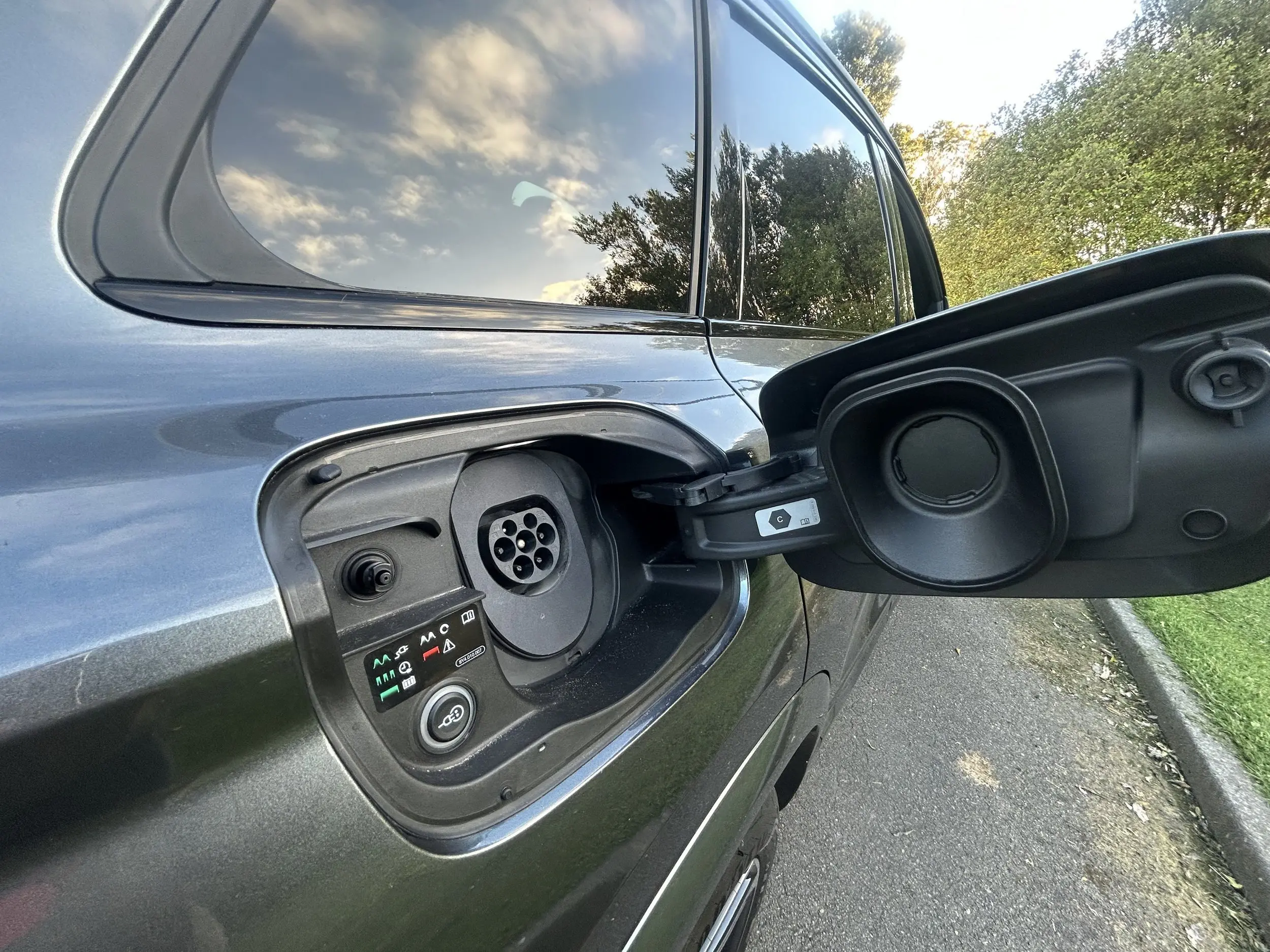
One point of difference with the Q6 is that it has DC and AC ports, mirror-located on the rear flanks. The DC type being on the left side makes it a bit awkward when hooking to some chargers. The AC charging is up to 11kW, so more a last resort for on the go, but spot-on for overnight drip-feed home charging.
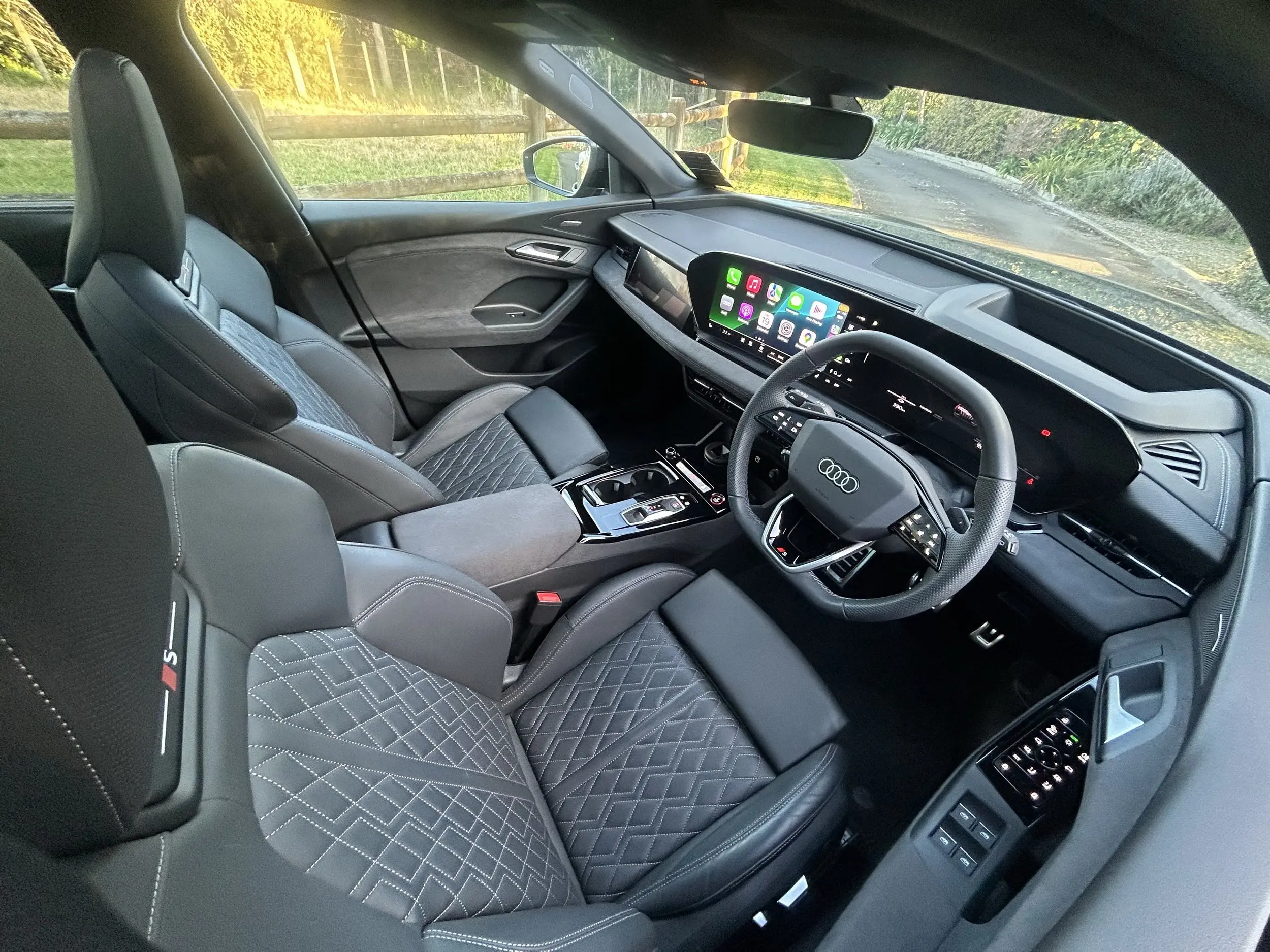
Charging downtime is a good opportunity to enjoy the car’s cabin. Audi interiors at this price point tend to be rather nice, and the Q6 excels in providing the premium trappings buyers will expect to see.
This time they’ve sensibly dropped those daft digital door mirrors with screens in the door cards, displaying the view the cameras see. Even so, the digital integration overall is expanded; the dashboard landscape being so filled they’ve been forced to re-site controls you’d expect to find there on to a large touch pad on the driver’s door.
While one might wish for a few more physical controls, you certainly achieve a full digital experience out of what Audi calls its "virtual cockpit".
The new dual-screen curved display encompassing instrument and infotainment screens — and the head-up display — provides the driver with an impressive view and slick operability. The graphics are impressively crisp, and there’s a wow factor in how the ambient lighting makes the whole unit appear to float at night.
Audi’s augmented reality head-up display is now in its second generation. In addition to projecting the usual driving-related information, it also dynamically animates direction changes from the navigation system to appear as arrows floating in the road as you approach a turn up to 200m away, growing as you approach. It might sound gimmicky, but is truly useful.
The SQ6 also provisions a touchscreen for the front passenger, providing direct access to the infotainment system, navigation and video streaming services. When the car is moving, a clever privacy layer prevents the driver from seeing what is happening on screen. A bit OTT? Yes, it feels a bit unnecessary a lot of the time, but it has a simplified version of the central touchscreen’s operating system that’s easier and more intuitive to use than the primary display.
When driving, the vehicle is very pleasant in respect to refinement; you really don’t hear much road or wind noise at all, which is probably to be expected given Audi’s fastidious approach to aerodynamics.
An important improvement has come in on road aptitude; something very much appreciated given the power contained in this package.
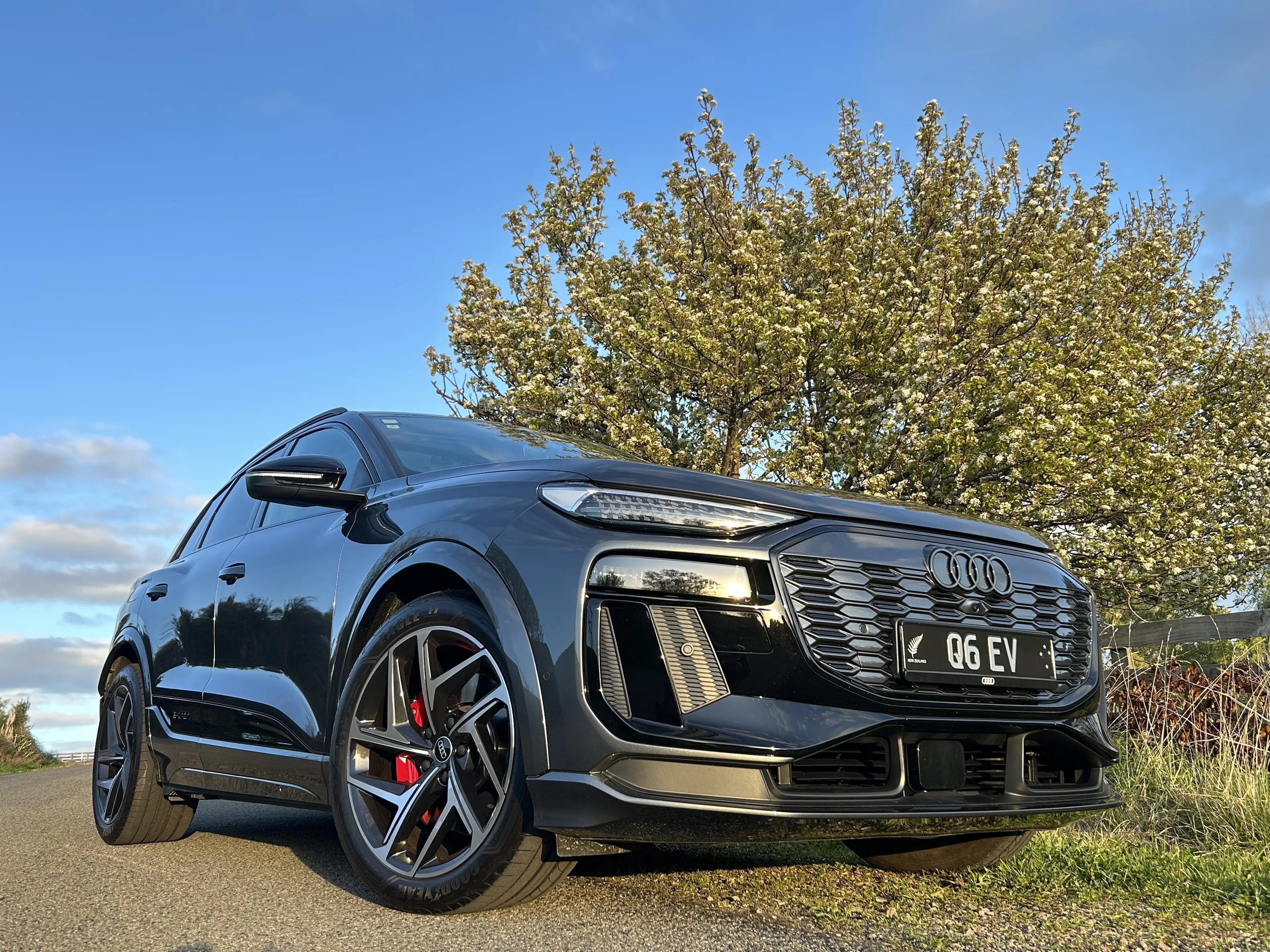
The Q6 starts with the 225kW single-motor rear-drive Q6 Advanced variant for $134,990. The opening dual motor quattro version is the 285kW Q6 S-Line at $155,990, while the flagship SQ6 (as tested) pumps up to 360kW and lists at $169,990.
While either of the "lesser" models are possibly a more sensible choice, we Kiwis love a sporty car. That’s reflected in national Audi buying patterns, so the pricier SQ6 is in the box seat.
With all that power (plus another 20kW kept in reserve for launch control deployment), aided and abetted by a massive 855Nm of torque, the SQ6 requires just 4.3s to complete the 0-100kmh sprint. It also has a top speed of 228kmh.
The appeal isn’t solely in the SQ6’s straight-line sprinting ability but how it takes its pace through the bends. Those older e-trons had lots of grip and traction, but primary reliance on those attributes during fast cornering was very apparent.
The SQ6 also hunkers and has all the same base ingredients as its predecessors, and for all that its tech has improved, the overall battery weight is much as before, so it is no more a candidate for slimmer of the year.
Yet it feels more lithe, more manageable and more competent, for a variety of reasons. Primarily, it starts with the new platform design, which in turn has a more sophisticated suspension set-up to deliver better comfort and stability.
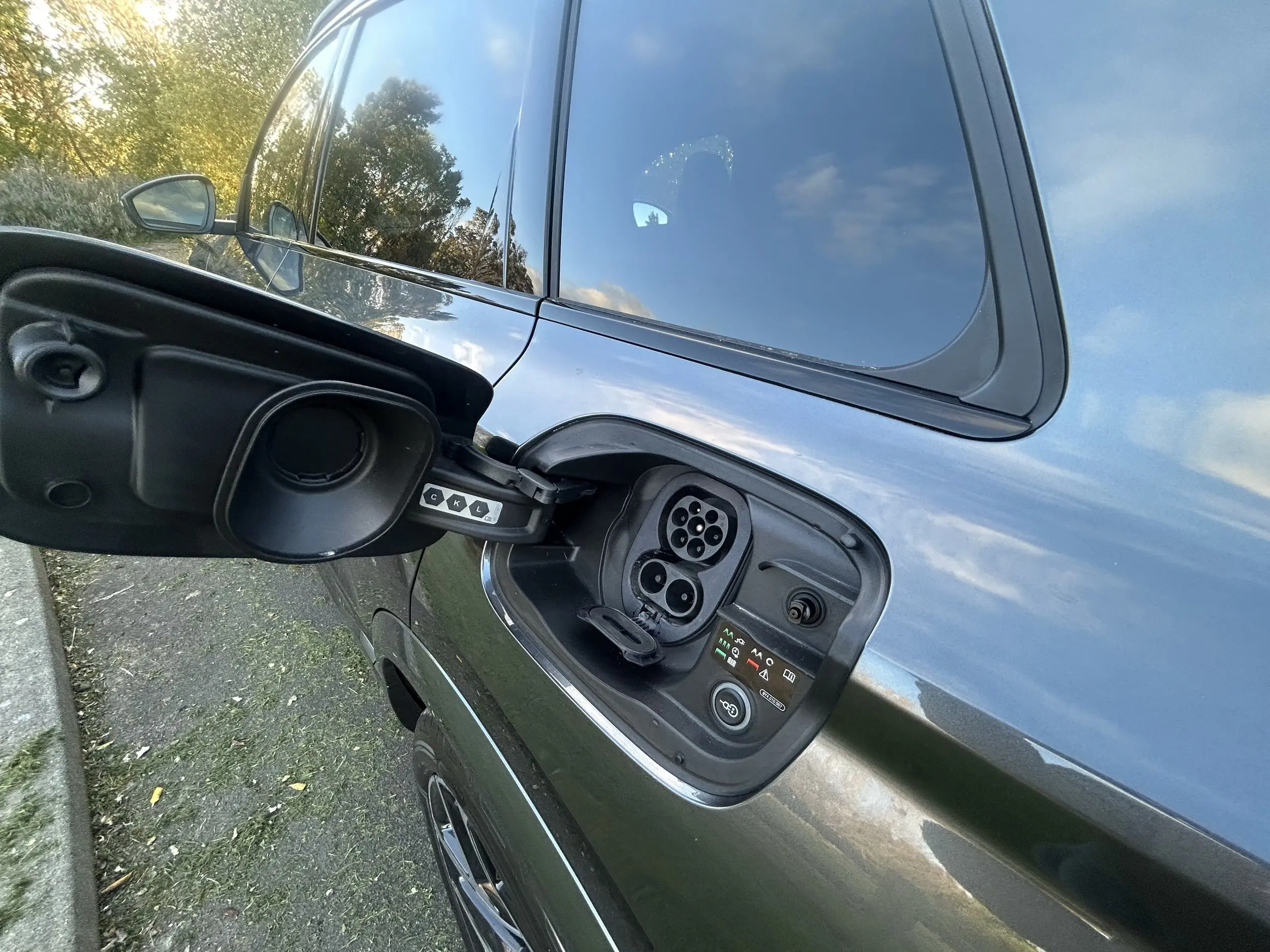
The SQ6 isn’t soft, but it has more emphasis on prioritising ride comfort. The degree of leniency still very much depends on the drive mode selected. It is of course more resilient in the absolute settings than in the default comfort. But even at its firmest, it seems to have more compliance now across imperfections that very probably would have made the older models jolt and buck. And when dialled back body lean is still well managed.
Beyond this, some contribution comes from a tangible rear bias to the power delivery. Also, compared with previous Audis, the steering gives the driver more precise and positive feedback.
Overall, then, there’s plenty of driver engagement and, for daily use, it will step up as a more agreeable vehicle in which to be a passenger.
Don’t underestimate the latent potency. You need barely breathe on the throttle to get a reminder of the considerable torque and absence of lag in delivery. Overtakes can be astoundingly brisk.
Energy burn is kept in check by better recuperation effort than occurred previously. Audi’s engineers claim that as much as 95% of the braking can be done without using the friction brakes.
Most of the time when you lift off the accelerator pedal, the car will slow down and put energy back into the battery. This can be driver-adjusted by cycling through the menu, controlled via a paddle on the back of the steering wheel. The strongest setting provides a one-pedal driving feel — a 101 for many EVs, but still a first for Audi. It’s nicely tailored: not too little, not too much.
Conversely, there is also a coasting mode where no recuperation happens, and the car freewheels. Working between the settings can leave other occupants wondering what’s going on, but it’s a satisfying driver shortcut to the official energy consumption range between 17.0 and 19.6kWh/100km.
While the less-powerful Q6 variants will certainly go further, the big battery still endows the SQ6 with an excellent range: some 590km on the WLTP test regime, and reliably between 400 and 500km in real-world highway motoring.
There’s a sense of "start again" for Audi with this car, but the brand hopes that its level of premium quality and style, as well as its latest battery-electric technology, will win recognition. Acceptance seems solid.
Those who understand why commitment has to be for the long haul might find it hard to come up with reasons why you shouldn’t.
AT A GLANCE
AUDI SQ6 E-TRON
Overall rating: ★★★★
Design and styling ★★★★★
Interior: ★★★★
Performance: ★★★★★
Ride and handling: ★★★★
Safety: ★★★★★
Environmental: ★★★★★
Price: $169,990
Powertrain: Dual electric motors, maximum power 360kW, maximum torque 855Nm.
Transmission: Single-speed automatic, all-wheel-drive.
Safety rating: Five star ANCAP.
Wheels and tyres: Alloys, 255/45 R21 front, 285/40 R21 rear tyres.
Battery & economy: 100kWh (94.9kWh usable) lithium-ion, estimated combined economy (WLTP Combined test) 20.2 kWh /100km.
Dimensions: Length, 4771mm; width, 1939mm; height, 1675mm
Kerb weight: 2350kg.
By Richard Bosselman