


Four Otago artists have made the finals of the prestigious Adam Portraiture Prize. Rebecca Fox discovers what is behind the face.
From tiny nail art to large canvas and from emerging artists to established ones, Otago’s Adam Portraiture Award finalists are as diverse in their practices as their backgrounds.
The four artists, three from Dunedin, Nina Morris, Emma Mitchell and Geoffrey Williams, and one from Alexandra, Marion Vialade-Worch, are among 43 finalists selected from 429 entries by international judge Jude Rae for the prestigious national award which has a $30,000 first prize.
In a change for the awards, entrants were required to paint portraits of living New Zealanders, created from at least one live sitting or study from life.
The Otago artists approached this in varying ways by creating self-portraits and portraits of family members and good friends.

It is a method she discovered after viewing Californian nail artist Vivian Xue Rahey’s work.
“I’ve never looked back since.”
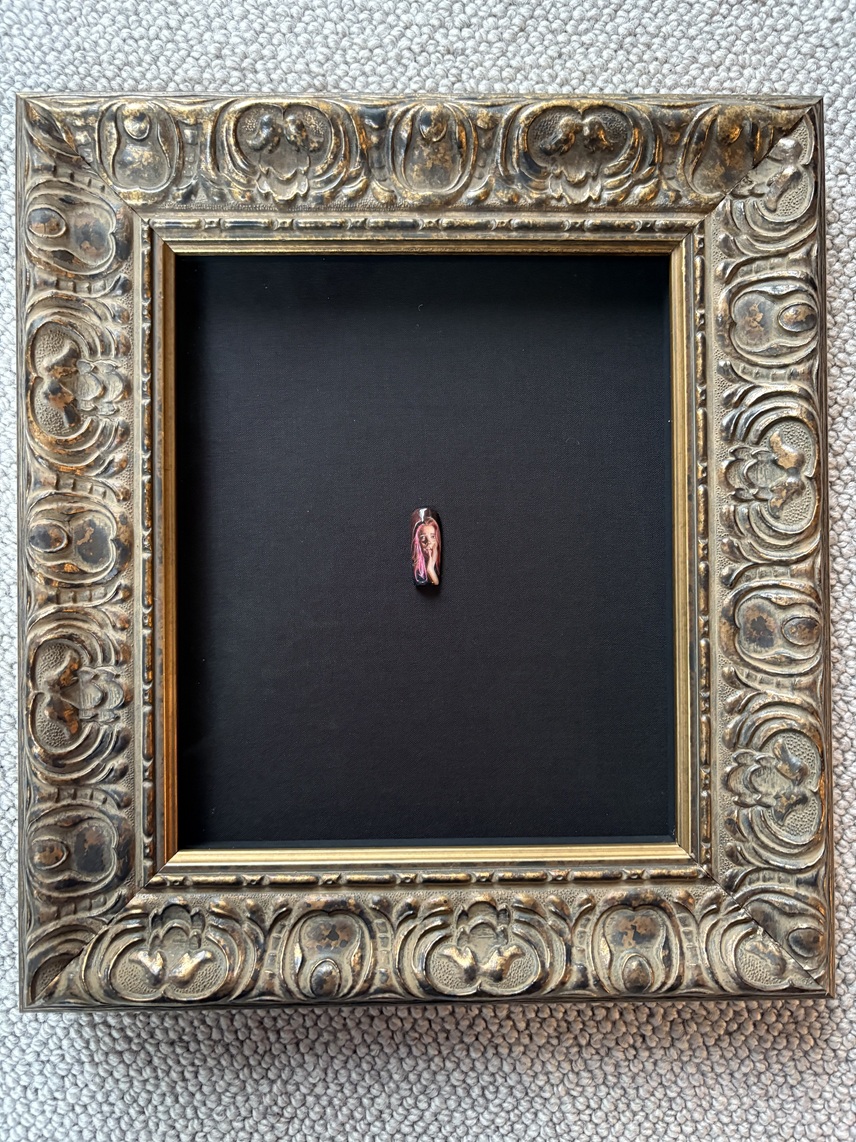
“There is nowhere to hide when painting on a curved canvas.”
This means she has to make sure her image is as small as possible so it does not stretch too far across the curve of the nail.
It requires brushes as small as 5mm to 25mm and any piece of brush hair out of place has to be cut.
“The smallest piece of dust or fluff will obstruct large parts of my work so it can get quite finicky.”
She does it all with the naked eye as magnifying glasses interfere with her hand-eye co-ordination too much.
Mitchell, who has no formal art training and used to paint with oils on a large scale, has always painted portraits.
“No matter what medium I’ve tried; sculpture, oils, gel polish, water colour, graphite, digital. Portraiture has always been at the forefront and at the core of my practice. It is simply what clicks for my brain.’’
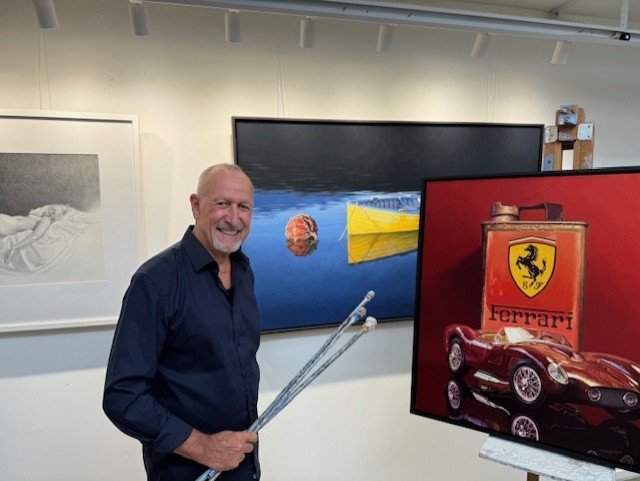
His work usually includes landscapes, nudes and still life. He had his first solo exhibition at the Otago Art Society in 1980 and works across mediums but prefers acrylics for their quick drying properties.
But Polly Anna Arabella Ruth Riddell was a “dear friend’’ who sat for him shortly before her death at age 40. In 2021, a man was charged with manslaughter in relation to Riddell’s death for failing to seek medical attention for her.
“Despite a tragic life, [she] showed incredible bravery. I felt a strong responsibility to her and her family to complete this painting.’’

Riddell was a victim of child sexual abuse which her parents have spoken out about. Having the work selected as a finalist provides “valuable exposure and help ensure Polly’s story reached a much wider audience’’, he says.

“Temi is living and working out of New Zealand now and the last phases in the development of this painting evoke memories of her, Temi’s love of ice cream, vintage clothes and celebration of her culture drew me to paint in this way.’’
Morris begins her works with many drawings from sittings and informally, then aims to illustrate something she sees in them which is different from how they see themselves and how others see them.
“There is a sort of ‘give and take’ with my subjects during the time spent drawing and painting them, and this is a way that I can still feel a part of their lives from afar.”
Normally Morris, who has a master of visual arts from the Dunedin School of Art, uses acrylics on canvas but this time she tried board, something new to her and tried new techniques for paint application, with a head and shoulder focus.

“To me, I find people fascinating and I enjoy painting portraits that show the uniqueness of my subjects and what I sometimes describe as their essence.’’
Meanwhile, French artist Marion Vialade-Worch, who lives in Alexandra and has a small studio in a vineyard, will paint or draw whatever she is curious about.
She describes herself as a self-taught artist, with a winemaking education, who started out in book illustration before moving to print-making when she moved to New Zealand.
Ten years ago she taught herself painting from books, online and in classes.
“For me, painting is drawing with a brush. And a medium is just another tool in my toolbox to see the world around me and make sense of its wonders.”
She finds portrait painting is like solving a puzzle: “all the pieces are there but they need to be fit in a certain order’’.
Her self-portrait was part of a 30-day challenge she set herself partly as a response to an ADHD diagnosis in her mid-40s.
“The task forced me to sit in front of a mirror, two hours a day for 30 days, to observe this person I didn’t know I was.”

“I went for oil pastels on paper (A4 size). Very conveniently, I could put the sticks down and get out of the studio quickly without having to clean or tidy anything.”
Vialade-Worch selected portrait 27 to enter in the Adam Award.
“Even if it took two hours to complete, it is the result of a 27-day study.”
Presented biennially by the New Zealand Portrait Gallery Te Pūkenga Whakaata and supported by the Adam Foundation, the Adam Portraiture Award is one of the country’s most significant and long-standing art prizes. This year the first prize increases to $30,000, reinforcing the award’s role in “supporting and elevating New Zealand artists”.
The winner, Auckland artist Duncan Pepe’s Solomon Tāmehana, was announced last night alongside a $2500 runner-up prize which went to Carol Bucknell from Waiheke Island.
All finalist works will be exhibited at the New Zealand Portraiture Gallery and will then go on tour around the country.
To see
Adam Portraiture Award, New Zealand Portrait Gallery, Wellington, May 21 to August 9, Te Atamira, Queenstown August 29-November 10.


