
PHOTO
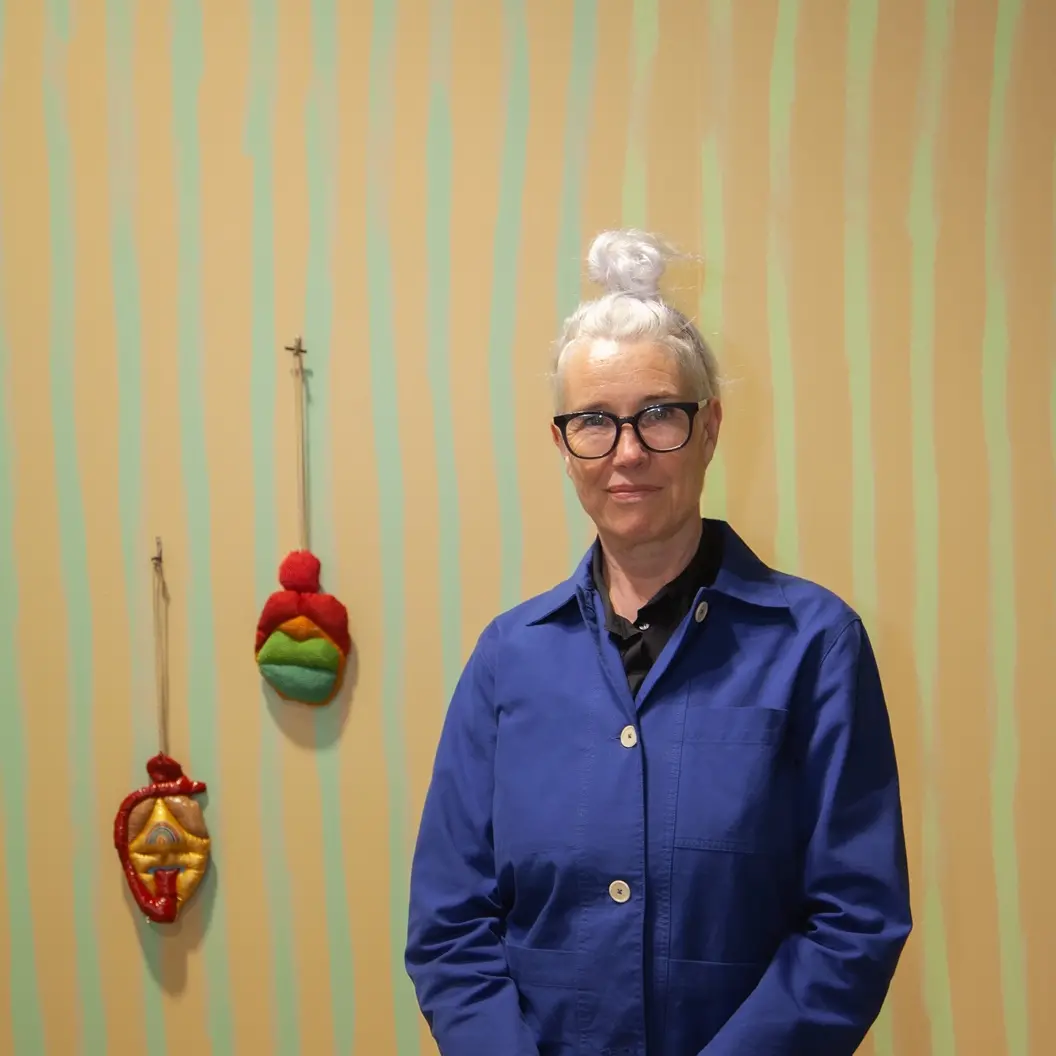
From wood to plastic, paint and glue, to found objects and fabric, metal and taxidermied ducklings, there is hardly a material out there that jeweller Lisa Walker has not used.
‘‘I’ve probably used every material you can think of. If you think of something, I’ve used it.’’
While she started out learning traditional goldsmithing in the 1980s at Dunedin School of Art under German-trained tutor Georg Beer and then at Fluxus under Swiss-born jeweller Kobi Bosshard, her work today bears little evidence of that training at first glance.
‘‘I’ve gone through kind of lots of different phases, gone through so many different phases with material. So I left goldsmithing, though that always hovers about. I still use those tools. I still occasionally use metal as well.’’
At the heart of her journey has been her research into what jewellery is and what it can be.
‘‘I’ve got an aesthetic that kind of pops out and is quite strange. I’m attracted to sort of almost ugly, almost weird, strange body parts, for example, you know, feet, hands, ears, all sorts of things have crept into my work over the years.’’
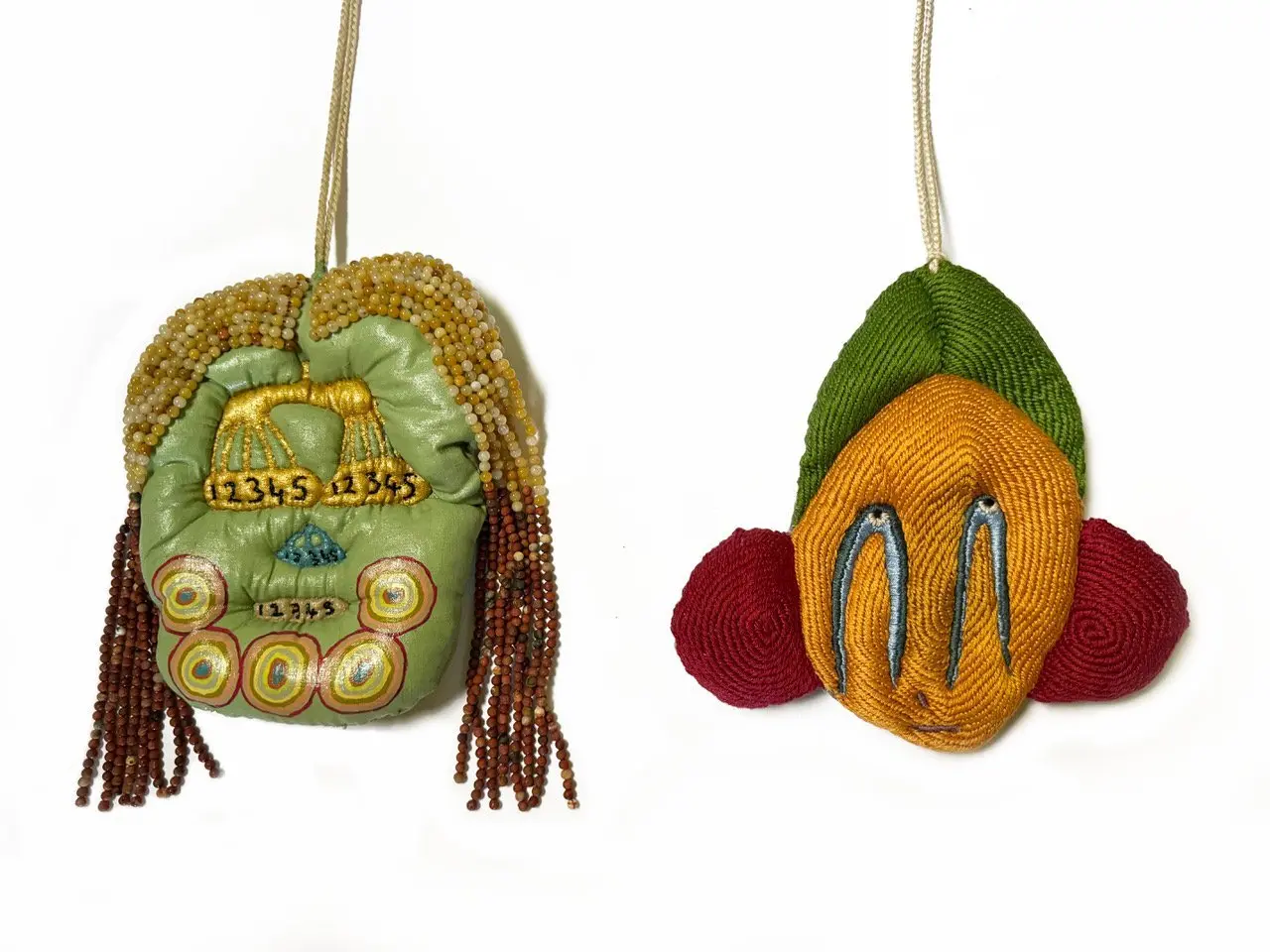
Most recently that has translated into exploring ‘‘heads’’ and all the elements that make up a head.
‘‘The ears, the eyes, the nose, the mouth, the hair, the forehead, the chin, the cheeks, it’s a huge, huge world and lots of elements seep in there.’’
For the past three years Walker has worked with fabric and acrylic paint, stuffing forms to become three-dimensional.
‘‘But then I squash them back again to almost two-dimensional so that becomes like a quilting almost.’’
She also adds semi-precious stones and beads to some pieces, creating colourful works.
‘‘When you’re just working with metal which I did for a long time you don’t delve into colour ... but then I started to use colour.’’
Wellington-based Walker remembers being ‘‘blown away’’ by Hilma af Klint’s 2022 exhibition at City Gallery, ‘‘The Secret Paintings’’.
‘‘I felt an immediate kinship with her colour there. And that’s about four years ago or something now, and I seem to be staying with that.
‘‘For me, it’s very personal. It’s a sense of that colour is beautiful, that is perfect, that colour, which I saw consistently in her work.’’
It is a long way from the work she created in her early days which led to her acceptance into post-graduate study in Munich, Germany.
Walker was not brought up in an arty family — her mother was a trade unionist and her dad a book publisher.
While her parents were always supportive of what she chose to do, she can remember her mother suggesting she could go to teachers college once she had graduated.
‘‘To be a full-time working artist would have been outside her thinking.’’
Instead she moved to Auckland, setting up Workshop 6 with three other jewellers. She heard about Munich’s Academy of Fine Arts post-graduate course and applied.
‘‘Just two people got in that year, me and another jeweller from Switzerland. As far as I know, I think I’m the only New Zealander who’s been in that class.’’
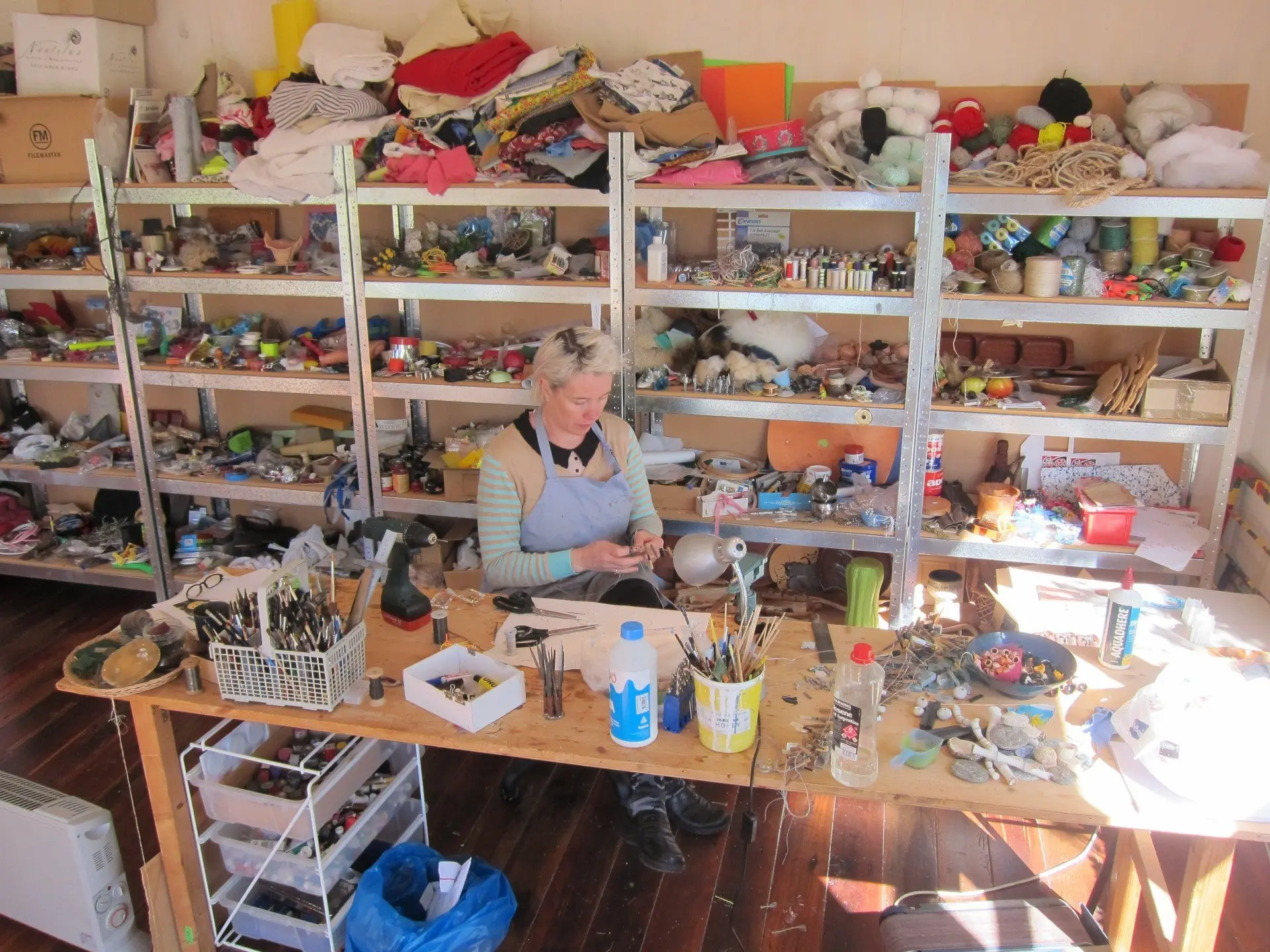
It was while studying in Munich that she continued goldsmithing — making small ‘‘little discoveries’’ — but alongside her workbench she started a collection of different materials.
‘‘So some glue and some plastic that I found off the road and some fabric, some fabric that I thought my mother might like for her cushions.’’
That is where her love for found objects began. Her professor also noticed a change in her work.
‘‘So it was all very unplanned. You’ll probably hear this a lot from me. I just made it up.’’
Walker, who returned to New Zealand in 2009, found it freeing as using different materials allowed the culture, music, her own experiences and politics to ‘‘creep in’’.
Some of those materials did not need to be changed at all because they were ‘‘beautiful’’ the way she found or bought them.
‘‘So I literally might drill a hole and put a cord through it, bang, that’s it.’’
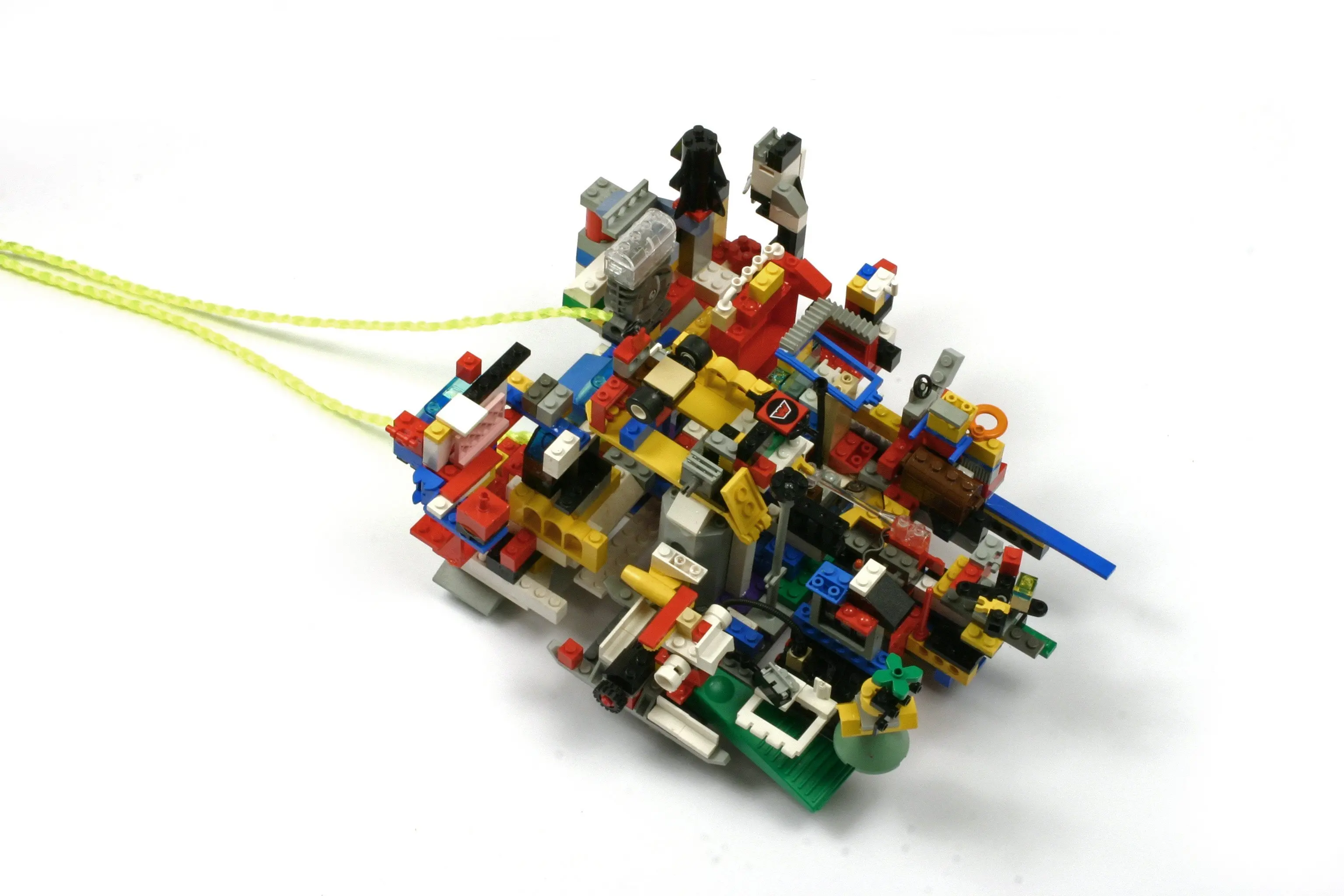
As a mother of two she saw the amazing things her children made with Lego, finding it quite inspiring.
She had a go herself making two ‘‘big beasts of Lego’’ which she glued together making permanent sculptures.
Since her student days, Walker has taught herself the skills she has needed to create her works.
Some of her most high-profile works include a necklace of old mobile phones made after she bought a box of the old phones at a flea market. She strung them together and painted each of them a different colour to make them more interesting.
‘‘I didn’t even really think about it. It just seemed so, so obvious to me to do that.’’
It caught the interest of critics, museums and collectors.
‘‘It just made complete sense to use something that was so common and everywhere and becoming big parts of our lives. These materials, they obviously provoke quite a reaction from people as well.’’
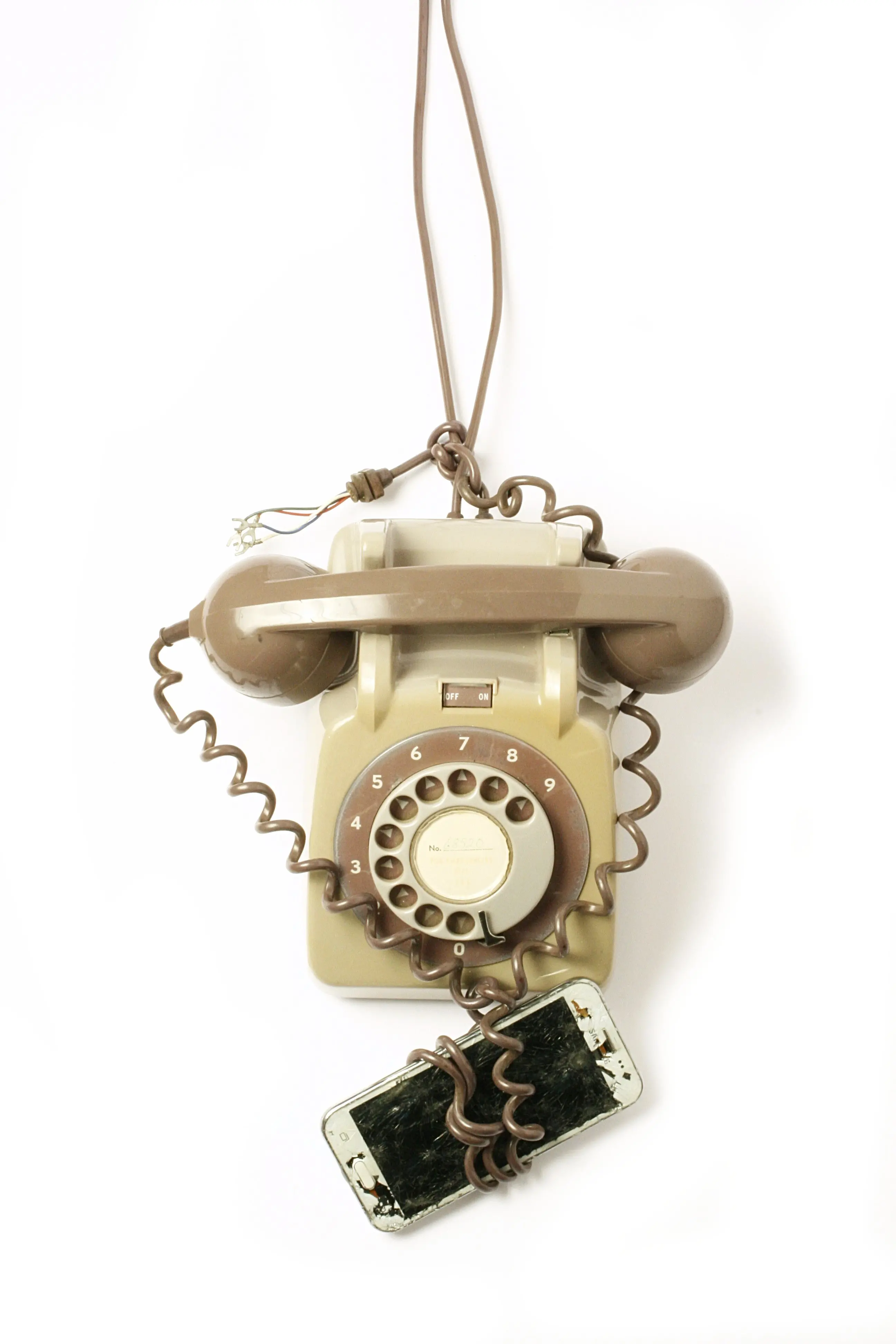
Another piece used a rotary dial phone and cellphone made just after Walker began collecting images on Instagram which inspired her.
‘‘I love that, when a piece is almost dumb. It’s almost so obvious and cliched, but it’s still got a real twist and interest to it.’’
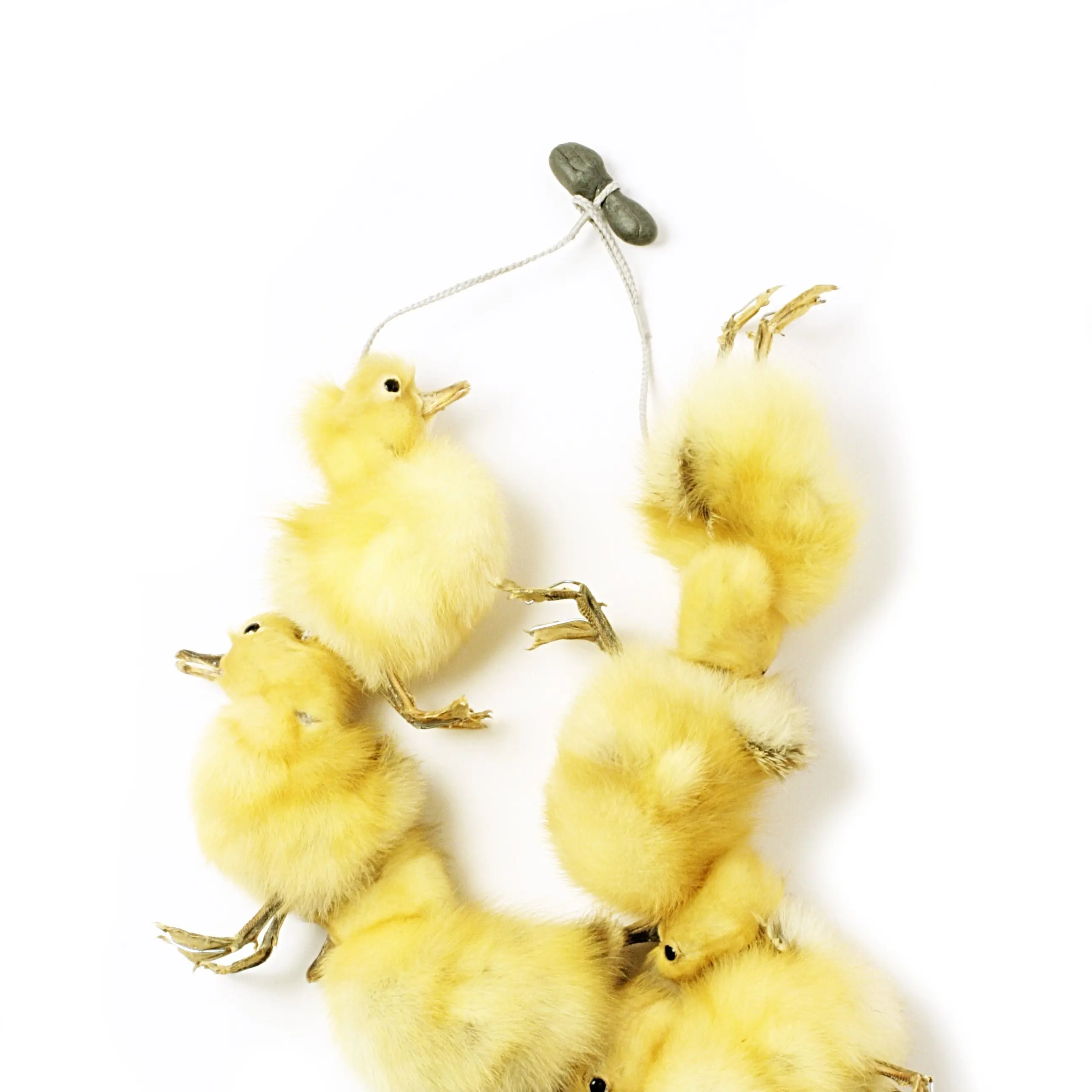
She also threaded together some taxidermied ducklings into a necklace after doing a dive into the taxidermy world to see what she could buy.
‘‘I came across those fluffy ducklings, which are a bizarre thing for a piece of jewellery because they’re so kind of cute, but also absolutely hideous — they’re taxidermy ducklings. It’s really revolting.’’
But for Walker that juxtaposition makes for a great piece of contemporary jewellery.
‘‘I just go with my gut, really, what stays interesting to me.’’
Quite often her attention gets diverted very quickly but her latest work with the ‘‘heads’’ has been going on for about two years.
‘‘That certainly wasn’t happening 10 years ago. I was jumping around all the time all over the place.’’
Her heads, created from second-hand sheets or linen from op shops, are hand-sewn because she likes the ‘‘unpredictability’’ of hand sewing.
‘‘It takes longer of course but I don’t care about that. With hand-stitching I can be freer.’’
Sometimes she unexpectedly comes across techniques when making works that provide another direction for her work.
‘‘I really did stumble across the fact that I could stitch back that 3D form, like squash it back in, like quilting. But it actually was perfect for the heads, because suddenly that cheek really looked like a cheek now. It’s kind of stuck out like a cheek does, or a forehead. Or a mouth. I’m making these huge mouths at the moment. I really love it when a technique I stumble across or discover just fits in so perfectly with what I’m doing.’’
They average about 25cm long and are designed to sit on a person’s sternum. They are strung on a thread that Walker makes.
‘‘So they’re recognisable as pieces of jewellery.’’
Her work has become more labour intensive. While she enjoys the slower pace of her work now, it does impact on how often she can exhibit. She continues to be in demand for exhibitions locally — Te Papa held survey exhibition ‘‘Lisa Walker: I want to go to my bedroom but I can’t be bothered’’ marking her 30th anniversary in 2018 — and internationally.
‘‘I’ve got to be more organised with my planning. ‘‘
Walker, who was made an Officer of the New Zealand Order of Merit (ONZM) in 2022, is also enjoying honing down the materials she is using in her work.
‘‘It’s still life and culture and art and everything is still creeping into the work, but it’s just a different sort of framework.’’
While mostly working with fabric these days, Walker still has her jewellery bench and equipment.
‘‘Every now and again I spend a few days making in pieces of metal. It’s what makes sense for a piece in some way.’’
Looking back, Walker is very appreciative of the start she got in Dunedin with Beer, Bosshard and visiting lecturers.
‘‘Certainly people back then had quite a profound effect, really.’’
TO SEE:
‘‘Heads’’, Lisa Walker, Te Atamira, Queenstown, June 25-August 12, Artist talk August 8, 9.30am-10.30am, Jewellery workshop, August 8, 11am-5pm