


It might be considered by many to be a child’s instrument, but Julie Brana has led the fight for the recorder to be recognised as just as demanding to play as any other instrument.
The Czech musician initially took up the recorder as, while she wanted to play the trombone like her father, it was not the done thing in 1980s Czechoslovakia for a woman to play a brass instrument. It was only supposed to be temporary but the instrument became a "lifelong love".
"By the age of 5, I knew I wanted to be a musician and I would tell everyone that."
So much so that at the end of her studies the director of the conservatory (music high school) in Plzen offered her the opportunity to set up recorder department and in 2003 the first recorder class in the Czech Republic was held.
"In the early days, it was challenging to demonstrate that playing the recorder is just as demanding as any other instrument. It took some time for even my colleagues at the conservatory to recognise that the recorder is not merely an instrument for young children."
But after more than 20 years, Brana can see progress has been made.
"The recorder has reached a very high level and now has its own dedicated audience. Some of my students have gone on to study at prestigious music schools across Europe [Lyon, Basel, Vienna, Graz, Frankfurt, Bergen], which brings me great joy and confirms that my work is meaningful and that I am on the right path."
She will be showcasing the recorder’s complexity during her tour of New Zealand this month to perform with a baroque group. At the heart of the concert is Vivaldi’s La Notte, a dramatic and imaginative recorder concerto that she will perform.
However, when she first began playing the recorder it was not an option to study at the conservatory; instead, she studied the modern transverse flute.
Brana discovered she loved being able to create sound with her own breath.
"Breath is unique and each of us has a different sensitivity to it, which means we produce a different sound, even if we’re playing the same flute."
At elementary art school she had one teacher who took the recorder seriously as a legitimate musical instrument and managed to find sheet music and recordings even though the country back then was under communist rule and was quite isolated from from developments in Western Europe, even in the field of historical instruments.
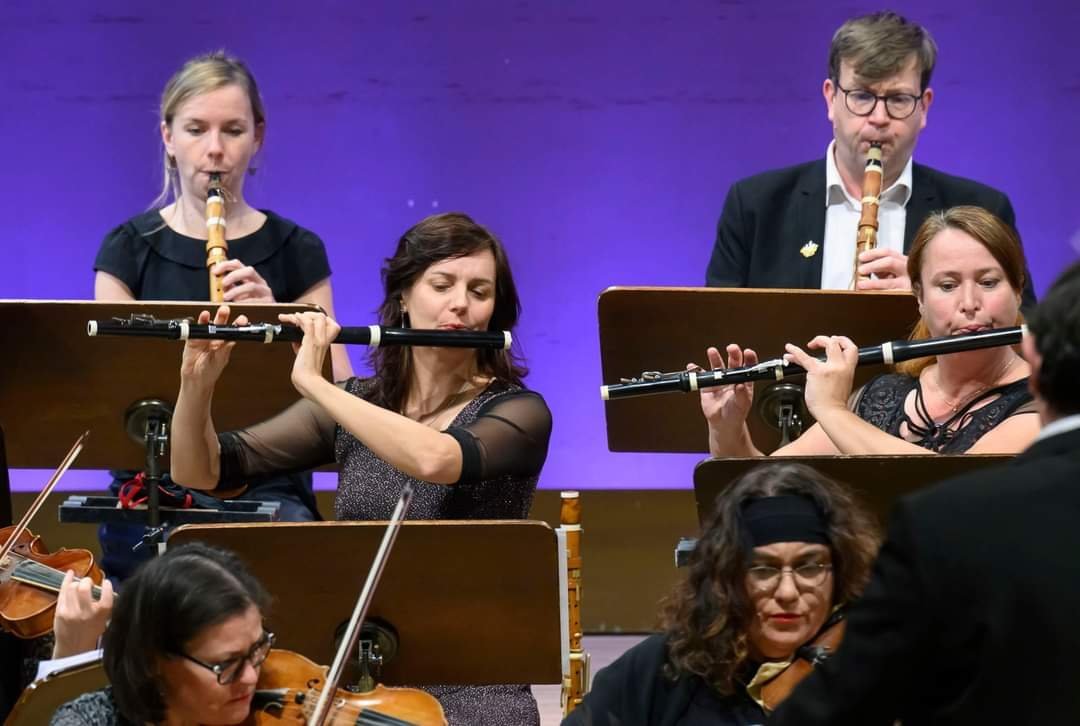
The literature for the recorder and transverse flute dates back to the Middle Ages.
"So it’s not just baroque music that fascinates me. I love historical music in general — there’s always something new to discover."
A particular thrill for Brana is playing from copies or original manuscripts of composers from that time, as they mostly did not notate dynamics or articulation, and tempo was often indicated only by the title, which sometimes expressed emotions rather than a specific tempo.
"Playing baroque music means being able to read basso continuo, play the harpsichord and improvise ornaments. And, most importantly, playing historical music on copies of historical instruments — that’s a real challenge."
Brana plays a baroque flute which has only one key and is made of wood while a modern transverse flute has many keys and is made of metal so is more robust and sounds stronger.
"For me as a baroque flute player, the most challenging aspect is that I have to regulate each note with my embouchure [the way the mouth is applied to the mouthpiece] and adjust it constantly. I also need to blow less air. The baroque flute has a smaller range — the lowest note is D1 and the highest is A3. For certain notes, I have to use different fingerings depending on the key I’m playing in."
Brana has been inspired in her career by renowned Dutch recorder player Peter Holtslag. After 1989’s Velvet Revolution, he was among the first musicians to visit the Czech Republic. She attended his masterclass in Prague when she was 17.
"After the course, he asked me if I would like to study with him. Although I was studying modern transverse flute at the conservatory at the time, the idea of pursuing my studies at a university in Hamburg stayed with me and never let go."
One of her favourite pieces to play as a soloist with an orchestra is Concerto in E minor, by G.P. Telemann, where there are two soloists — one on the recorder and the other on the transverse flute.
"Since I can play both, it’s really fun to perform the same piece, one time on the recorder and the next on the transverse flute.
"I also love French baroque music. We play in a trio with recorder, viola da gamba and harpsichord. This music is more intimate and, as a player, I need to listen more closely to the others and communicate with them."
Telemann’s music is something she enjoys playing anytime.
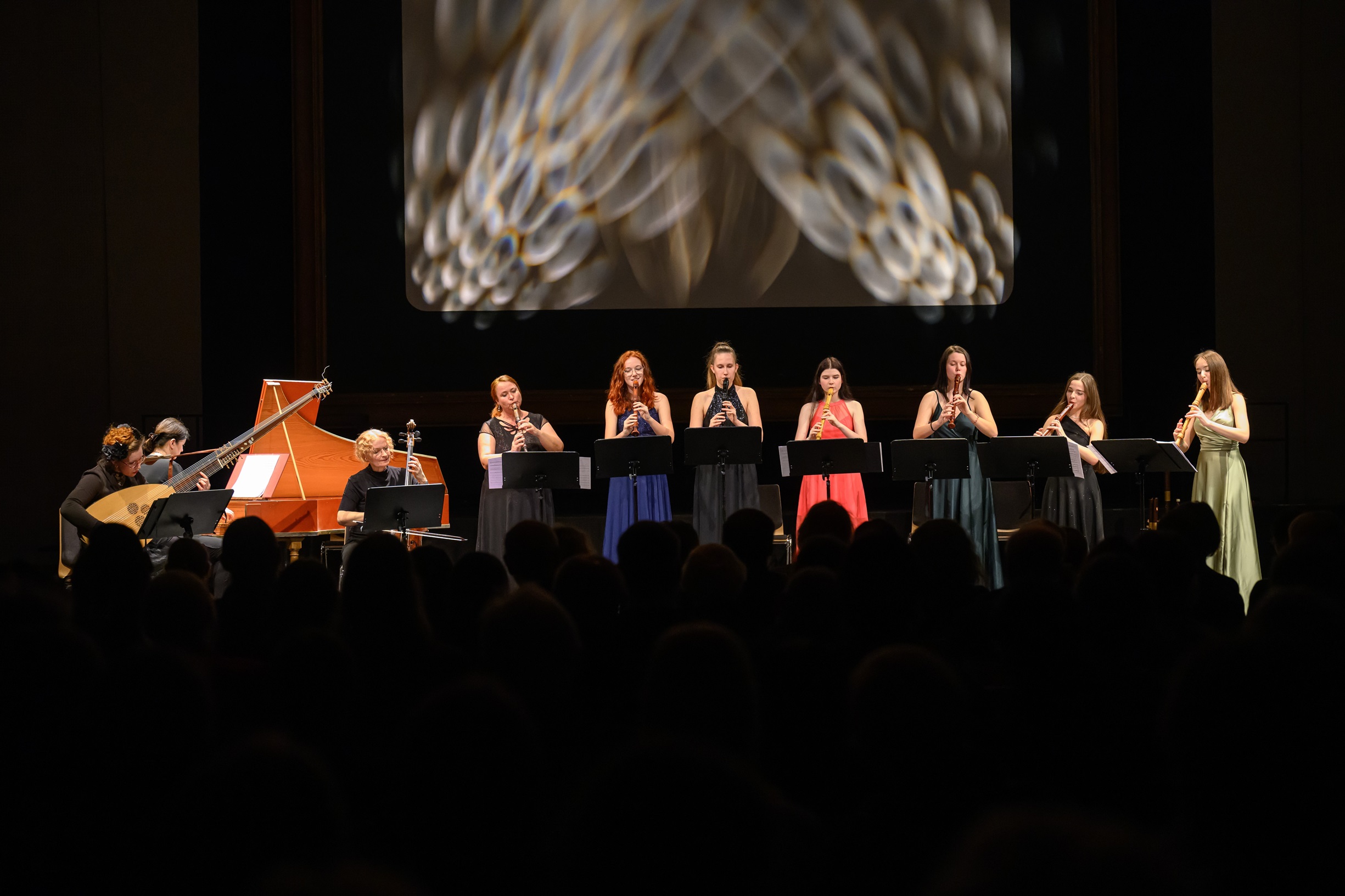
As she also plays an eight-key classical flute, she also enjoys performing symphonies by Mozart, Haydn and Beethoven "with great enthusiasm".
The difference between playing in a baroque orchestra compared with a modern one is really in the approach. As a baroque musician, she has much more interpretive freedom as the notation in the baroque period was not precise.
"As a performer, I have to understand the basso continuo and the harmony to decide how I’ll interpret the piece. There are so many possibilities, which gives me great freedom, but it also comes with the responsibility of delivering a historically informed performance."
To prepare for a concert, especially one with a challenging solo programme, Brana practises the programme well in advance. Once the technical aspects are secure, she starts shaping the artistic and musical interpretation.
On the day of a concert she likes to warm up thoroughly and focuses on deep breathing and relaxing just before stepping on stage.
"I always look forward to the concert, excited about the audience and the energy they bring, as well as the energy I will share and take from the stage. And, yes, I always feel a bit of stage fright, but I see it as positive when it’s not overwhelming. Stage fright can actually push a performer to give their best, so I embrace it with joy."
For decades, Brana has juggled her performance schedule with teaching. She is also head of traverso, the baroque flute, at the Prague Conservatory.
"It requires careful planning. And when you also have a family, with a partner who is a musician, it can be even more challenging."
Especially when she is to travel to the other side of the world, but she is looking forward to her first visit to New Zealand as part of the Baroque Unbound Concert Tour, presented by Baroque Music Community and Educational Trust of New Zealand.
A keen mountain hiker, cyclist and swimmer as well as flower gardener, Brana is keen to see if New Zealand is as beautiful as it looks in the photos and documentaries she has seen.
"I can’t wait to experience it for myself. I’m also looking forward to meeting new people and discovering the local atmosphere."
To see:
Baroque Unbound Concert Tour: St Luke’s Church, Oamaru, Feb 10; St Paul’s Cathedral, Dunedin, Feb 11; St Andrew’s Presbyterian Church, Gore, Feb 12; St Mary’s Basilica, Invercargill, Feb 13; Rippon Vineyard, Wānaka, Feb 15.


