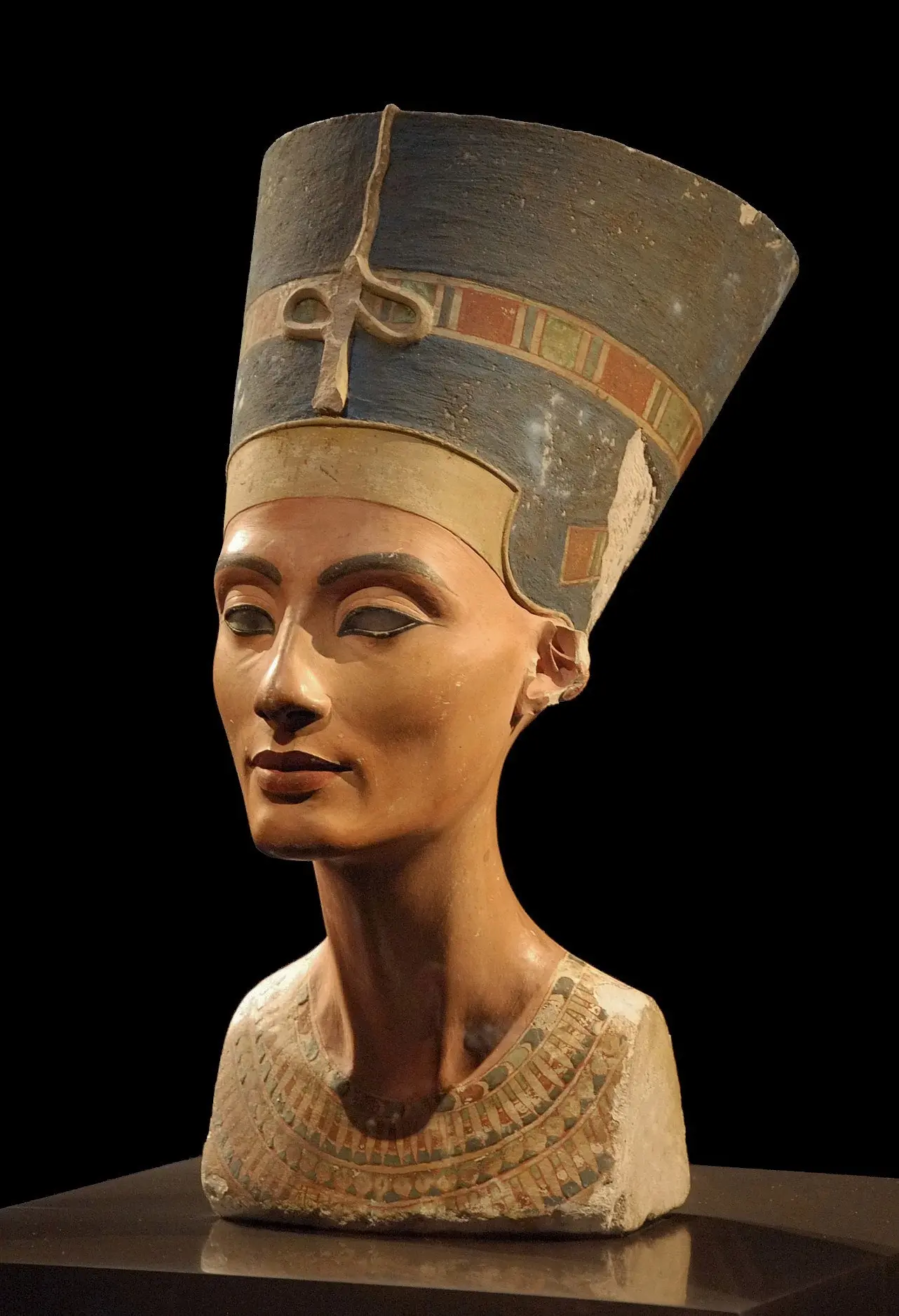
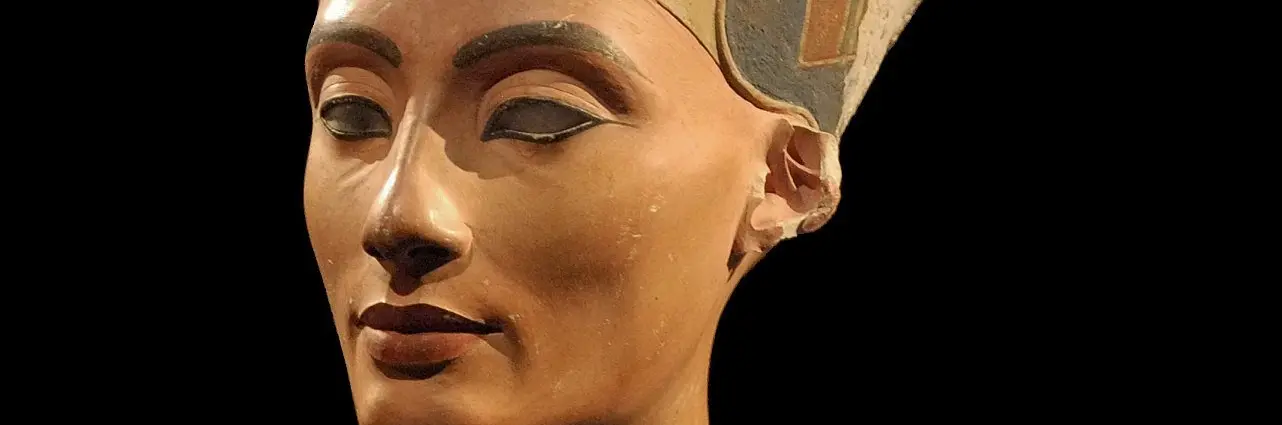
The ancient Egyptian queen Nefertiti is admired in modern times for her beauty, captured most famously in the painted bust now (controversially) housed in Berlin’s Neues Museum. Originating from the workshop of the court sculptor Thutmose, it is one of many depictions of the queen uncovered from the ancient city of Akhetaten, modern Amarna, from where Nefertiti and her husband Akhenaten ruled Egypt about 3300 years ago. Part of another depiction — a solitary stone elbow — can be found in Tūhura Otago Museum’s collection. Nefertiti and Akhenaten loom relatively large in the public’s knowledge of ancient Egypt, alongside later rulers such as Tutankhamun, Ramesses the Great and Cleopatra. The couple are famous for their departure from the Egyptian religious norm, suppressing the increasingly powerful cult of Amun centred at Thebes (formerly Waset and now Luxor) in favour of the solar deity Aten, the disc of the sun. To this end, and probably influenced by a number of factors, the centres of royal power were moved from Memphis (modern Mit Rahineh, 20km south of Cairo as the crow flies) and Thebes (500km south of Cairo) to a new site approximately equidistant between them. There, in a barren bay of desert, Akhenaten founded the city of Akhetaten, which means “Horizon of the Aten”. That location may have been chosen because the sun appears to rise from a valley that cuts through the cliffs on the edge of the plain, resembling the hieroglyph for “horizon”. The fragmentary elbow in Tūhura’s collection was rediscovered in the remains of Akhetaten by the Egypt Exploration Society, during their 1936-37 excavation season. It was found south of the wall surrounding the Great Aten Temple’s 270,000sq m enclosure, in a dump of broken royal statuary thought to have originated from the destruction of the temple under later rulers. Otago MuseumLimestone fragment of a small statue of Nefertiti. Photo: E38.64, presented by the Egypt Exploration Society; Tuhura Otago Museum Collection Measuring 15x11cm, it is carved from white limestone and shows a bent left arm from shoulder to mid-forearm. A long, three-lobed flail lies on the upper arm, and traces of black paint indicate the draped sleeve of Nefertiti’s dress. Although it is pharaohs who were most famously portrayed holding a flail (and crook), they typically held it in their right hand; queens held their own distinct flail in their left hand. Wikimedia CommonsThis small statue of Nefertiti’s mother-in-law, Tiye, shows the pose in which ancient Egyptian queens were typically depicted. The museum’s fragment likely came from a statue similar to this one, which is housed at the Louvre. Photo: Miguel Hermoso Cuesta, CC BY-SA 3.0, via Wikimedia Commons The names of the Aten, contained in two oval cartouches, are carved into the bicep and forearm of the fragment: “Ra-Horakhty, rejoicing in the horizon, in his name of Shu (light) which comes from the disc”. The engraved name reminds us of Nefertiti’s role in the worship of the Aten, where the royal couple served as the intermediaries between the worshipper and the deity, doing away with the conventional power structure of priesthoods operating on behalf of the king. This change of religious focus was short-lived, however, as was Akhetaten itself. Not long after the pharaoh Akhenaten’s death in 1332 BC, and about 15 years after it was built, the city was abandoned. Nefertiti seems to have outlived her husband and almost certainly ruled briefly as a king in her own right. Within a few short years, the one whose name means “the beautiful one has come” disappeared into oblivion, only to resurface 3300 years later from beneath the sands of her ancient city. Merryn Chynoweth is Tūhura Otago Museum assistant collection manager, humanities.
