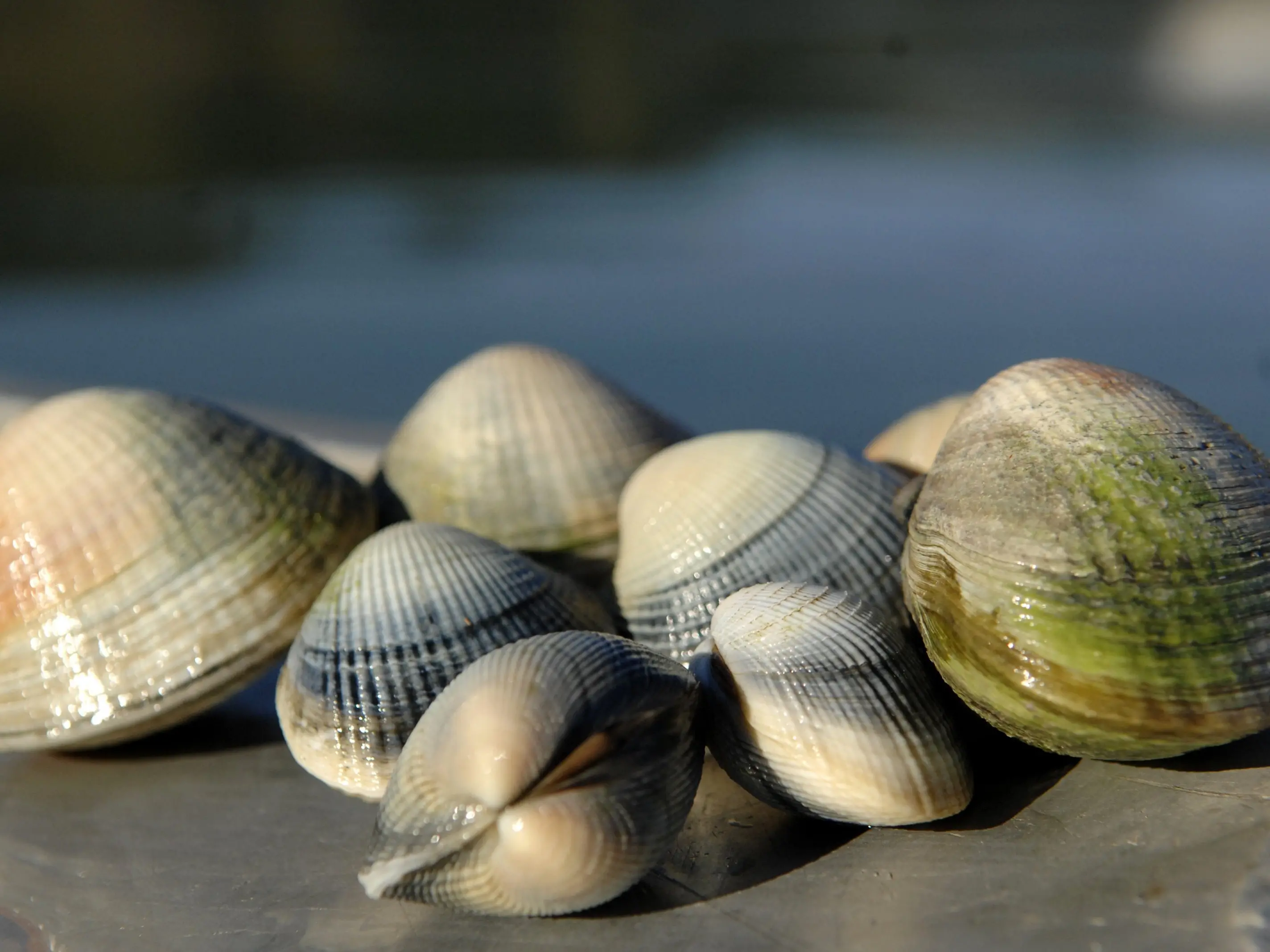
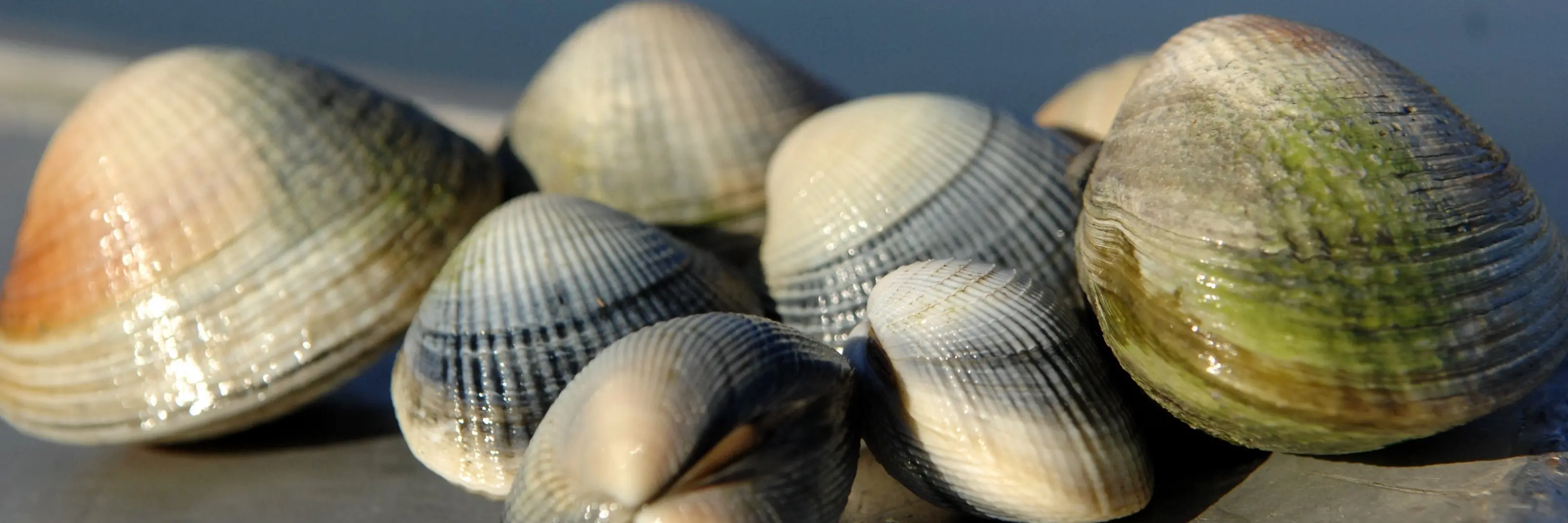
The first thing many people do when they collect a shell is to try to find out what it is. And what they mean by that is: what’s it called? As it happens, we can use a lot of names for the same creature, for example: person, Homo sapiens, human, man, woman, tangata, personage, mortal, individual, being, earthling … Animals living in the sea are equally well furnished with names. We use the general term “clams” to describe animals with two shells (which scientists also call “bivalves”). They can live in great numbers in estuaries, their white shells buried in the sand. Here in Dunedin, many of us call them cockles and we go “cockling” to collect them, in order to steam them open in white wine and garlic and enjoy them on the veranda watching the sun go down on a perfect Dunedin summer’s day. But they are, technically, not cockles. True cockles are in the family Cardidae and most of the 200-plus species live in sandy beaches, mostly in the northern hemisphere. So what are our “cockles”? They are Venus clams, in the family Veneridae. Many different species of venerids are fished and eaten all over the world. Another common name for our local delicacies is littleneck clams. This is a name applied to numerous kinds of clams, including Leukoma staminea, the “Pacific rock cockle” from the North Pacific, and Mercenaria mercenaria, the “Quahog” of the North Atlantic (also not cockles; they are both venerids). Commercially, our species are sold as littleneck clams. A commercial fishing company based in Dunedin, Southern Clams, has been harvesting these creatures for 35 years. They started off hand digging in Papanui Inlet, then moved to Blueskin Bay, where they invented a body-dredge system that allowed them to harvest adult clams more efficiently. Since 2017, they have also dredged in parts of Otago Harbour. After collection, the clams are sorted, cooled, packaged and shipped. In 2025, the Otago catch was 716,518kg. OTAGO IMAGES/OTAGO DAILY TIMESHarvesting clams from Otago Harbour. Photo: Stephen Jaquiery The various English names for this species are both inaccurate and confusing, so it’s good that these molluscs (and all animals that scientists can get hold of) have a unique and specific scientific name, in this case: Austrovenus stuchburyi. But even then, there is a bit of flexibility. William Wood (1774-1857, bookseller, publisher and natural scientist of London) called the species Venus Stutchburyii in 1828. By the mid 19th century, the name used was Chione stutchburyi, as the genus Venus was split up into smaller groups. In 1926, Harold John Finlay (1901-51) decided that this species was different enough from other Chione species to be given its own genus — Austrovenus, meaning southern venus shell. It is found only in New Zealand. Most scientists, however, only used Austrovenus as a subgenus, so the full name was Chione (Austrovenus) stutchburyi. It was some 50 years before there was agreement to use the current name, Austrovenus stutchburyi. Incidentally, Finlay was a Dunedin boy! Although he was born in India, his missionary parents brought him home to be educated at North East Valley and other Dunedin schools before studying chemistry at the University of Otago; he gained prizes in chemistry, paleontology and poetry. A varied scientific career in New Zealand led to his receiving the prestigious Hector Medal from the Royal Society of New Zealand. He also composed musical works for the national orchestra, founded the Otago Bridge Club, collected stamps and loved cats. All of this achievement was despite considerable disability — he was a paraplegic all his life, after contracting poliomyelitis aged 4. But I digress. The species was named by Wood to honour Samuel Stutchbury, an early British natural historian who visited both Australia and New Zealand and many Pacific islands. Stutchbury (1798-1859) was the chief zoologist on Sir George Osborne and later on Rolla, which travelled the Pacific in 1825-27. He made significant contributions to knowledge in geology and biology, and in particular, he documented Pacific pearl-diving techniques. Marshall ClaxtonEnglish naturalist and geologist Samuel Stutchbury, in 1852, by Marshall Claxton. That was early in New Zealand’s colonial history, but Aotearoa’s indigenous peoples have been practising mātaitai (gathering of shellfish) for a very long time, and they know their cockles. It’s not surprising, then, that there are numerous te reo names for them, depending in part on where you are. Tuangi is listed by Ministry for Primary Industries as the “primary name”, with alternatives of huangi, tanetane, hinangi and hūwai. Here in the south, we most often use the term tuaki. The allowable customary catch for kai moana (10,000kg per year) is the same as the estimated overall recreational catch, each a small fraction of the commercial allowable catch. Both customary and recreational harvest is by hand. I have used cockles here as an example of the many names we can have for a single species (I think I count 11), but they are not special in this regard. Most of the species we choose to eat have numerous names, and sometimes different species share the same common name, in whichever language we happen to use. As a scientist, I am grateful for the special rules that govern scientific names, so that when I pop an Austrovenus stutchburyi into my mouth, I know what I am getting. Abby Smith is emeritus professor of marine science at the University of Otago.