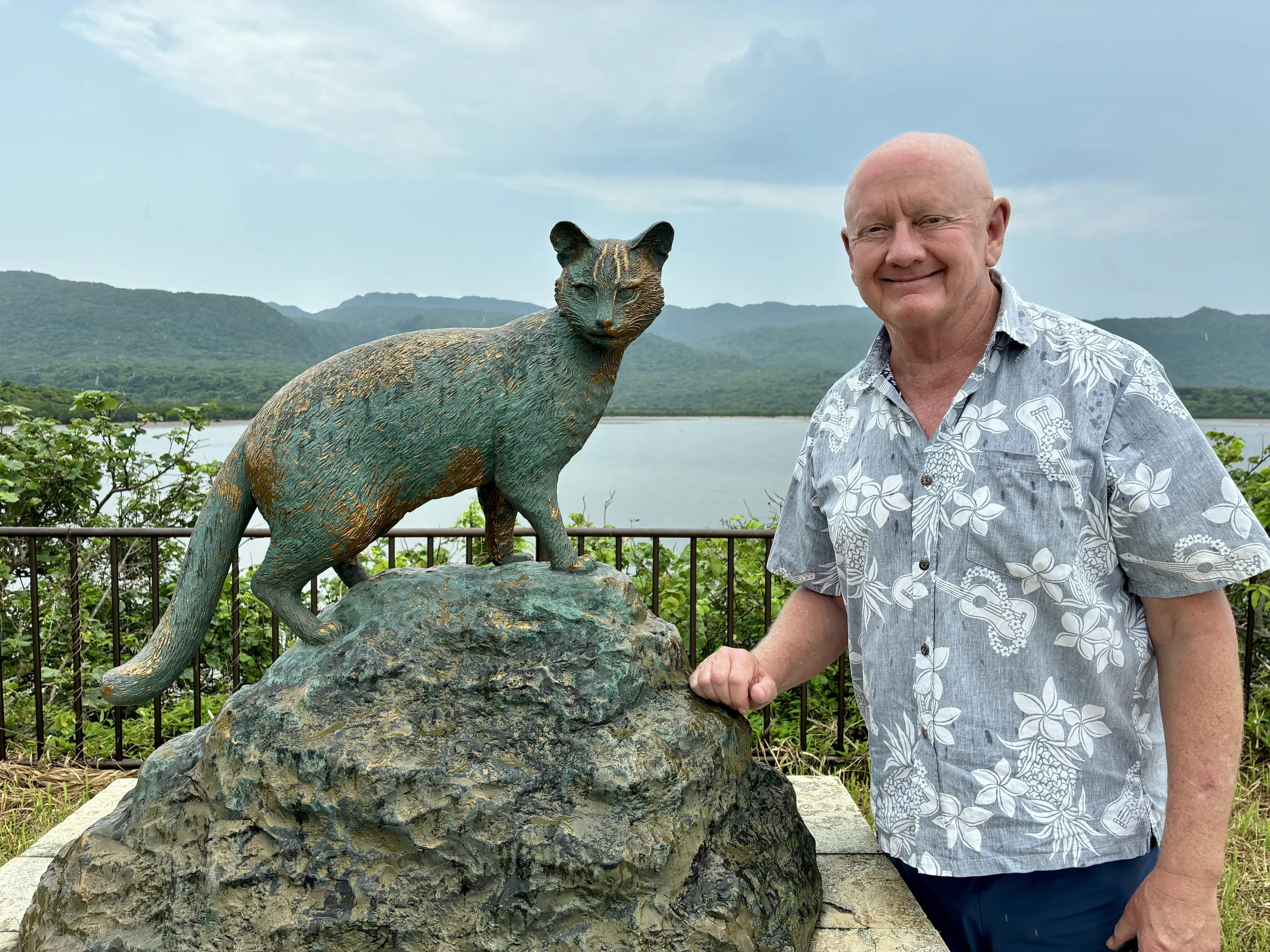
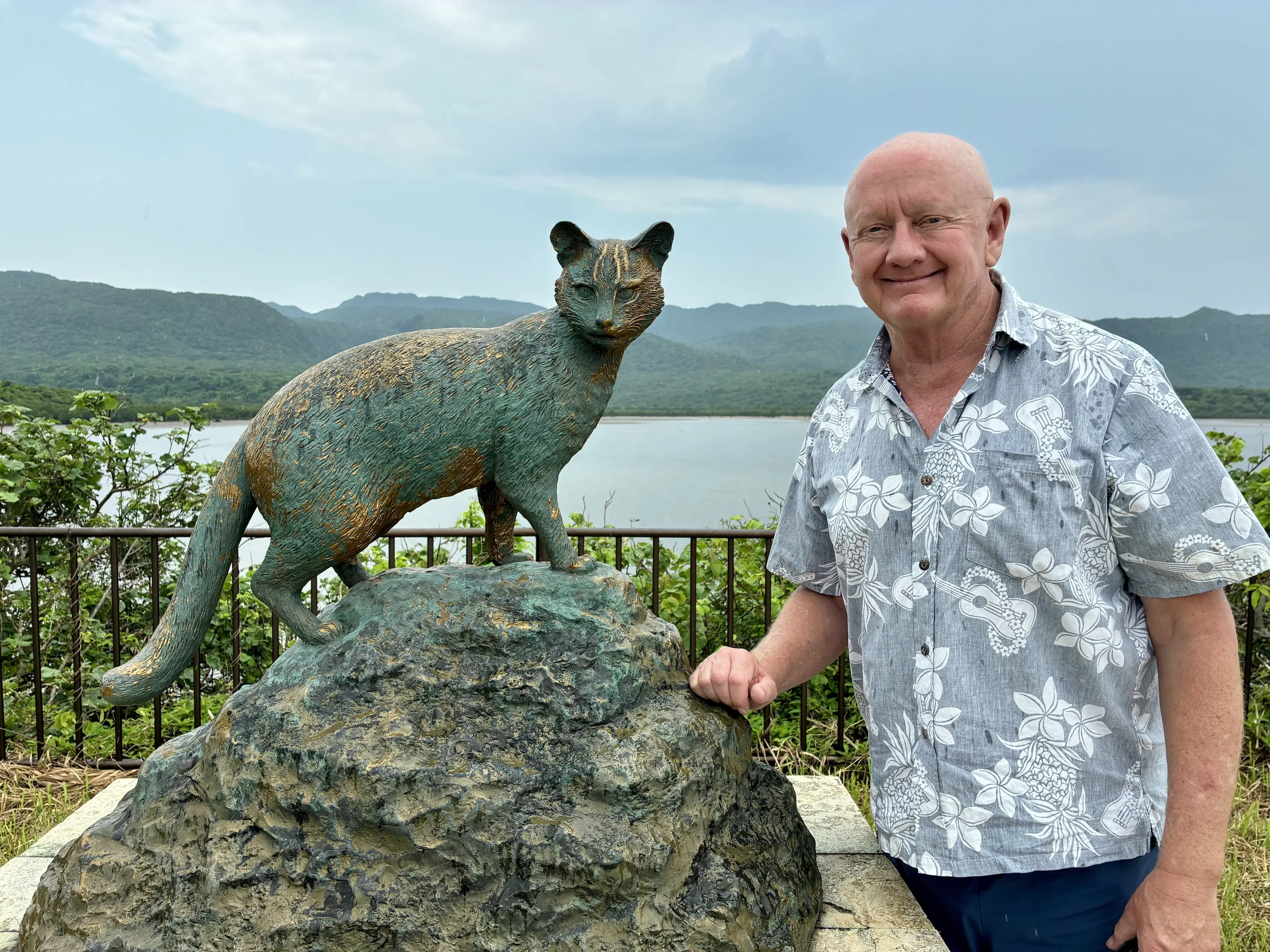
While plenty of Kiwis have been heading to northern Japan to ski and snowboard on some of the best powder on the planet, not so many have ventured to the other end of the country. A very long island nation, Japan is shaped a bit like Aotearoa New Zealand. It stretches north to south over some 22 degrees of latitude. If you laid a map of Japan over the eastern seaboard of North America, you’d find that it covers from Montreal to Miami. Working for Lonely Planet, part of my job is to introduce parts of Japan that are off the standard tourist trail — and surprisingly, that’s still relatively easy to do, despite Japan hosting some 43 million international visitors in 2025. Few visitors head to the Nansei Shoto (Southwestern Islands), a chain of islands that stretches all the way from Japan’s third largest island, Kyushu, to just east of Taiwan. Northern islands in the chain are part of Kyushu’s Kagoshima Prefecture, while the southern islands make up Okinawa Prefecture, the southernmost of Japan’s 47 prefectures. While a number of Kiwis visit Okinawa for diving, snorkelling and karate training, few have made the trip to the end of the line, the Yaeyama Islands, closer to Taiwan than Okinawa’s main island. Yonaguni Island is only 110km off Taiwan’s eastern coast. Yaeyama Islands on the rise The Yaeyamas are a fascinating place to visit, which my wife Yuriko and I did recently, researching an online guide to the Yaeyama Islands for the Lonely Planet website. Yuriko comes from Osaka, so when we go to Japan, we usually fly into Tokyo, then find our way by plane or train to Osaka. Planning to visit the Yaeyama Islands however, this time we flew to Hong Kong, then entered Japan from there. The main island in the Yaeyama group, Ishigaki-jima, has an international airport, with direct flights — some seasonal — connecting with Hong Kong, Taiwan and Korea. This makes the islands an intriguing entry and/or exit point for a visit to Japan. Hong Kong Express runs two-hour flights into Ishigaki Island direct from Hong Kong. I covered the Yaeyama Islands for Lonely Planet’s Japan guidebook over 20 years ago, when the islands were virtually unknown and took up just a few pages in the Okinawa chapter. This time, with the islands becoming increasingly popular, I was looking forward to exploring for an online guide to the Yaeyamas. The local vibe The Yaeyama Islands are perfect for independent types, adventurers and explorers. While a few of the islands are further afield, most of the inhabited ones are scattered about the Sekisei Lagoon, one of the largest coral reefs in Asia. Divers and snorkelers love the Yaeyamas. In particular, the islands are renowned for manta rays and sea turtles. The narrow passage between Iriomote and Kohama Islands, nicknamed Manta Way, is known for its ray sightings, especially between April and June. Some 50,000 of the Yaeyama group’s population of 55,000 live on the main island, Ishigaki-jima, making it the hub of the group. Virtually all visitors come by plane. A new ferry service running twice per week began operating in June between Ishigaki-jima and Taiwan, but there are no ferry connections northeast to the other Okinawan island groups. The Yaeyamas are kariyushi territory — the Okinawan version of Hawaii’s aloha wear. It’s bright, colourful and cheery, just like the local populace. Lots of escapists and alternative lifestylers down here; nary a suit in sight and rubber shoes are the norm. Just as many New Yorkers escape to sunny Florida for the winter, quite a few Japanese from colder, northern latitudes escape their winter by sitting it out in Ishigaki-jima. In Kiwi terms, the latitude of the Yaeyamas, at close to 24 degrees north, is similar to that of somewhere north of Queensland’s Sunshine Coast. Winters are warm, daily highs in January rarely dropping below 21°C, with overnight lows of 17°C and water temperatures of 22°C. July (summer) has average highs of 32°C, lows of 28°C and water temperatures of 29°C. Any time is a good time to go to the Yaeyamas, but the islands can be crowded with Japanese visitors in the Golden Week holidays (late April and early May) and in the school summer vacation period (July and August). Typhoon season, as with the rest of Japan, runs from June to October. It’s the luck of the draw, but if a typhoon hits or passes close to the islands, flights and ferries can be cancelled. Typhoons are taken very seriously in Japan. Rugby fans may remember that three matches, including England vs France, were cancelled at the 2019 Rugby World Cup due to typhoon safety concerns. Enjoying Ishigaki Island Ishigaki city, the main city on Ishigaki-jima is a lively place, with plenty of eclectic shops, restaurants and bars. For those after a relaxing break and some fun in the sun, a few days at a resort such as Fusaki Beach Resort will do the business. However, one of the great joys of visiting the Yaeyamas is the opportunity to visit other islands in the group by ferry. We stayed at locally owned Miyahara Hotel, only 150m from Ishigaki’s ferry terminal. Miyahara Hotel has a very generous perk for guests; an urn of awamori, the local Okinawan firewater (40% alcohol), sits close to reception, with paper cups for guests to enjoy a free tipple. While we indulged in a cup of awamori before heading out to dinner each evening, we couldn’t help but imagine the potential havoc of a hotel in Aotearoa handing out free 40% alcohol to guests! The hotel’s coffee lounge even had bottles of awamori from each of the Yaeyama Islands’ eight distilleries for guests to sample freely at their leisure. After enjoying a day driving around Ishigaki-jima by rental car, we took day trips out to a number of islands. Ferries to islands around the Sekisei Lagoon such as Taketomi-jima, Iriomote-jima, Kohama-jima and Kuroshima operate with regular departures to the popular destinations, fewer to the less-visited islands. Yaeyama charm on Taketomi Island Only 15 minutes by ferry from Ishigaki port, Taketomi-jima is a bit like a living Yaeyama cultural museum, with a village of red-roofed houses, stacked limestone walls and splashes of colour in the form of bright bougainvillea, hibiscus and fuchsia. Roofs are topped with a pair of shisa (lion-dog statues) for protection. The best way to view the village and the small island’s few attractive beaches is by rental bicycle. Yuriko and I rented e-bikes for three hours for ¥2400 ($NZ27); there are a number of small cafes and restaurants in the village. Taketomi is a must-do for Japanese visitors to the Yaeyamas and the classic touristy activity is to see the sights on a water buffalo-drawn cart. The ride is accompanied by live sanshin music (a three-stringed instrument considered the soul of Okinawan music), with the water buffalo sporting a flower behind one ear. Adventure on Iriomote Island Iriomote-jima is thought of as a last frontier in Japan, with 90% of this large, mountainous island covered in jungle. The island became part of a World Heritage-listed Natural Site in 2021 and is renowned for its Iriomote yamaneko, a small wildcat that was officially recognised as a new species in 1967. Forty-five minutes from Ishigaki-jima by ferry, the island has a population of only 2400. We hired a rental car; Yamaneko Rent a Car includes fuel in daily rates starting at ¥7000. Speed limits may be slow — 30kph in village areas, 40kph on the open road — but they are designed to protect the yamaneko, which has speeding cars as its biggest adversary. The Iriomote Wildlife Conservation Centre is a must-visit, while the Urauchi River Jungle Cruise includes a hiking option. Tours operate taking visitors kayaking, stand-up paddleboarding and hiking to the top of 55m-high Pinaisara Falls. Outdoors enthusiasts will enjoy spending a few days on this large island. E-bike around Kohama Island A 30-minute ferry ride from Ishigaki port, Kohama-jima is a hilly island, and we hired an e-bike for ¥550 per hour opposite the ferry terminal. Kohama is known for its sugar cane and became famous throughout Japan in the early 2000s as a filming location for NHK’s television drama series Churasan, which introduced small-island Okinawan culture to Japan. We climbed up to Ufudaki Observation Deck, the island’s 100m high point, from where there are spectacular 360° views of the Sekisei Lagoon and its islands. Near the island’s western tip, Sakurai Coffee & Records is a tiny cafe run by alternative lifestyler and coffee lover Sakurai-san, originally from Tokyo — not to be missed. Back at the ferry port, we enjoyed a cold Orion beer at Bob’s Cafe while waiting for the ferry back to Ishigaki-jima.
