
PHOTO
Overseas there has been discussion about removing best-before dates to prevent food wastage, but such dates are only a guide, according to Prof Phil Bremer, of the food sciences department at the University of Otago.
The problem is that guidelines tend to be taken as rules, he says.
Perishable food with a shelf life of less than two years is required to have a date-marking, but these are of two sorts: the best-before, which is a guideline for quality, and the use-by or expiry date which has more to do with safety, he said.
Products can have a limited shelf life for a number of reasons. Something like a basil pesto will slowly oxidise and turn brown, and chemical changes will occur.
"After a period of time, the producer will decide that it has moved sufficiently far away from what they consider the best and no longer want to sell it, and that's what the best-before date is indicating.
Simply, it's not a safety issue, it's a quality issue."
Most products, if hygienically produced, will not contain pathogens anyway and many have a low pH so pathogens will not grow but moulds may, Prof Bremer said.
"If you see anything growing on the product or it doesn't smell the way you think it should, throw it out; otherwise, it's probably OK to eat as long as it's in its original container and the container's intact and you have no reason to think it's been temperature-abused."
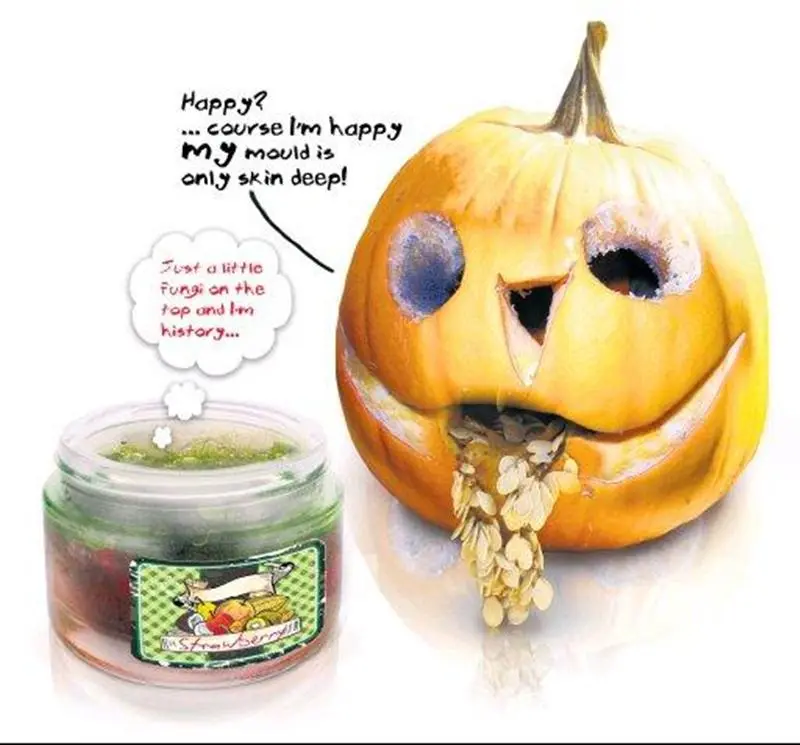
Mould can be cut off hard foods such as hard cheese or vegetables such as pumpkin. However, it's different story with more liquid foods.
"Five years ago, I would have probably said if you got fungi on your jam, scoop the top off. Now the evidence seems to suggest you should throw the jam out. In a liquid product like jam, you don't know where those toxins have diffused to," Prof Bremer said.
There is now evidence to suggest that exposure over many years to toxins produced by fungi or mould can increase your risk of some diseases such as liver cancer, he said.
He emphasises the importance of storage temperature. Many pathogens will not grow below certain temperatures such as a correct fridge temperature of 1-5degC.
If the product has been left out of the fridge for a while, such as a dip at a party, it should probably be tossed out, he said.
However, the best-before date no longer counts if the container has been opened.
Most products indicate that once opened, they should be used within a certain number of days.
As opposed to best-before dates, use-by or expiry dates are about safety rather than quality. These apply to foods that potentially contain pathogens, such as fresh meat.
Over time, their numbers will increase, even in the fridge, so the chance of problems increases with time, he said.
When bacteria start growing on a food, they start breaking down the easy food such as simple sugars and free protein and nitrogen which does not produce off odours or flavours.
However, when they have used these up, they start breaking down proteins and lipids and produce off odours and slime.
However, most food-borne illnesses come not from eating things past their best-by date, but from poor hygiene such as not washing hands before preparing food or cross-contamination, such as using a chopping board for raw chicken then putting salad on it without washing it in between, he said.