
PHOTO
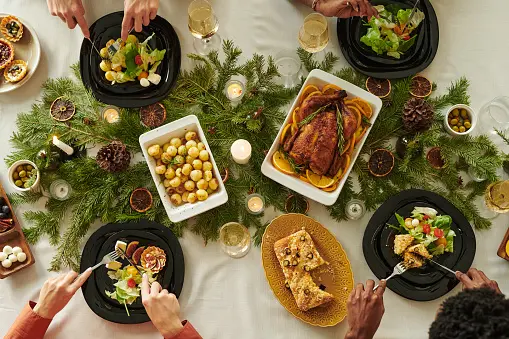
British food writer Georgina Hayden of The Observer provides tips and tricks for stress-free Christmas cooking.
Food writers and magazines love a twist at Christmas. Harissa turkey. Black forest trifle. Jerk-spiced ham. I’ve made them all for various publications.
And yet, when it comes to the big day at home, I stick to a fairly traditional menu. The reasons for this are - as I’m sure they are for many people - my own nostalgia, as well as what my family wants.
However, unlike many people, I love the marathon of cooking Christmas lunch. It helps that I’ve cooked dozens, if not hundreds, for ad campaigns (20 turkeys at a time! Ten kilos of roast potatoes!), private events, magazine and book photoshoots, as well as for friends and family.
So if you dread the preparation, or find yourself in charge of the festive kitchen for the first time, let me share with you a few key tips I’ve picked up along the way.
And in the moments it all seems overwhelming, remember, this is essentially Sunday roast, but with benefits. And a lot of those benefits can be made in advance.
The weeks before
What are you going to eat? Decide this well in advance (including the pudding, see below), tell your family or guests what to expect, and say if they have any objections to raise them now. Then decide whether to take those objections on board. Assign family members dishes to bring, if that’s helpful.
Shall we have starters?
Hard no from me. You are planning potentially the biggest meal you’ll cook (then eat) all year; why add in a souffle or prawn cocktail or other fiddly thing?
If you’re cooking for fewer people, or going all in on hosting, knock yourself out with as many courses as you want. If you’re at all stressed or nervous, I strongly advise you to skip starters.
At the very most I will lay out a platter of smoked salmon about an hour ahead for people to have when we start pouring drinks. I’ll adorn it with wedges of lemon, chopped chives, a bowl of sour cream and a pile of shop-bought blini. (This is not the time to be getting out that dusty blini pan.)
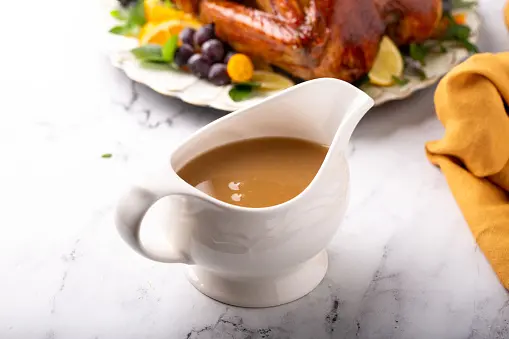
Get ahead with your gravy
Do not underestimate the importance and strength of a good gravy. Meat a bit dry? Drown it in gravy. Food not as hot as you hoped? The gravy can be. Lacking a bit of je ne sais quoi? Gravy gravy gravy.
Do your Christmas self the biggest favour and make a batch in advance to freeze. I roast chicken wings (usually about 1kg, chopped if possible, with some chopped onions and carrots, maybe some thyme and bay) in a large casserole until they’re golden brown and crisp.
Carefully transfer the pan to a medium heat on the hob, pour in a large glass of any table wine and bring to the boil. Bubble until almost cooked away, then stir in a large knob of butter and 4 tablespoons of plain flour.
Break up all the ingredients a bit with a potato masher. When the flour has coated everything in the tray and browned and cooked, add 2 litres of water.
Bring to the boil, then reduce to a medium-low heat and leave to bubble away for 45 minutes, until thickened.
Strain the gravy through a fine sieve into a saucepan. If you like it a bit sweeter, whisk in a heaped tablespoon of redcurrant jam or jelly. Taste, adjust the seasoning and add more stock if you like a thinner gravy.
Leave to cool, then freeze until needed.
All the sauces?
For me, gravy is non-negotiable, but cranberry and bread sauce aren’t. I know many people who never have them.
I have a giant family, so I do include them - condiments are an easy win for an air of abundance and generosity.
Again, I’d make them in advance and freeze them. If you want to save time, there are good commercial versions of these that you can make a little more special.
Before you pop cranberry sauce in a bowl, add a few strips of orange zest or clementine juice and a stick of cinnamon; just before serving, warm bread sauce through with a bay leaf, a couple of black peppercorns and a scratch of nutmeg.
The day before
Christmas Eve is the day when most of the magic should be happening - and I don’t just mean what appears under the tree. This is the day to do all the prep, all the messy work, so that you look like an effortless swan when it comes to the day itself.
You want to be doing very little actual cooking on Christmas Day, just finishing dishes in the oven or, at the very most, heating things through. If you do all your prep as I guide you here, then on Christmas Day you will only really be in the kitchen for the last 40 minutes or so before serving.
Tatties divine
Everyone has “their” way of roasting potatoes. I won’t try to convince you that one way is better than the other (though mine is), but what I can offer you is a great make-ahead tip.
So, peel, parboil, drain and scuff up your spuds the day before. Then toss them with whatever fat you’re using (melt the goose fat first, if that’s the way you’re going) and cool down the coated potatoes in a roasting tray with any herbs you like.
Cover them and keep them cool, until you are ready to roast the next day. All the messy work is done ahead, and all they will need is about 75-90 minutes in the oven at 180°C fan bake.
The other vegetables
As with the potatoes, most of the hard work can be done in advance for the likes of carrots.
Carrots: peel them, then chop or slice to your desired shape. Place them in either a roasting tray or wide pan, depending on how you are planning to cook them and the oven space you have. Then dress them so they are ready to roast. I love to dress mine with olive oil and a knob of butter, a good squeeze of clementine juice, thyme sprigs and crushed garlic. Cover and keep cool until needed.
Stuffing and sausage
While stuffing and pigs in blankets are a must-have for our Christmas table, they might not be what everyone considers an essential. However, both are a great and inexpensive way of making a meal stretch further.
They can be prepared in advance too, just make your favourite stuffing recipe (sausage or other) and roll it into balls, or tray it up and pop in the fridge ready to bake. Wrap your chipolatas in bacon ahead of time - I like to tuck a sage leaf or sprig of rosemary in there as I go. Equally, you can get great pre-made options of both, ready to bake, if you want as little stress as possible.
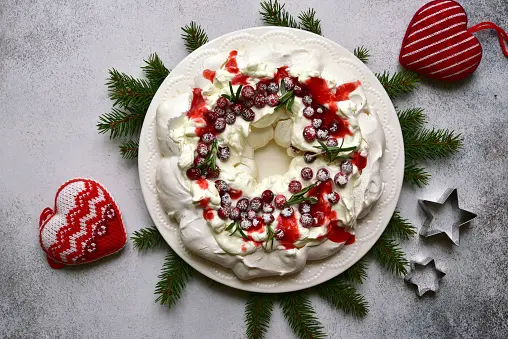
Pudding, trad or not
Your Christmas Day dessert should be prepared almost entirely ahead of time. If you are traditional then you will probably have made your fruit cake or pudding weeks ago. However, they aren’t everyone’s cup of tea, so don’t ruin an elaborate meal by forcing them on your guests in the name of tradition.
Just make (or buy) something you know your family will love. If yours loves apple crumble, then make apple crumble. (You could always stir a bit of mincemeat in there if you want to nod to the occasion.)
Personal favourites at ours are things such as sticky toffee pudding (perfect made the day before and reheated when we feel ready for dessert), or a classic tiramisu. Ravneet Gill’s white coffee panna cotta has to be made the day ahead, as can most of the elements of Anna Hedworth’s mince pie pavlova, and assembled just ahead of time.
Equally, dessert is a great course to delegate to any visiting guests you have who want to chip in to help with the workload.
Sweet tricks
I will almost certainly buy ready-made custard. You can get excellent shop-bought ones. Just pep them up with a shot of your chosen alcohol, to your taste.
For boozy butter to go with mince pies or Christmas pudding, simply beat a packet of room temperature salted butter with an almost equal quantity of sifted icing sugar, until creamy and pale.
Then slowly beat in your chosen alcohol (brandy, rum or Grand Marnier are all good). I add a spoon at a time, starting at about 75ml, and stopping when I reach the level of booziness that I like. About 100-125ml works well. Beat in a touch of vanilla extract, then pop in the fridge until needed.
Before you hit the sack
Work out your meat timings (ask your butcher or the internet) and make your flavoured butter, if using. You don’t want to be messing around with calculating timings on Christmas morning, then realising you haven’t got the turkey in the oven soon enough. Plan ahead, know what time you need to get your meat out, and you’ll be ready to go on the big day.
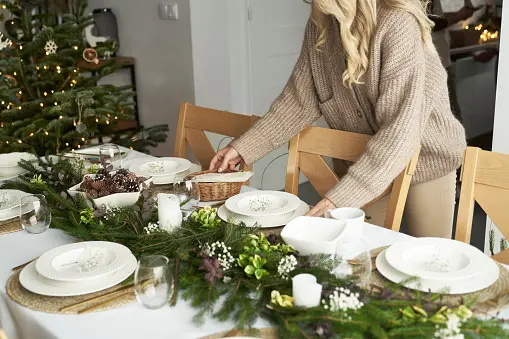
One last thing... set the table
If you really want as effortless a Christmas Day as possible (who doesn’t?), I’d go as far as suggesting getting your crockery, cutlery and glassware ready on Christmas Eve. Pick your serveware and platters. You could even lay the table.
Christmas Day
Every household will have different ideas of when they like to sit for their Christmas meal, so pick your serving time and work backwards. I find physically writing out a schedule works best, and pinning it to the wall or fridge so you stay on track.
I used to be a late person, eating as you would a dinner/tea; however, I am now drawn to an earlier sitting of around 1-2pm. You’ve done all the preparation - sit and enjoy it sooner rather than later, then spend the afternoon grazing and picking at leftovers.
The final festive countdown
Firstly, take your meat out of the fridge well ahead of when it is due to go in the oven and prepare it with whatever butter/fat/herbs you are cooking it in.
Preheat your oven to the desired temperature. Put your meat in the oven, making sure you have timed it to come out 30 minutes before you are ready to serve, so it has time to rest and you have time to cook the rest of the dinner.
90 minutes before you want to eat
Put the tray of potatoes in the oven.
45 minutes before
Lay out your starter, if you are providing one.
30 minutes before
Remove your meat from the oven, cover it loosely with foil and leave it to rest. Adjust the oven temperature as needed. Then place the , carrots, stuffing and pigs in blankets in the oven.
15 minutes before
Warm the gravy and the bread sauce, leave it ticking away over a low heat, adding a splash of water if needed. Spoon the cranberry sauce into serving bowls and place on the table.
Someone should have given you a glass of fizz about half an hour ago. If not, find out why. Plate up, either in the kitchen, or family style at the table.
Merry Christmas!