
PHOTO
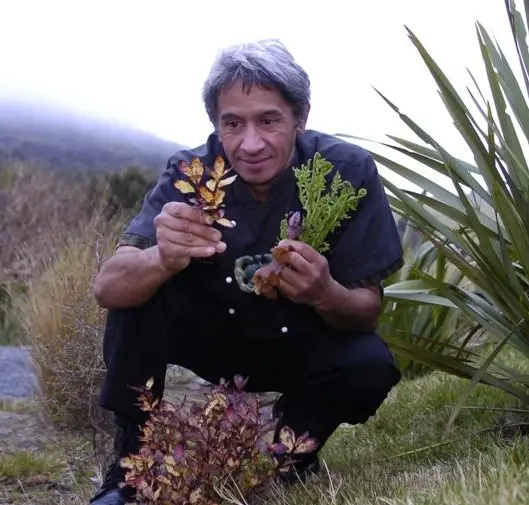
When Charles Royal moved to Rotorua in 1996 to open a Cajun-Creole restaurant, he was surprised there was nothing in the way of modern Maori cuisine.
A few hotels were doing hangi for visitors but apart from that there was no Maori food in a Maori town. They were catering for overseas visitors and serving things such as shrimp cocktail, he says.
Contemporary cuisine was called Pacific rim but there was nothing about it that identified with New Zealand. He says he wanted to create a modern cuisine that was unique to this country and to explore some of his Maori culinary heritage.
His restaurant changed to contemporary Maori fusion as he started using wild herbs such as pikopiko (emerging fern fronds), horopito (bush pepper) and kawakawa (pepper tree). Other chefs showed interest and Royal decided to sell his restaurant and go into wild harvesting full-time to supply the growing demand. He and his family gather the herbs from family land near Taumarunui and he also takes native food tours.
Royal, who spent 10 years as an army chef and learned a lot about cooking in the field and bush, worked with Crop and Food Research to establish how to harvest sustainably and to check the properties of the items he was gathering.
Of 312 different varieties of fern in New Zealand, only seven are edible. Many of the rest are carcinogenic, such as bracken fronds or crown fern, which is eaten by the Japanese, who have a high incidence of stomach cancer, he says.
Pikopiko, the emerging fiddlehead-shaped fronds of hen and chicken fern (Asplenium bulbiferum) which he harvests, are now used by many chefs as a decorative, and particularly Kiwi, garnish on food.
Horopito is traditionally used by Maori for its antifungal and antibacterial properties, among other things. It has a hot flavour that creeps up on you, unlike the instant heat of chilli, he says.
Besides using it as a herb in dishes, Royal also uses it to smoke fish and other foods.
Kawakawa, which tastes a little like spearmint, is a medicinal herb and thins the blood. He says it should not be taken in large amounts, especially by people on drugs such as warfarin. One cup of kawakawa tea every two to three days is enough.
"Like my mother, a lot of old people think 'if I have heaps, it's going to cure me' and she had a lot and it made her very sick.
With kawakawa, you have to be careful."
Kawakawa fruit tastes a little like cinnamon and chilli, he says.
He also harvests harakeke (flax) seed, which has a nutty flavour, is a mild laxative and can be used in muesli or muffins.
Wood-ear fungus is one of the wild mushrooms he harvests, but Royal warns that you should not eat wild mushrooms unless you are certain of their identity, as some are poisonous.
In the 19th century, wood-ear fungus was exported to China.
Berries are harder to harvest and supply, as they are seasonal and don't store well. However, Royal likes to use miro berries, which have a flavour a little like juniper berries, to stuff duck.
An interested group of people followed Royal through the Orokonui Ecosanctuary at Queen's Birthday weekend as he pointed out horopito; hen and chicken fern, from which he harvests pikopiko; the common but carcinogenic crown fern; tarata (lemonwood), which can be used for smoking fish or as tea or in a salad; koromiko (a type of hebe), which is good for an upset stomach; tataramoa (bush lawyer), whose tender tips and small berries can be eaten; makomako (wineberry), which is high in vitamin C and was used by Captain Cook; puahou (five-finger), which contains carotene and tastes a little like carrot or parsnip and whose young leaves can be used in salads; and ti kouka (cabbage-tree heart), which, when stripped of its leaves and cooked, tastes like cabbage.
When you take out the heart, two stalks will regrow where there was one, which is why there are so many old, branched cabbage trees near old settlements, he says.
In the kitchen he demonstrated ways to use some of these items and some of his dried and flaked herbs, rubs and other products.
Many of the recipes are available in his book, Cooking with Charles Royal (Huia), which, along with his kinaki products, is available from the ecosanctuary.
For more information, visit www.maorifood.com.

One of the simplest dishes Charles Royal cooked involved steaming fresh, cleaned cockles until they opened and topping them with stir-fried wood-ear fungus and pikopiko flavoured with horopito and kawakawa. He served it with a slice of pikopiko takakau (damper bread with fiddleheads).
To prepare pikopiko
• Wash the tips thoroughly in cold water and use your fingers to rub off the brown speckles along the stalk, which are bitter.
• Remove the small fern-shaped leaves, which can be used in salads or as a garnish.
• Like asparagus, pikopiko has a natural snapping point and is best less than 25cm long.
• The lower stems are fibrous.
Serves 8
10 pikopiko tips and stalks
2 cups plain flour
2 tsp pikopiko powder
2 tsp baking powder
pinch salt
1½ cups cold soda water
Preheat the oven to 200degC.
Chop the stalks of the pikopiko, reserving the fiddleheads for decoration.
Sift the flour, pikopiko powder, baking powder and salt into a bowl and mix together. Add the chopped pikopiko and make a well in the centre.
Add the soda water and gently mix the ingredients together. The key to this bread is keeping the dough soft and wet. Overworking can make the dough tough and the bread hard.
Lightly spray an oven tray with oil. With wet hands place the dough on the tray, shape into a round and press slightly to make it flat and smooth.
Arrange the fiddleheads on the dough and press down gently.
Place the dough in the middle of the oven and cook for about 20 minutes.
After 20 minutes, remove the bread from the oven and lightly spray the top with oil or brush with egg wash. Place bread back in the oven for another 15 minutes.
Remove bread from the oven and test it by inserting a knife into the centre. If the knife comes out clean and no wet dough sticks to it, the bread is cooked.
Wrap in a clean, damp tea towel and leave to cool on a rack.
Serve with hummus flavoured with horopito or a pesto made with sunflower and flax seeds and chopped pikopiko stems.
Options
• Sprinkle rock salt or flax seeds on top of the bread after spraying with oil or brushing with egg wash.
• Using avocado oil instead of egg wash gives a golden-green glaze. Or, you can use rice bran oil.
• The next day split the bread, toast it under the grill and fill it with thin slices of lamb, aioli and fresh salad.
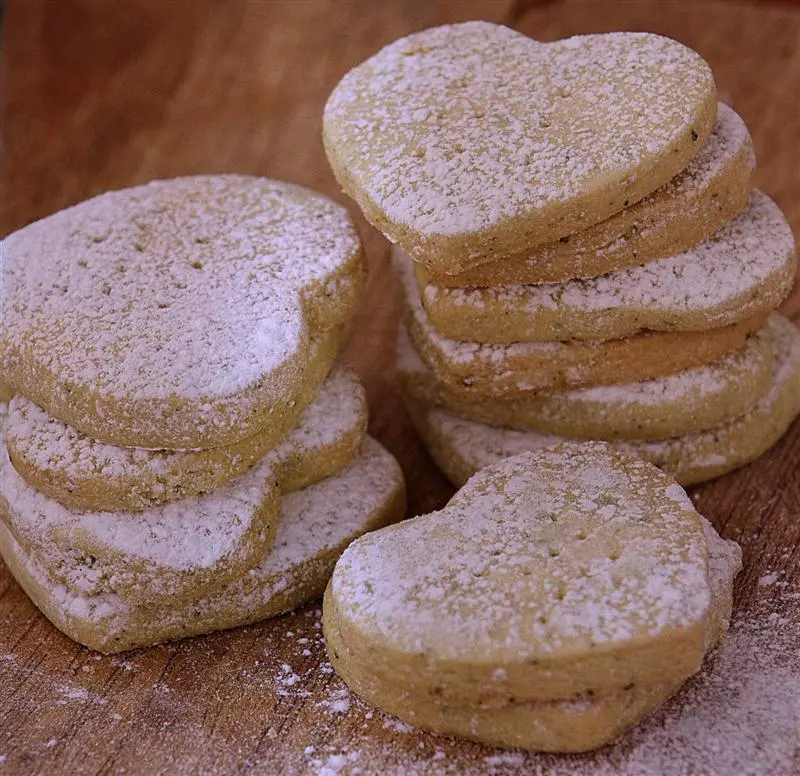
Makes 16
250g butter
1 cup icing sugar
2 tsp dried kawakawa
1 cup cornflour
1 cups plain flour
Preheat oven to 150degC.
Cream butter and icing sugar until light and fluffy.
Add the kawakawa and blend well.
Sift the flour and cornflour together, add them to the butter mixture and combine.
Turn the dough on to a lightly floured bench and knead until it is no longer sticky.
Lightly flour the bench again and roll the dough to 1cm thick.
Cut into shapes and place on a greased baking sheet. Prick with a fork.
Bake for 20-25 minutes until lightly golden.
Dust with icing sugar to serve.