
PHOTO
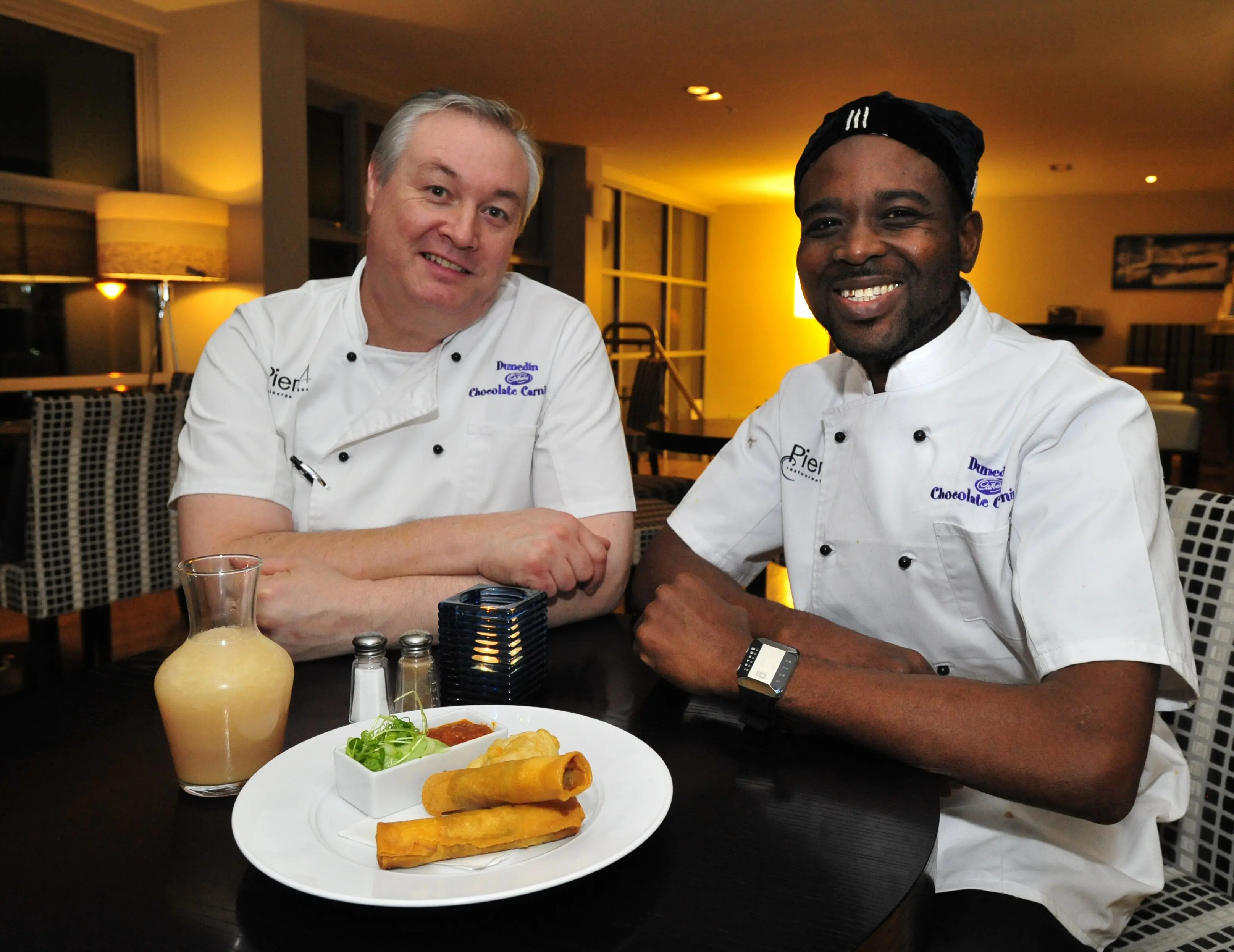
African ginger beer
To make 25-40 litres
2kg ginger root (older roots are better than young baby ones)
250g cloves
2.5-3kg sugar
juice of 3-4 lemons (about 200ml)
water
• Peel and chop the ginger and put it into a processor with water.
• Process it then strain the ginger out, keeping the water. The ginger can be reprocessed with more water. Put the strained juice in a pot with sugar and cloves and cook until the water is coloured, then add the lemon juice - not too much or it will be too lemony.
• Strain, dilute to taste and chill.
• Hudu Alhassan says you can leave this in the fridge for three to five weeks to ferment but be careful your bottles don't explode.
Jollof rice
for 4-6 people
1 breast of chicken, chopped into small pieces
cumin, basil, chicken booster or stock powder for marinade
2 onions, diced
2 cloves garlic
a thumb-sized piece of fresh ginger, chopped
1 red capsicum, cored and chopped
1 green capsicum, cored and chopped
1 small tin (250g) tomato paste
1 kg basmati rice, washed
finely diced vegetables such as carrot, green beans or red and green capsicum
salt
oil or butter
• Sprinkle the diced chicken with cumin, basil, chicken booster and salt and pepper. Toss and leave to marinate.
• Put onions, garlic, ginger and capsicums into a processor and reduce to a paste.
• Heat a little oil in a large pot, add the chicken, toss to brown, add the paste and stir, then add the finely diced vegetables and cook until it starts to brown.
• Add the tomato paste and the washed rice, season to taste with salt and add water to the depth of the first joint of your finger when the tip is placed on top of the rice and vegetables.
• Add a dollop of butter or oil, cover and simmer slowly until the rice has absorbed the water and is cooked and the grains are separate.
• An alternative is to put the rice and vegetable mixture in a baking dish, cover tightly with foil, and cook in a 180degC oven for about 30 minutes.
Cooking, let alone becoming a chef, is the last thing Hudu Alhassan thought he would ever do. In Ghana, when he grew up and still today, cooking is considered a woman's job.
"Even if you see a man in a restaurant, he won't be in the kitchen, cooking," the chef and owner of African Feeling restaurant in Sydney said.
He was in Dunedin recently cooking an African-inspired dinner at Pier 24 as part of the Cadbury Chocolate Carnival.
Ghana is a major supplier of cocoa beans, which are mostly exported, as chocolate is not part of the traditional cuisine - cocoa trees were introduced by the British as a commercial crop.
Alhassan jumped at the opportunity to show African food here. Westerners tend to have negative ideas of Africa gained from television, but, like other Africans living the West, he finds it satisfying to have the opportunity to show that Africa is not all about war and famine, he says.
He moved to Australia in 1987 for better opportunities and to avoid one of the cyclical tribal conflicts that trouble the region.
When he bought the restaurant, he learnt to cook from the previous owners and an African woman chef. He likes to offer flavours from around the continent, although he has a special love of dishes from his home region of northern Ghana.
The food there was influenced by the Arabs who traded across the Sahara, and by the traders on the coast: slave traders and European spice traders on their way to and from the East - Portuguese, Germans, Dutch and British.
Flavourings include onions, garlic, ginger, capsicum, chilli, allspice and other spices, many of which go into the flavoursome soupy stews and sauces that are eaten with a starchy staple such as rice, yams or the favourite, fufu. This is a thick porridge that can be formed into balls and is made from pounded root vegetables such as yam or cassava, or flour of various sorts such as semolina, millet or corn.
He used to make it with yam flour but his clients were unfamiliar with yams, so now he makes it from semolina cooked simply with water until very thick then formed into a ball, as he did at the dinner at Pier 24.
At home, a stew would be poured over the fufu and it would be eaten with the fingers, he says.
When his clients ask about what meats are eaten in Africa, he sometimes tells them he has elephant on special.
"They jump and and I say, no, I'm joking. You can't bring in any fresh meat. All the meat we get here is exactly the same you would buy from the shop. The only difference is we cook it differently from the way you cook it. We use the same spices you can buy here but in a different way."
His menu for the dinner at Pier 24 included dishes from different parts of Africa.
From Morocco in the north was the main, a lamb tagine with couscous and fufu, green beans and okra, a tropical vegetable that originated in west Africa.
From west Africa, of which Ghana is a part, was a cigar-shaped deep-fried pastry filled with spiced minced beef and kpoff-kpoff (the "k" is silent), which is a yeasted, deep-fried dumpling, served with kpam (also pronounced with a silent "k"), a chilli-laced tomato and capsicum dipping sauce.
From the eastern side of the continent was a coconut prawn curry with onion, garlic, ginger, capsicum and coconut milk, demonstrating the blend of African, Arab and Indian influences in the region. It was served with jollof rice, a west African favourite, with onion, tomato, chilli and chicken, but it can also be made with fish or vegetables.
Alhassan says that when he returns to his Sydney restaurant, he will introduce tips he picked up from Pier 24 executive chef Michael Coughlin on ways of garnishing and presentation to create a modern Western style, but he will, as always, keep the flavours authentic.
Alhassan made a delicious, refreshing ginger beer that went well with the spicy food.