
PHOTO
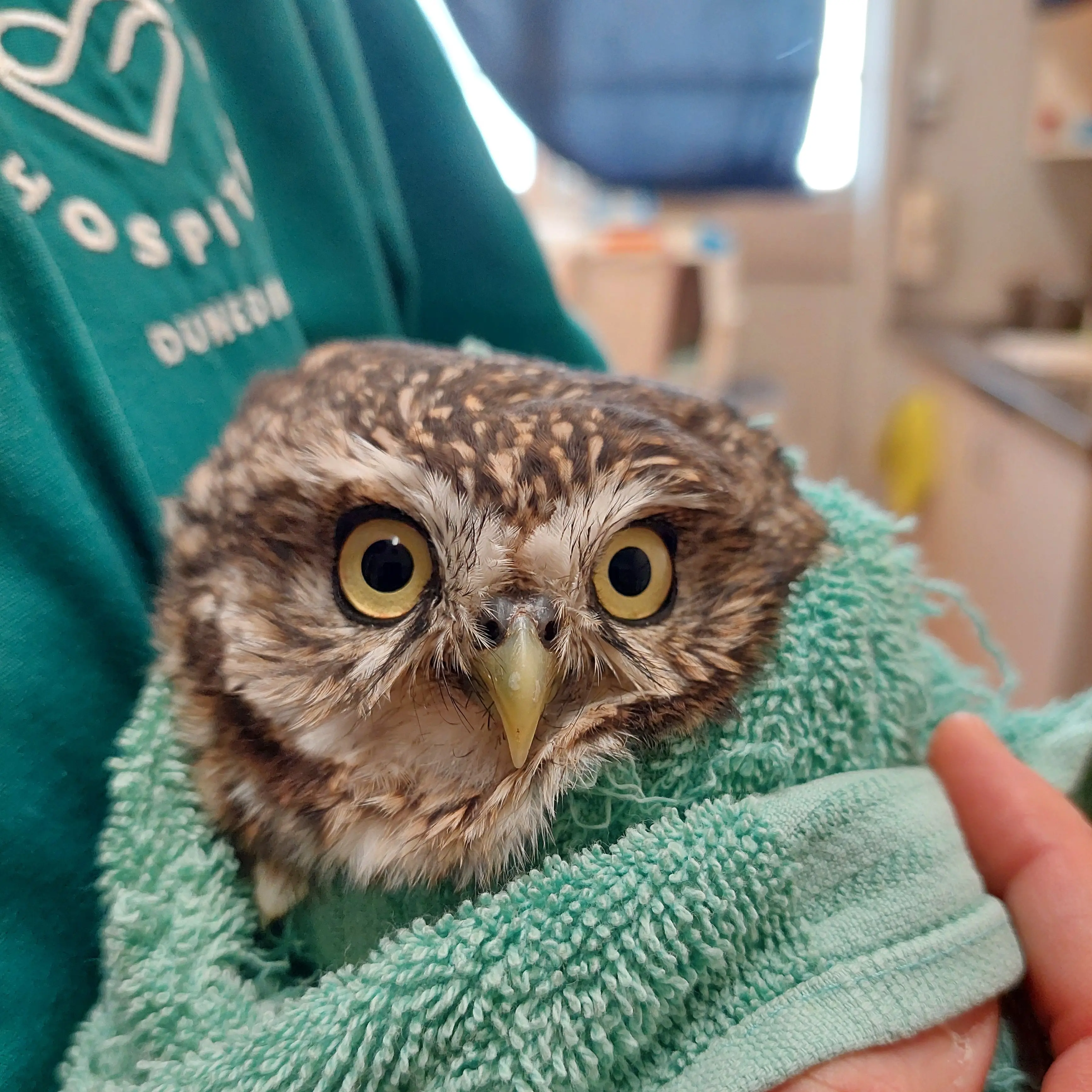
The little owl (Athene noctua) nicknamed the “German owl”, or “ruru nohinohi” in Māori, is a small but charismatic species introduced from Germany to New Zealand in the 1900s to help control the growing populations of small introduced birds that were becoming a problem for the agriculture sector.
In New Zealand, it is classified as an introduced and naturalised species, meaning it is established in the wild but not native.
Unlike most owls, they are more active during the day, seen perched on fence posts or power lines scanning the ground for insects and small prey.
With their bright yellow eyes and distinctive white eyebrows, they have an almost grumpy expression that makes them an interesting sight across parts of the South Island.

Recently, the Dunedin Botanic Garden aviary team received one of these wee owls for rehabilitation after it was found injured by a caring member of the public.
On examination, the owl was diagnosed with a fractured wing - an injury unfortunately common in birds following vehicle collisions or window strikes.
Further assessment revealed something even more remarkable: an older, healed fracture on the opposite wing. Despite this previous injury, the little owl had clearly managed to survive and carry on with its daily life until the second injury made flight difficult.
With both a new and old fracture, this little owl has required extra support. Careful management has focused on mobility and gradual conditioning of the wings.
While the Dunedin Botanic Garden aviary plays a small role in its recovery journey, the next steps will help assess the work already done at the Dunedin Wildlife Hospital.
Providing a larger space where it can test its wings and reacclimatise to the outside weather conditions is the next challenge.
With continued care and a bit of resilience, something this little guy has already shown in abundance, we remain hopeful it will soon return to the place it calls home.
- By Alisha Sherriff