

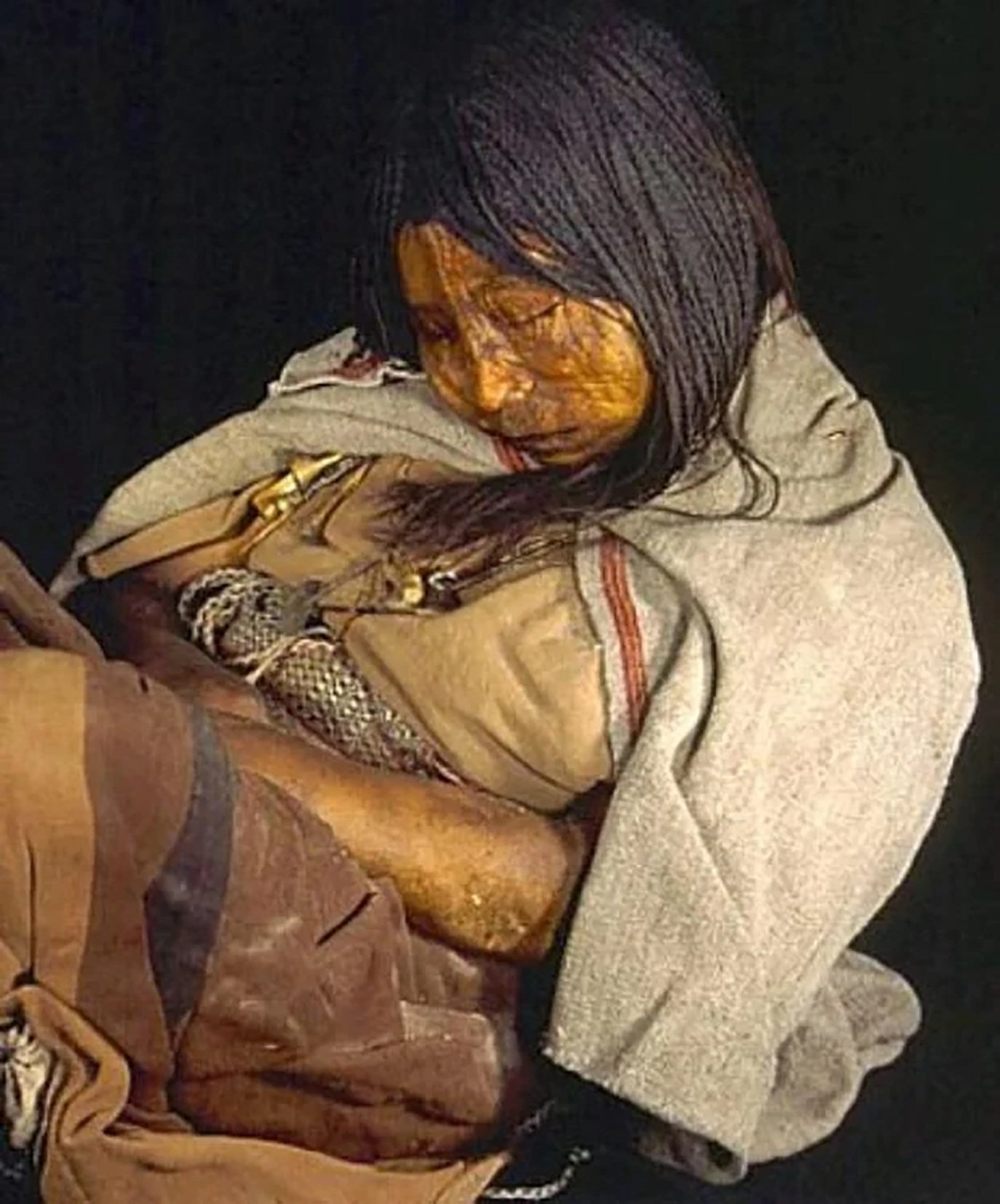
Is this the world’s highest archaeological excavation?
Not according to the Guinness Book of Records.

It was in 1528 that Francisco Pizarro encountered the Inca Empire. Centred at the great city of Cuzco in Peru, this remarkable civilisation had a long reach across South America, and like so many others, its rulers linked high peaks with the gods.
The three died as part of a Capacocha ceremony that required the sacrifice of children on auspicious occasions in the life of the emperor.
This particular trio comprised a girl aged about 6, a young woman of 15 and a boy of 7. According to their dress and the items buried with them, they would have travelled more than 1000km from Cuzco to the sacred summit before they were buried alive, to die from the bitter cold.
It was the permanent ice in the high Andes that preserved the bodies, and enabled the archaeologists to find, from their DNA, that the three were not related. They had enjoyed a good diet based on corn, and taken coca leaves, known to counteract cold conditions. Their clothing and shoes were perfectly preserved, as were the sacrificial objects that accompanied them in death.
This event took place in about 1500AD, on the cusp of the destruction of the Inca Empire. In 1532, Pizarro defeated Emperor Atahualpa and, for a ransom, demanded that a room be filled with gold. When this was done, he had Atahualpa executed and the Capacocha ceremonies came to an end.


