
PHOTO
It was 10 years ago, on a balmy warm evening in Greece, that I yarned with Mike Petraglia during a gathering to celebrate our son Tom and Katerina’s wedding.
So it was with a tinge of envy recently that the news came through that he has landed a research grant of $40.5 million in order to "to transform our understanding of why and how our species, Homo sapiens, is the only surviving human on our planet".
The funding decision from the Australia Research Council came as Judith Collins removed social science research from our own Marsden Fund. Griffith University in Brisbane has become a major centre for exploring how we have become the sole surviving human species, that has thus far shown a remarkable resilience to climate change as we have taken over possession of this planet. And on January 21, the journal Nature reported a further profoundly important advance in this quest.
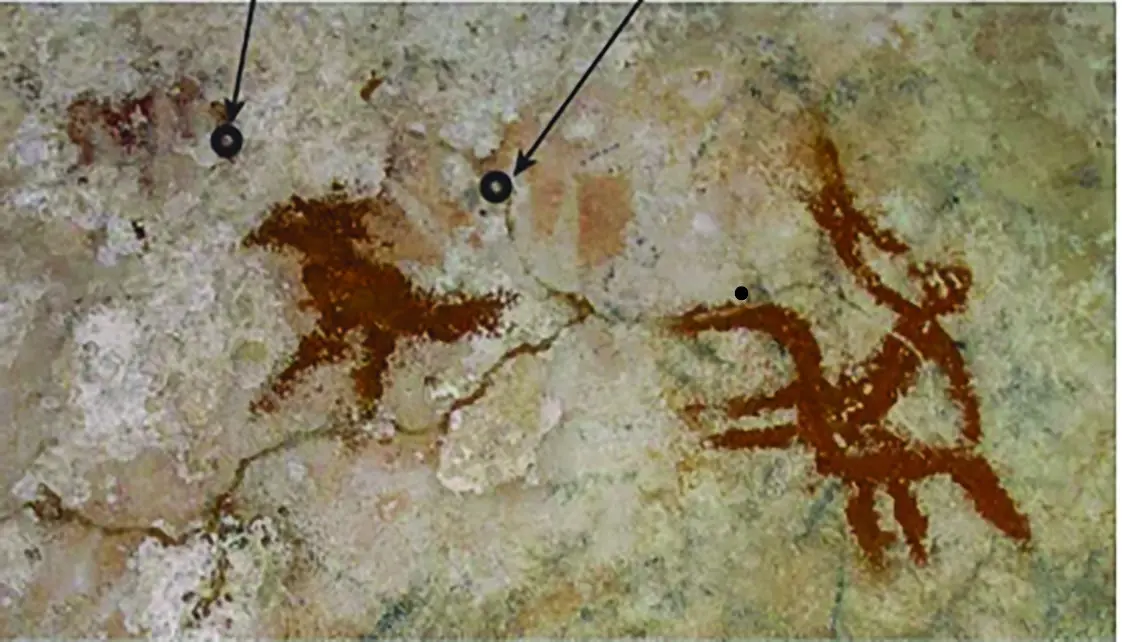
An Australian/Indonesian research team has just announced their discovery of the world’s oldest human art in the form of hand stencils from Liang Metanduno, a cave on Muna Island in Sulawesi. You might think it virtually impossible to date a faded fragment of paint on a rock face, but this is how it is done.
You have to micro-examine the natural calcite that has formed over the painted hand, and then apply what is known as laser-ablation U-series dating, undertaken at Southern Cross University in New South Wales. The result? A minimum age of 67,800 years.
Now, there has been a long controversy over when we modern humans migrated out of our African homeland. What routes did they follow? When did they cross ocean divides to reach Australia?
The new date from Sulawesi strongly hints early humans crossed from Borneo into Sulawesi, and then by island hopping, reached what is now western New Guinea. This route has recently been documented by Dylan Gaffney’s excavations at Mololo Cave on Waigeo Island, just 50km from New Guinea.
A graduate of the University of Otago, Dylan is now an associate professor at Oxford, and at Mololo, he has identified human occupation from at least 50,000 years ago. Viewed for decades as a backwater in the story of human achievements, our part of the world is now receiving proper recognition.