

One evening six years ago, a member of the support staff asked if I would accompany her to Steve’s studio, where I was able to admire the remarkably wide range of his images that extended from Rudolf Nureyev to a German medieval pageant, and from Tibetan life to the Changing of the Guard.
Two years ago, he actually sat me in front of his camera, and he repeated this last December.

When knowledge of casting in bronze reached China 4200 years ago, the emperors of the early dynasties seized on this new medium to advertise their elite status by staging ceremonial feasts, during which they displayed magnificent bronze wine and dining sets. The Houmuwu Ding, cast for the Queen Mother 32 centuries ago, weighs 832.84kg, the heaviest bronze from the ancient world. These, and the equally impressive jades, are prominent in his photographic archive that now extends to 40 sumptuous volumes.
I have already written about the tomb of the first Emperor Qin Shihuangdi, and his terracotta army. The three pits themselves are vast, but comprise but a tiny proportion of the mortuary complex dominated by the pyramid that covers the royal tomb.
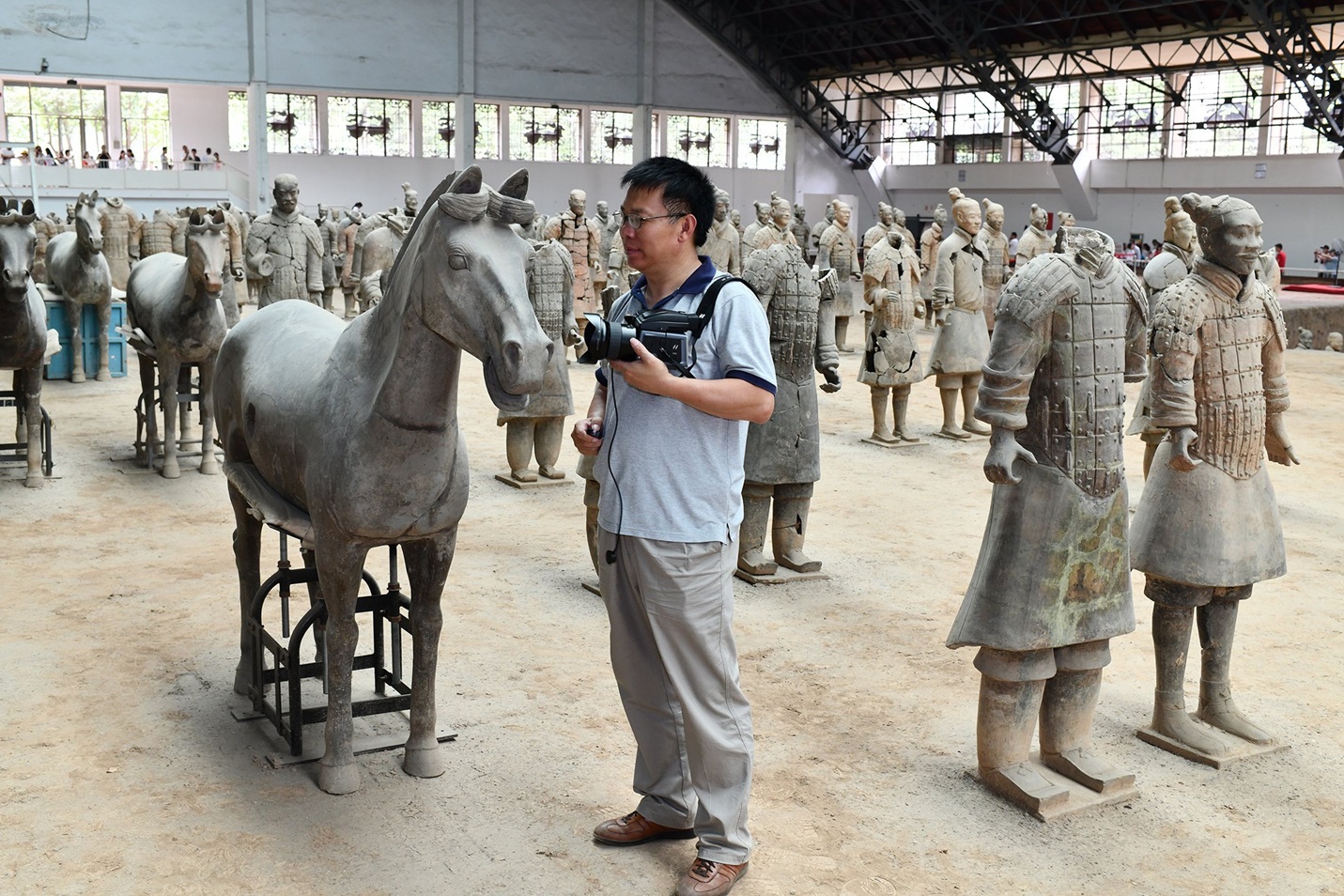
Tourists can gaze down on the infantry from a viewing platform, but only VIPs are invited to inspect the army at close range. Steve has been able to apply his high-resolution imaging close up, to capture the individuality of each soldier. During a break from the forum, we found a quiet corner where he ran through a series of his images. We paused to inspect one in particular: a close-up of a clay face so perfectly formed that it seemed on the brink of conversation. We looked at the eyebrows, and wondered how they had been crafted, perhaps with a fine comb or a feather.
There is no close match to this military archive anywhere on earth. Imagine being able to get up as close to the army of Henry V at Agincourt, or Emperor Claudius’s Roman legion XX Valeria Victrix that invaded Britain 253 years after the terracotta army was sealed for posterity.


