Working together to learn more

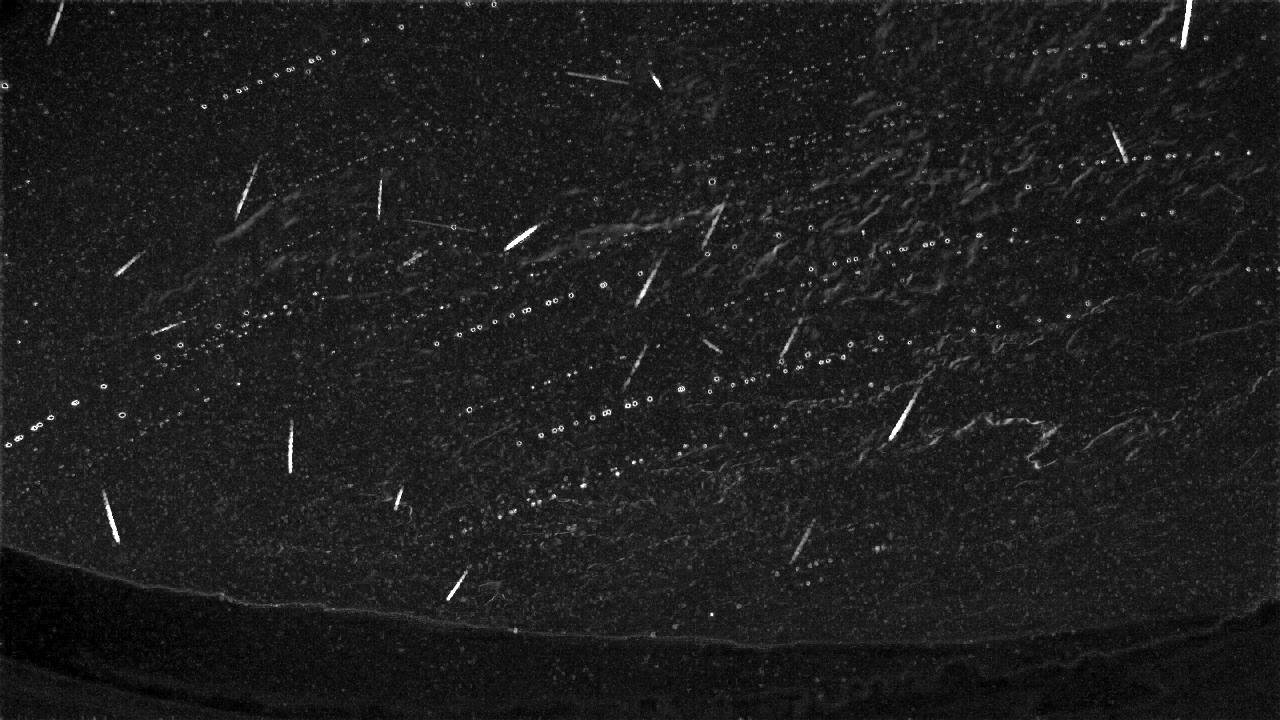
Meteors over Middlemarch detected and captured by a "fireball" camera. Photos: Ian Griffin
On calm nights in Middlemarch, when the wind drops and the paddocks fall quiet, my usual practice is to step outside before bed and gaze upwards. Old habits. Astronomers of a certain age can’t help themselves.

The owls are calling, Orion descends towards the Rock and Pillar Range and the Milky Way arches from horizon to horizon like a pale river. It feels ancient. Intimate. Personal.

Yet, these days, the sky above my farmlet is being watched with rather more discipline than my ageing eyes can muster.

Bolted to the observatory are two small cameras. One is part of the Fireballs Aotearoa network. Every night, it scans the sky for meteors bright enough to survive their fiery plunge through the atmosphere. When fireballs disintegrate above Otago, multiple stations across the country record them. From those intersecting lines of sight, we can reconstruct its trajectory through space, calculate its original orbit around the sun, and sometimes predict where fragments — meteorites older than Earth — may have landed.

Thanks to this amazing piece of kit, a shooting star is no longer just something to wish upon. It is a data point with a purpose.

The second camera belongs to Auroreye, an international citizen-science project mapping the fine structure of the aurora.

When solar eruptions send charged particles streaming toward Earth, our magnetic field shudders and glows. 
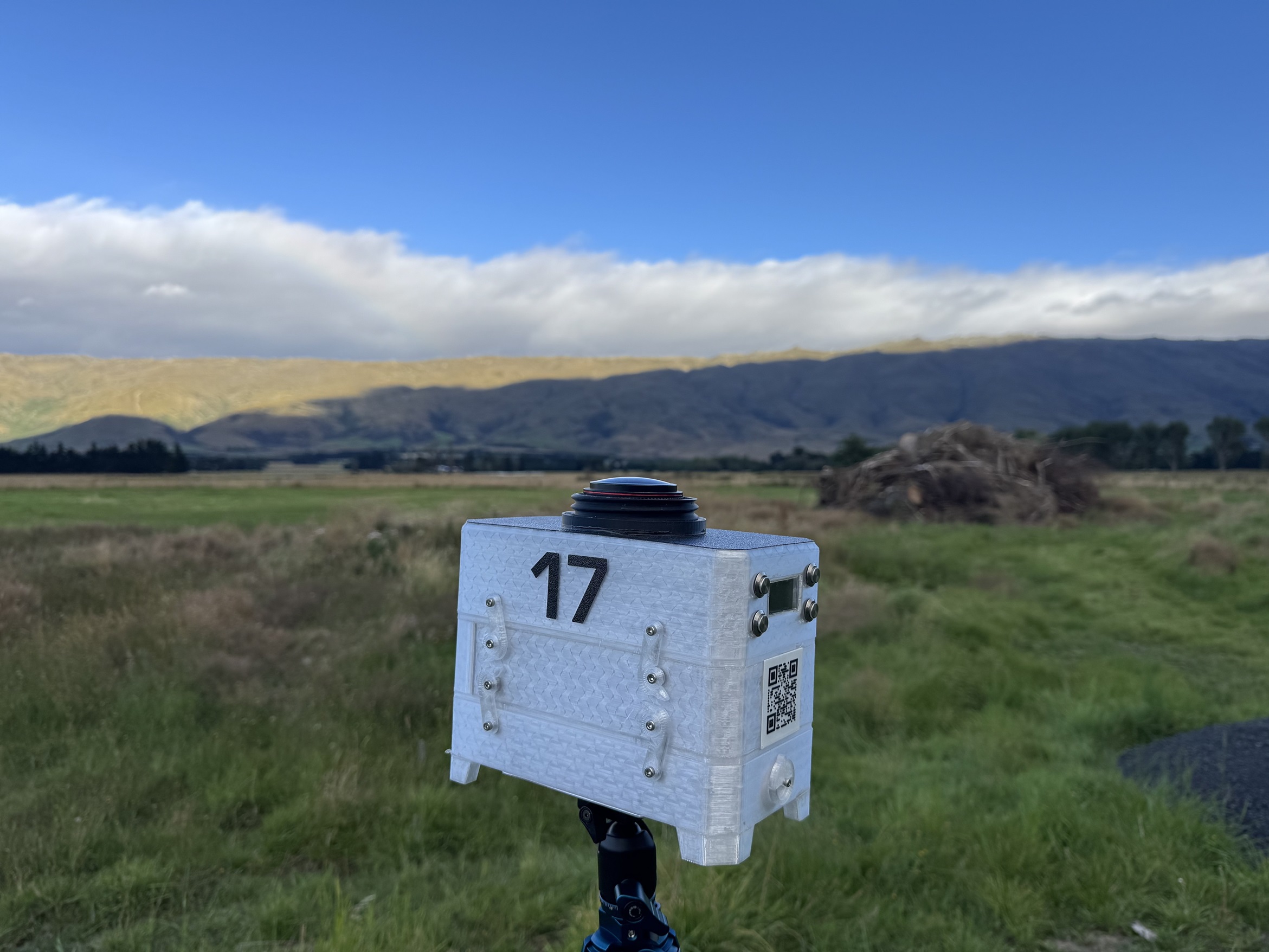
The Auroreye camera is on duty at Ian Griffin’s property at Middlemarch.
The camera records every ripple and "picket fence" with time stamps precise enough to compare with magnetometers in Alaska or satellite measurements above the atmosphere.

Grandad in the paddock, perhaps. But grandad with global collaborators.

What I love most is this: while I sleep, the cameras continue their quiet vigil. Data flows north and south. 

A meteor over Strath-Taieri may have the same origin as one seen over Canada. An auroral arc above Dunedin may correspond to magnetic turbulence thousands of kilometres away.

We still look up in wonder. But now, here in Otago’s dark skies, we also measure, calculate and contribute. The night is no longer just a spectacle. It is a conversation — and we are finally fluent enough to answer back.